
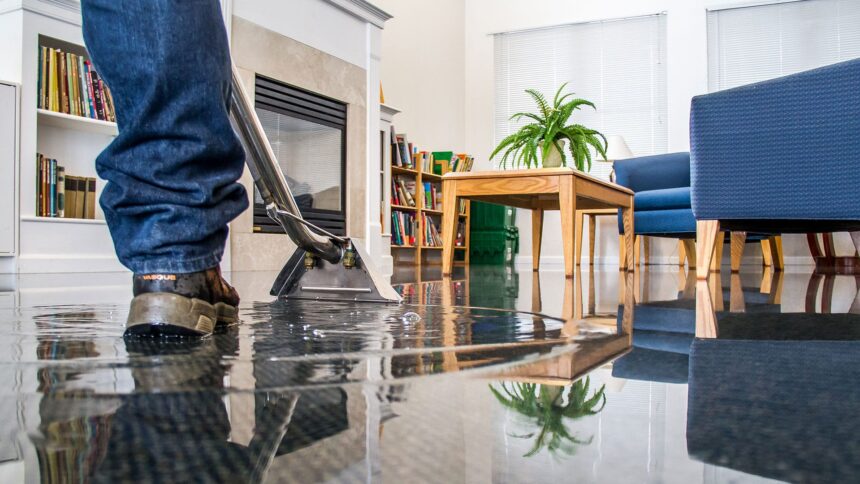
Effective water damage restoration eliminates both visible water and hidden moisture from components like framing and drywall; this prevents further material deterioration and structural weakening. The right restoration approaches help speed up drying and minimize the risk of moisture issues recurring in your property. Here are a few effective water damage restoration techniques you should know:
Locate the Water Source
Locating and stopping the source of water intrusion protects structural materials such as subflooring, insulation, and framing from ongoing saturation. You prevent new water from entering, and that allows the restoration scope to be defined more accurately. This step also helps you uncover the underlying cause of water damage in your home, not just the visible stain. Potential sources of water damage in residential and commercial properties may include:
- A damaged roof system
- Plumbing leaks
- Foundation cracks
- Window and door failures
- Gutter and downspout problems
If the source is a supply line, fixture, or appliance leak, shut off a supply valve, and then isolate the affected area. Make sure to seal gaps around windows and small exterior openings if the intrusion point is visible. Improving drainage around the perimeter helps guide surface water away from your building, and it also mitigates pooling near the foundation.
Eliminate Hidden Moisture
Removing hidden moisture helps limit further material breakdown and supports a faster move from damage mitigation to repair. This step also helps detect water that surface cleaning may overlook, such as damp framing, subfloors, and ceiling voids. Water damage restoration professionals begin by conducting thorough inspections, which help them map moisture accurately. Accurate mapping helps technicians place drying equipment where materials are actually wet rather than only where damage appears most severe.
Remove Standing Water
Removing standing water helps limit how far moisture can spread, and it also allows structural materials to dry faster. It stops water from soaking deeper into flooring, drywall, and insulation, contributing to faster restoration. Water often travels through seams and low spots. This means by removing standing water quickly, you reduce the risk of secondary damage in adjacent rooms.
Once the water is removed, it becomes easy to access and inspect exposed surfaces like flooring, wall cavities, and trim. This water damage restoration technique also supports faster removal of wet materials that keep releasing moisture. Standing water can carry debris and residue into wider areas, so fast removal lowers the risk of contamination spreading across your property.
Before beginning this step, make sure to shut off power to affected spaces. Avoid contact with outlets, cords, or appliances near the water for safety purposes. A professional uses extraction equipment to remove both visible water as well as the water pooled in low-lying areas. Extraction equipment, such as pumps and wet vacuums, helps minimize saturation in structural materials, allowing drying to begin sooner.
Clean and Sanitize Affected Areas
Water intrusion from stormwater, sewage, or contaminated plumbing can expose your property to elements like dirt and bacteria. Cleaning helps remove visible residue such as sludge and debris, and that makes the next restoration steps more effective. Sanitation is key to reducing the spread of microorganisms on hard surfaces after contaminated water exposure. Both cleaning and sanitation protect salvageable materials, and also prepare affected surfaces for drying and repair.
Hire a Water Damage Restoration Team
Effective water damage restoration requires accurate moisture detection, thorough drying, and prompt structural repairs, not just removing standing water. A skilled team is able to develop a clear restoration plan by assessing the water source and saturation level, making the process more efficient and accurate. Contact a reliable team for quick inspections, mold removal, and repairs after water damage.