

Vietnam has become an increasingly attractive base for building software products for global markets. Access to technical talent, competitive costs, and experience with international clients are among its key advantages. However, turning these strengths into successful global products requires more than development skills. Teams must also understand product goals, communicate across markets, and deliver consistently over the long term.
1. Vietnam’s growing role in global software development
Vietnam has spent years building its software engineering ecosystem. The country now has a large pool of IT professionals and produces a large number of ICT graduates each year. Major cities such as Ho Chi Minh City, Hanoi, and Da Nang have developed strong technology communities, while international companies have also established engineering and R&D operations in the country. This growth has changed the type of work that Vietnamese teams can take on.
In the earlier outsourcing model, an overseas company might provide detailed specifications and ask a Vietnamese team to develop a particular feature or application. Today, some companies are involved much earlier in the process, including product planning, architecture, UX/UI design, development, testing, cloud infrastructure, and ongoing product improvement.
That shift matters because global products require teams to understand not only how to build software, but also why it is being built.

2. Why companies choose Vietnam to build software products
2.1. Access to technical talent
Vietnam has developed a strong engineering workforce across web and mobile development, cloud computing, AI, data, QA, and other areas. This gives international companies more options when they need to build or expand a product team.
The talent advantage is not simply about the number of developers available. For global projects, companies also need engineers who have experience with modern technologies, Agile development, international clients, and distributed teams.
2.2. Competitive development costs
Cost remains an important reason companies consider Vietnam. Developer and outsourcing rates are generally lower than in markets such as the US, Western Europe, and Australia, although the actual difference depends on seniority, technology, project complexity, and engagement model.
However, cost should not be treated as the main measure of value. A cheaper team can become expensive if requirements are misunderstood, quality problems appear late, or the client needs to spend significant management time correcting issues. The more useful question is whether the team can deliver reliable software while working within the client’s product and business constraints.
2.3. Experience with international delivery
Vietnamese software companies have worked with international customers for years. This has created experience with distributed development, different working cultures, international quality expectations, and cross-border project management.
Vietnam’s GMT+7 time zone can also work well for companies in Asia-Pacific and provide useful overlap with European teams. For North American companies, the time difference can support an overnight development cycle when communication and handoffs are planned properly.
3. The challenges of building global products from Vietnam
3.1. Communication goes beyond English
English is necessary, but language ability alone does not solve communication problems. A product team needs to understand ambiguous requirements, ask the right questions, explain technical trade-offs, and identify when a request may conflict with the product’s goals.
This becomes especially important when the client and development team come from different business and cultural backgrounds.
3.2. Product thinking can be a bigger gap than technical skills
One of the biggest differences between traditional outsourcing and product development is ownership of decisions. A task-based team may focus on completing the requirements it receives. A product-oriented team needs to ask additional questions:
- Who will use this feature?
- What problem is it solving?
- How will users interact with it?
- What should happen if the original assumption is wrong?
- Does the feature support the wider business goal?
Without this product context, even technically strong teams can build software that works but does not create the expected business value.
3.3. Quality and scalability require planning
Global products may need to support different markets, user behaviors, regulations, and traffic levels. Decisions about architecture, security, testing, infrastructure, and data management therefore become important from an early stage.
A team that is suitable for building an MVP may not automatically be suitable for scaling the product later. Companies should evaluate whether their development partner has the engineering processes and experience needed for the product’s next stage, not just its current requirements.
4. How Vietnamese software teams can bridge the gap
The opportunity for Vietnam is to move further from task-based outsourcing toward product development partnerships. This requires several changes:
- First, teams need stronger involvement in the product context. Developers, designers, QA engineers, business analysts, and project managers should understand the goals behind the requirements they receive.
- Second, cross-functional teams can reduce communication gaps. When product, design, engineering, and QA work closely together, issues can be identified earlier instead of being passed between separate teams.
- Third, communication processes need to be designed deliberately. Clear documentation, regular product discussions, shared project tools, and agreed decision-making processes can reduce the problems caused by distance and time zones.
- Finally, development partners need to take responsibility for long-term product quality rather than treating each delivery as an isolated project.
Companies such as PowerGate Software illustrate this shift through a software product studio approach, supporting clients across areas such as product development, software engineering, design, QA, and other technical capabilities. The broader point is not that every company needs the same model, but that global clients increasingly need development partners who can understand the product as a whole.
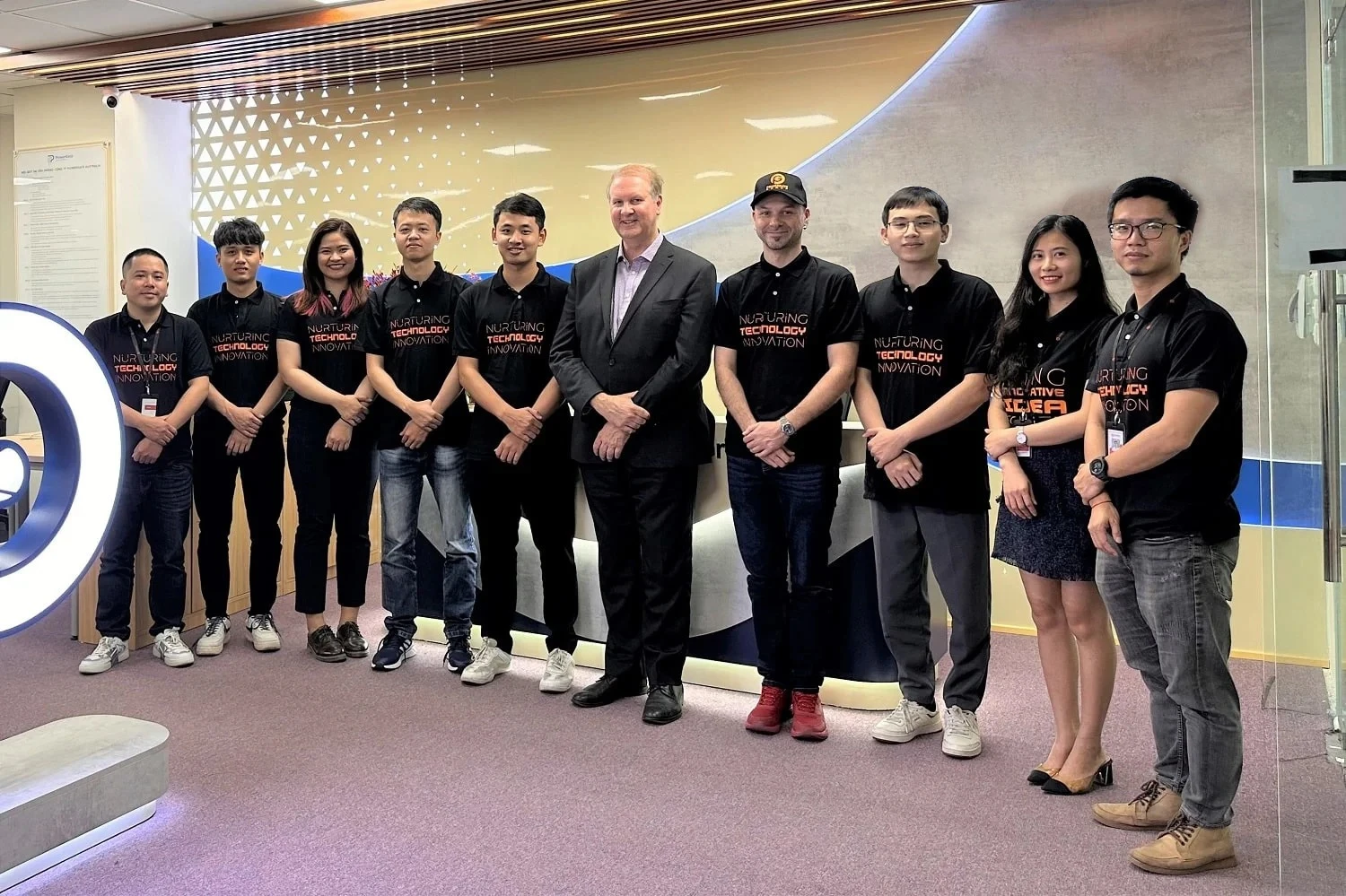
PowerGate Software is a global AI-Powered software product studio with more than 15 years of experience
5. What companies should look for in a Vietnam-based software partner
Choosing a development partner based only on hourly rates is risky. Companies planning to build a global product from Vietnam should consider:
- International project experience: Has the team worked with companies in the target market?
- Product development capability: Can it contribute to product decisions, architecture, UX, testing, and long-term improvements?
- Communication practices: How are requirements, decisions, risks, and progress communicated?
- Technical depth: Does the team have relevant experience with the technologies and architecture the product requires?
- Quality processes: How are testing, security, code reviews, deployment, and maintenance handled?
- Team stability: Will the same people remain involved as the product develops?
- Scalability: Can the partner expand or adjust the team when the product moves from MVP to a larger user base?
Vietnam’s software industry is moving beyond traditional outsourcing toward more long-term product development. For global companies, the country offers access to technical talent, competitive costs, and experience with international delivery. The key challenge is finding teams that can understand product goals, communicate effectively, and take responsibility beyond individual development tasks. For businesses considering Vietnam, the focus should be not only on cost, but also on the value and level of responsibility a development partner can bring