
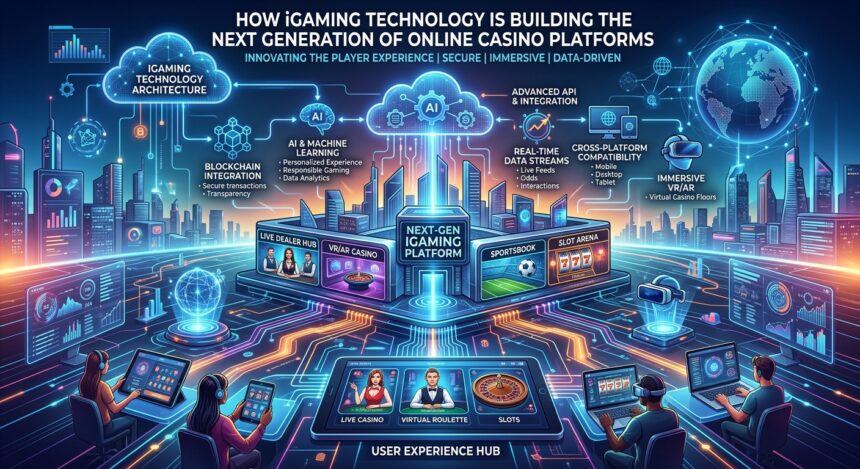
The online gambling industry has changed dramatically over the last two decades. What began as a relatively simple form of internet-based gaming has developed into a highly sophisticated technology sector involving payment systems, cloud infrastructure, data analytics, cybersecurity, mobile applications, and real-time gaming platforms. Behind every successful online casino is a complex technical ecosystem designed to provide reliable performance while meeting the expectations of modern players.
Understanding the Inception of iGaming infrastructure helps explain how the industry reached its current level of sophistication. Early gambling websites relied on basic servers, limited game selections, and relatively simple payment methods. As internet connectivity improved and consumer confidence increased, operators needed infrastructure capable of supporting larger audiences, faster transactions, and more interactive gaming experiences.
The Evolution of iGaming Infrastructure
Modern iGaming infrastructure is much more than the software visible to players. It includes gaming engines, databases, payment gateways, customer-management systems, fraud-prevention technologies, reporting tools, and secure communication layers. These components must work together continuously, often handling thousands of simultaneous transactions and gaming sessions.
Cloud computing has played an important role in this development. Instead of depending entirely on physical servers, operators can now use scalable cloud environments that allow resources to increase or decrease according to demand. This is particularly useful during major sporting events or promotional campaigns when traffic can increase significantly within a short period.
Software architecture has also become more modular. Developers can build individual components that communicate through APIs, making it easier to integrate new games, payment providers, analytics solutions, and other services without rebuilding an entire platform.
What Is a B2B iGaming Platform?
A B2B iGaming Platform provides technology and infrastructure to businesses operating in the gambling industry rather than directly serving individual players. These platforms can help casino operators, sportsbooks, game studios, and other gaming companies launch and manage digital products.
A typical B2B solution may include casino game aggregation, player management, payment integration, bonuses, reporting dashboards, risk-management tools, and back-office functionality. By using an established platform, operators can avoid developing every component internally.
This approach can significantly reduce development time. Instead of spending years creating a complete technology stack, a new operator can connect its website or application to existing infrastructure and concentrate on branding, customer acquisition, content, and market strategy.
Software Development and Platform Scalability
Scalability is one of the most important considerations when developing gambling software. An application that performs well with a few hundred users may struggle when thousands of players access it simultaneously.
Modern development teams therefore focus on distributed architectures, efficient databases, caching systems, load balancing, and automated monitoring. These technologies help maintain stable performance while allowing platforms to grow.
Application programming interfaces are equally important. APIs allow different services to exchange information securely. For example, a casino platform may connect its payment provider, game supplier, identity-verification service, and analytics system through separate APIs. This creates a flexible ecosystem where individual services can be upgraded without necessarily affecting the entire platform.
Security and Responsible Technology
Security is another fundamental requirement for online gambling technology. Platforms handle sensitive information, financial transactions, and account credentials, making them attractive targets for cybercriminals.
Developers therefore implement encryption, secure authentication, access controls, fraud detection, transaction monitoring, and regular security testing. Reliable infrastructure should also include backup and recovery systems to reduce the impact of technical failures.
Technology can support responsible gambling as well. Modern platforms can provide tools for deposit limits, session monitoring, self-exclusion, and other player-protection mechanisms. These features demonstrate that software development in the gambling sector is not only about improving entertainment but also about creating controlled and accountable digital environments.
The Future of iGaming Technology
The next stage of iGaming development is likely to involve greater automation, artificial intelligence, advanced analytics, and increasingly personalized digital experiences. AI can help businesses analyze large volumes of operational data, identify unusual activity, improve customer support, and optimize platform performance.
At the infrastructure level, flexible cloud services and API-driven architectures will continue to make it easier for businesses to enter new markets and integrate specialized technologies.
Ultimately, the success of an online casino or gaming business depends on much more than attractive design. Reliable infrastructure, scalable software, secure transactions, efficient integrations, and responsible technology form the foundation of a modern iGaming operation. As these systems continue to evolve, the companies investing in strong technical foundations will be better positioned to compete in an increasingly sophisticated digital gambling market.