
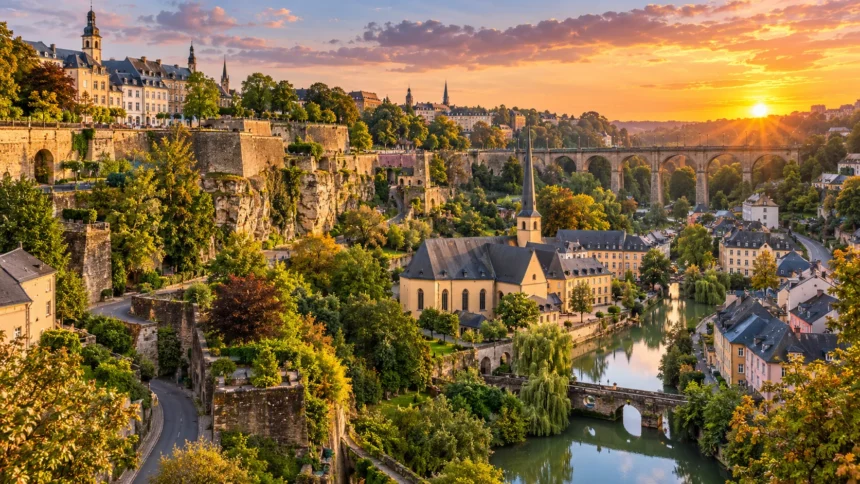
Why Luxembourg Is Worth Visiting
Luxembourg may be one of Europe’s smallest countries, but it offers an impressive mix of medieval history, scenic valleys, castles, forests, museums, and modern city life. Travelers can explore ancient fortifications in the morning and reach peaceful countryside later the same day. Its compact size makes Luxembourg especially convenient for visitors who want varied experiences without spending hours moving between distant destinations.
Luxembourg City is usually the main starting point, with dramatic cliffs, historic neighborhoods, bridges, elegant squares, and modern European institutions. Beyond the capital, places such as Vianden, Echternach, and the Mullerthal region reveal another side of the country. Vineyards, hiking routes, river valleys, traditional towns, and hilltop castles create plenty of reasons to travel beyond the city center.
The country works particularly well for a short European break or as part of a longer regional itinerary. History lovers can explore fortresses and castles, while outdoor travelers can spend time hiking through forests and rocky landscapes. Food, museums, architecture, and scenic walks add enough variety to keep both first-time visitors and returning travelers interested.
Explore Luxembourg City’s Old Quarter
Luxembourg City’s historic center is the best place to begin discovering the capital. Its streets combine grand buildings, quiet squares, old fortifications, and viewpoints overlooking deep valleys. Walking is one of the easiest ways to explore because many important attractions sit relatively close together, allowing visitors to enjoy the architecture without constantly relying on transportation.
Place d’Armes and Place Guillaume II are useful central points for exploring the surrounding streets. Cafés, shops, government buildings, and pedestrian areas create a lively atmosphere throughout the day. Instead of moving directly between major landmarks, take time to wander through smaller streets where historic façades and unexpected viewpoints reveal more of the city’s distinctive character.
The old quarter becomes especially attractive in the evening when day visitors begin leaving and restaurants grow busier. A relaxed walk after dinner lets you appreciate illuminated buildings and quieter public spaces. Staying near the center can make sightseeing convenient, but Luxembourg’s compact layout also allows visitors based elsewhere to reach the historic district without much difficulty.
Walk Through the Bock Casemates
The Bock Casemates are among Luxembourg City’s most distinctive historical attractions. These underground defensive passages were carved into rock as part of the city’s extensive fortress system. Exploring them gives visitors a better sense of why Luxembourg once held such strategic importance and how military engineering shaped the appearance of the modern capital.
Inside, narrow corridors, chambers, openings, and viewpoints create an experience that feels very different from ordinary museums. Some areas offer impressive views toward the valley and surrounding neighborhoods. Visitors who dislike enclosed spaces should take their time, while comfortable shoes are useful because floors and passages can be uneven in parts of the underground complex.
The casemates fit naturally into a wider walking route through the historic center. Combine them with nearby viewpoints, fortress remains, and old streets to understand how the defensive landscape connected together. Allowing enough time to explore slowly makes the experience more meaningful than treating the underground passages as a quick stop between other attractions.
See the Views From the Chemin de la Corniche
The Chemin de la Corniche is one of the most scenic walking areas in Luxembourg City. The elevated route follows parts of the old fortifications and provides broad views over the Alzette valley, historic buildings, bridges, and the district of Grund below. It is particularly appealing to photographers and travelers who enjoy combining sightseeing with relaxed outdoor walks.
Different sections of the route reveal changing perspectives of the city. From above, Luxembourg’s unusual geography becomes much easier to understand, with neighborhoods positioned on multiple levels around steep cliffs and valleys. The combination of stone walls, rooftops, greenery, and distant modern buildings creates a view that feels both historic and distinctly European.
Late afternoon can be an enjoyable time to walk here because softer light adds warmth to the surrounding architecture. However, clear mornings can also provide excellent visibility and fewer people. Take your time at the viewpoints rather than rushing through, since the scenery itself is one of the main reasons this walk remains memorable.
Discover Grund and the Lower City
Grund sits below Luxembourg City’s upper historic center and offers a quieter atmosphere beside the Alzette River. Traditional buildings, bridges, walking paths, and green spaces create a peaceful contrast to the busier streets above. Exploring this neighborhood helps visitors appreciate the different levels and landscapes that make Luxembourg City visually unusual.
Walking down into Grund can be enjoyable, but remember that returning to the upper city may involve a noticeable climb. Fortunately, convenient connections can make the journey easier for travelers who want to avoid steep uphill walking. Once below, spend time following the river and exploring small streets rather than treating the neighborhood as only a viewpoint from above.
Grund is particularly pleasant when combined with a relaxed lunch or afternoon walk. The riverside environment encourages a slower pace and provides opportunities to photograph bridges, historic buildings, and cliffside scenery. Visiting both the upper and lower parts of Luxembourg City gives you a much fuller impression than remaining only around the main commercial streets.
Visit the Grand Ducal Palace and Notre-Dame Cathedral
The Grand Ducal Palace is one of the most recognizable buildings in central Luxembourg City. Its elegant façade and central location make it easy to include during a walking tour of the old quarter. Even when visitors do not enter, the surrounding streets provide an excellent opportunity to appreciate architecture and understand the ceremonial importance of the area.
Nearby, Notre-Dame Cathedral adds another important historic and religious landmark to the city itinerary. Its interior provides a quiet break from the busy streets and reflects centuries of architectural and cultural development. Visitors should remember that it remains an active place of worship, so respectful behavior and appropriate clothing are important while exploring inside.
These landmarks are close enough to combine with nearby squares, cafés, and shopping streets. Rather than planning a separate journey for each attraction, include them in a broader central walking route. This approach makes sightseeing more efficient while allowing enough flexibility to stop whenever an interesting building, shop, or public space catches your attention.
Experience Luxembourg’s Museums and Modern Side
Luxembourg City is not only about castles and fortifications. Its museums cover art, history, archaeology, design, and contemporary culture, making them valuable additions to an itinerary. Visiting one or two museums can also provide useful context for the historic sites you encounter throughout the city and offer a comfortable indoor activity during poor weather.
The Kirchberg district shows a dramatically different side of Luxembourg. Modern offices, cultural venues, contemporary architecture, and European institutions create a strong contrast with the old quarter. Walking around this part of the city demonstrates how Luxembourg combines its historic identity with a modern international role and ambitious urban development.
Travelers interested in contemporary art and architecture may want to dedicate several hours to Kirchberg rather than only passing through. Combining a modern museum with nearby buildings and public spaces creates a balanced half-day experience. Moving between Kirchberg and the historic center also highlights how much variety is packed into Luxembourg City’s relatively small area.
Take a Day Trip to Vianden
Vianden is one of Luxembourg’s most picturesque towns and makes an excellent day trip from the capital. The town lies beside the River Our and is dominated by an impressive hilltop castle. Narrow streets, traditional buildings, riverside scenery, and surrounding hills give Vianden the kind of atmosphere many travelers imagine when planning a European castle excursion.
Vianden Castle is the main attraction and rewards visitors with historic interiors, architectural details, and elevated views. The climb toward the castle also reveals attractive perspectives of the town below. Rather than leaving immediately after the visit, spend time walking along the river and exploring smaller streets to experience more of Vianden’s relaxed character.
Outdoor travelers can extend the visit by exploring walking routes around the surrounding hills and valley. The town works well for both history-focused sightseeing and scenic recreation. Staying overnight is an option for travelers who prefer a slower pace, although Vianden can also fit comfortably into a carefully planned day trip.
Hike Through the Mullerthal Region
The Mullerthal region is one of Luxembourg’s best destinations for hiking and nature. Often associated with dramatic sandstone formations, wooded trails, rocky passages, streams, and small waterfalls, the area feels surprisingly wild considering the country’s compact size. It is particularly appealing to travelers who want to balance city sightseeing with a full day outdoors.
Walking routes range from shorter local paths to longer sections that require more time and preparation. Some trails pass through narrow rock formations and uneven forest terrain, so supportive footwear is important. Choose a route suited to your experience and available daylight instead of attempting a long hike simply because a famous trail appears on your itinerary.
The region becomes especially beautiful during periods when forests are green or autumn colors begin appearing. Weather can change quickly, so light rain protection is useful even when conditions initially look pleasant. A day in Mullerthal provides a refreshing contrast to castles, museums, and city streets while showing another side of Luxembourg’s landscape.
Explore Echternach and Its Historic Center
Echternach is Luxembourg’s oldest town and works well as part of a trip through the Mullerthal region. Historic streets, religious buildings, attractive squares, and a relaxed atmosphere make it enjoyable even for travelers who are not planning a long hike. The town’s manageable size allows visitors to explore much of the center comfortably on foot.
The basilica and surrounding historic areas provide useful insight into Echternach’s long cultural and religious importance. Small cafés and restaurants create easy places to stop between sights. Rather than focusing only on one landmark, walk through the town slowly and notice how historic buildings remain integrated with everyday shops, homes, and public spaces.
Echternach also makes a practical base for travelers who want more time in eastern Luxembourg. Nearby countryside and hiking routes can be combined with mornings or evenings in town. Even as a day trip, pairing Echternach with a shorter Mullerthal walk creates a varied experience involving both cultural sightseeing and outdoor scenery.
Enjoy the Moselle Valley and Luxembourg’s Wine Country
Luxembourg’s Moselle Valley offers vineyards, riverside scenery, small towns, and a slower rural atmosphere. The region provides another excellent contrast with the capital and is particularly appealing to travelers interested in food, wine, cycling, or countryside drives. Vineyards covering gentle slopes give the landscape a distinctive character that changes with the seasons.
Wine traditions are an important part of local culture in the region. Travelers interested in tastings can look for opportunities to learn about local production and discover regional varieties. Those who do not drink can still enjoy the scenery, walking routes, riverside communities, and relaxed restaurants found throughout the Moselle area.
Cycling and driving are both good ways to explore several communities without rushing. Build enough time into the day for spontaneous stops because smaller viewpoints and villages can be as enjoyable as the planned attractions. A Moselle excursion works especially well when your itinerary already includes Luxembourg City, castles, and forested landscapes.
Plan the Perfect Luxembourg Itinerary
Two or three days is enough for a focused introduction to Luxembourg City and one nearby destination. Spend the first day exploring the old quarter, Bock Casemates, Grund, and major central landmarks. Use the second day for museums or modern districts, then choose Vianden, Mullerthal, or another countryside destination if you have additional time.
With four or five days, the itinerary becomes much more relaxed. You can visit Vianden, hike in Mullerthal, explore Echternach, and spend time in the Moselle Valley without constantly changing plans. Luxembourg’s small size makes this variety possible while still allowing you to return to the capital between excursions if that suits your accommodation arrangements.
Keep the itinerary flexible and group nearby attractions together. Comfortable walking shoes are essential because historic streets, hills, and trails can involve more walking than expected. Leaving room for cafés, scenic viewpoints, and spontaneous stops often produces a better experience than scheduling every hour around a long list of attractions.
Conclusion
Luxembourg offers far more variety than its small size might suggest. Luxembourg City combines fortifications, historic neighborhoods, museums, river valleys, and modern architecture, while destinations such as Vianden, Mullerthal, Echternach, and the Moselle Valley provide castles, hiking, vineyards, and countryside scenery.
The best Luxembourg itinerary combines city experiences with at least one trip beyond the capital. History lovers may prefer Vianden, hikers can prioritize Mullerthal, and food or wine travelers may enjoy the Moselle region. This variety makes it easy to personalize the trip without spending large amounts of time traveling between destinations.
Three to five days gives many visitors enough time to experience the country at a comfortable pace. Wear good walking shoes, leave space for spontaneous discoveries, and avoid treating Luxembourg as only a quick stop between larger European destinations. Its combination of history, nature, and compact convenience makes it worth exploring properly.
FAQs
How many days do you need in Luxembourg?
Two or three days is enough for Luxembourg City and one nearby excursion. Four or five days is better if you also want to visit Vianden, Mullerthal, Echternach, or the Moselle Valley.
What are the best things to do in Luxembourg City?
Top experiences include exploring the old quarter, walking the Chemin de la Corniche, visiting the Bock Casemates, discovering Grund, seeing major historic landmarks, and exploring museums or the modern Kirchberg district.
Is Vianden worth visiting?
Yes. Vianden combines an impressive hilltop castle with a picturesque riverside town, traditional streets, and surrounding countryside. It is especially suitable for travelers interested in castles, history, photography, and scenic walks.
Is Luxembourg good for hiking?
Yes. The Mullerthal region is particularly popular for hiking because of its forests, sandstone formations, streams, and rocky passages. Other regions also provide scenic walking and cycling opportunities through countryside and river valleys.
Is Luxembourg easy to explore without a car?
Yes. Many major attractions and towns can be reached without driving, while Luxembourg City is highly walkable. A car can provide extra flexibility for rural areas, but it is not essential for many itineraries.


