
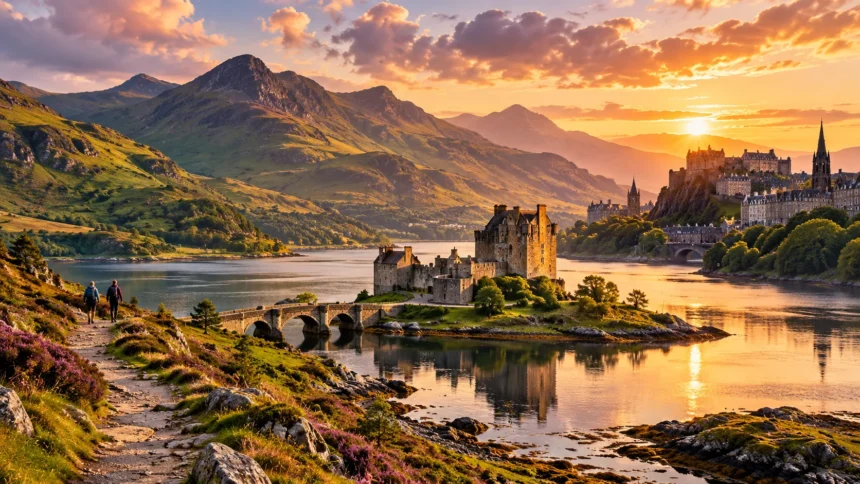
Why Scotland Is Worth Visiting
Scotland is a destination filled with dramatic mountains, historic cities, medieval castles, peaceful islands, scenic lochs, and rugged coastlines. Travelers can spend one day walking through ancient streets and the next exploring open countryside surrounded by spectacular natural scenery. This variety makes Scotland suitable for history lovers, hikers, photographers, road trippers, families, and travelers looking for memorable cultural experiences.
The country’s relatively compact size makes it possible to combine cities and countryside within the same trip. Edinburgh and Glasgow provide museums, architecture, restaurants, and nightlife, while the Highlands offer mountain landscapes, quiet villages, and famous driving routes. Islands such as Skye add another level of natural beauty with cliffs, waterfalls, coastal views, and distinctive geological formations.
Scotland also has a strong cultural identity reflected in its music, food, festivals, traditions, and historic landmarks. Castles, battlefields, old universities, fishing communities, and remote valleys reveal different parts of the country’s story. Whether you have a long weekend or several weeks, there are enough places to visit in Scotland to build an itinerary around your interests.
Explore Edinburgh and Its Historic Old Town
Edinburgh is one of the best places to begin a Scotland trip because it combines history, architecture, culture, and impressive city views. The Old Town is filled with narrow lanes, stone buildings, hidden courtyards, traditional pubs, and historic landmarks. Walking through the area gives visitors an immediate sense of the city’s medieval character and layered history.
Edinburgh Castle dominates the skyline from its position on Castle Rock and remains one of the city’s most recognizable attractions. Visitors can explore historic buildings, learn about Scotland’s royal and military past, and enjoy wide views over the city. From the castle, the Royal Mile continues downhill through the historic center toward the Palace of Holyroodhouse.
Edinburgh also offers excellent museums, restaurants, cafés, and green spaces beyond the Old Town. Travelers can climb Arthur’s Seat for panoramic views or explore the elegant streets of the New Town. Spending at least two or three days allows enough time to experience major attractions while leaving room for relaxed walks and spontaneous discoveries.
Experience the Energy of Glasgow
Glasgow provides a very different experience from Edinburgh and is especially appealing to travelers interested in music, art, architecture, shopping, and nightlife. The city has a lively personality and a strong cultural scene, with galleries, museums, performance venues, and creative neighborhoods spread across different areas. Its atmosphere feels modern while still preserving significant historic architecture.
One of Glasgow’s strengths is the number of cultural attractions visitors can explore. Museums and galleries cover everything from art and transportation to local history and design. Walking through neighborhoods such as the West End also reveals attractive streets, independent shops, restaurants, cafés, and green spaces that make the city enjoyable beyond its headline attractions.
Glasgow is also a useful base for exploring western Scotland. Loch Lomond and other scenic areas can be reached relatively easily, making it possible to combine urban sightseeing with nature. Travelers who enjoy live music and evening entertainment may want to stay longer because Glasgow’s nightlife adds another dimension to the overall Scottish city experience.
Discover the Isle of Skye
The Isle of Skye is one of Scotland’s most famous destinations and is known for dramatic landscapes, rugged mountains, waterfalls, sea cliffs, and winding roads. Photographers and outdoor travelers are especially drawn to the island because scenic views appear almost everywhere. Even short drives can reveal changing combinations of coastline, hills, rock formations, and open countryside.
Popular places include the Old Man of Storr, Quiraing, Fairy Pools, and dramatic coastal viewpoints. Some attractions require hiking over uneven ground, while others can be enjoyed with shorter walks. Weather changes quickly on Skye, so waterproof layers, comfortable footwear, and a flexible schedule are useful even when the morning begins with clear skies.
Skye deserves more than a rushed day trip if possible. Staying for two or three nights allows you to explore at a slower pace and reduces the pressure to visit several distant attractions in one day. Early mornings and evenings can also feel more peaceful, especially around well-known viewpoints that become busier during peak travel periods.
Drive Through the Scottish Highlands
The Scottish Highlands contain some of the country’s most impressive scenery, including mountains, glens, rivers, forests, and remote roads. This region is ideal for travelers who enjoy road trips and outdoor landscapes. Driving allows you to stop at viewpoints, small villages, walking trails, and quiet locations that are difficult to experience properly through a rushed tour.
Glencoe is one of the most famous Highland landscapes and is known for steep mountains and a dramatic valley setting. Visitors can enjoy short walks, longer hikes, scenic pullouts, or simply drive through while admiring the surrounding peaks. The area also has deep historical significance, giving travelers both natural beauty and cultural context.
Allow extra time when planning Highland journeys because roads can be narrow and weather may affect driving conditions. Distances on a map can look short, yet the journey often takes longer than expected. Building a slower itinerary makes it easier to stop spontaneously and appreciate the landscapes rather than spending most of the trip racing between destinations.
Visit Loch Ness and Inverness
Loch Ness is one of Scotland’s most famous natural attractions, known internationally for stories about the legendary Loch Ness Monster. Even without the mystery, the long freshwater loch offers beautiful scenery and a peaceful Highland atmosphere. Visitors can enjoy viewpoints, boat trips, nearby walking areas, and historic attractions along its shores.
Urquhart Castle is one of the most memorable sights around Loch Ness. The ruins stand beside the water and provide impressive views across the loch, combining dramatic scenery with Scottish history. Exploring the remains helps visitors understand the region’s strategic importance while also providing excellent photography opportunities during changing weather and light.
Nearby Inverness is often considered the gateway to the Highlands and makes a convenient base for exploring the surrounding region. The city offers restaurants, accommodation, riverside walks, and transportation connections. Staying in Inverness allows travelers to combine Loch Ness with other nearby destinations while enjoying the comforts of a small but lively city.
See the Beauty of Loch Lomond
Loch Lomond is one of Scotland’s most accessible scenic destinations and works particularly well for travelers visiting Glasgow. The loch is surrounded by hills, forests, villages, and walking routes, providing opportunities for both relaxation and outdoor adventure. Visitors can enjoy cruises, hiking, cycling, or simply spend time beside the water taking in the landscape.
Different parts of Loch Lomond offer different experiences. Some areas are popular with families and casual visitors, while quieter sections appeal to walkers and photographers. Travelers with more time can explore nearby villages or choose longer trails that provide elevated views across the water and surrounding countryside.
Loch Lomond can be visited as a day trip, but staying overnight creates a more relaxed experience. Early morning and evening light can make the scenery especially attractive, and fewer visitors may be present outside peak daytime hours. It is also a useful stop when traveling between Glasgow and the western Highlands.
Explore Stirling and Its Famous Castle
Stirling has played an important role in Scottish history and is one of the best destinations for travelers interested in castles and historic events. Stirling Castle stands above the surrounding landscape and has strong connections with Scottish royalty. Its impressive location alone makes it worth visiting, while the interiors and exhibitions provide deeper historical context.
The wider area is also associated with major moments in Scotland’s past. Visitors interested in famous battles and national history can explore monuments and sites connected with figures such as William Wallace and Robert the Bruce. Understanding these events makes the region more meaningful than simply viewing another collection of historic buildings.
Stirling is relatively compact, making it easy to combine several attractions within one day. It can work as a day trip from Edinburgh or Glasgow, although an overnight stay allows a slower pace. The city also provides a convenient transition point between Scotland’s central urban areas and more rural destinations farther north.
Discover St Andrews and the Fife Coast
St Andrews is internationally known as the historic home of golf, but the town offers much more than famous courses. Visitors can explore old university buildings, castle ruins, cathedral remains, beaches, and attractive streets filled with cafés and small shops. The combination of history and coastal scenery makes the town appealing even to travelers with no interest in golf.
The ruined cathedral is particularly impressive because its remains reveal the scale of what was once an important religious center. St Andrews Castle provides another historic stop overlooking the coast. Walking between these attractions allows visitors to experience much of the town on foot while enjoying views toward the North Sea.
Travelers with additional time can explore the wider Fife coastline, including small fishing villages and coastal walking routes. These communities provide a quieter contrast to Scotland’s larger cities. Combining St Andrews with the surrounding coast can create a rewarding day focused on historic architecture, sea views, local food, and relaxed village atmosphere.
Visit Cairngorms National Park
Cairngorms National Park is an excellent destination for travelers who enjoy mountains, forests, wildlife, and outdoor activities. The large park contains varied landscapes, from open high ground to wooded valleys and rivers. Hiking, cycling, wildlife watching, skiing, and scenic driving are among the activities visitors can enjoy depending on the season.
Walking routes range from gentle forest paths to more demanding mountain hikes. Travelers should select routes according to their experience because conditions can change quickly at higher elevations. Proper clothing, waterproof layers, navigation, food, and water become increasingly important when leaving easy visitor areas for longer mountain adventures.
The Cairngorms also contain towns and villages that provide accommodation and convenient bases for exploring the park. Spending several nights allows visitors to experience both active outdoor days and slower moments in local communities. The region works especially well for people who want Scotland’s mountain scenery without focusing entirely on coastal destinations.
Explore Fort William and Ben Nevis
Fort William sits beneath some of Scotland’s most dramatic mountain scenery and is a popular destination for outdoor travelers. The town provides access to hiking routes, nearby glens, scenic drives, and famous landscapes across the western Highlands. It also makes a practical stop when traveling between Glencoe, Loch Ness, and other Highland destinations.
Ben Nevis, the highest mountain in the United Kingdom, attracts hikers from around the world. Reaching the summit is a serious undertaking that requires suitable fitness, preparation, clothing, and awareness of mountain weather. Travelers who do not want a demanding hike can still appreciate the mountain from lower trails and viewpoints around the area.
Fort William is also associated with scenic rail journeys and routes through remarkable Highland landscapes. Visitors can combine outdoor activities with quieter sightseeing around nearby lochs and valleys. Staying for several nights is worthwhile if hiking is a priority, particularly because poor weather may require flexibility when planning mountain activities.
Visit the Orkney Islands
The Orkney Islands offer a fascinating combination of archaeology, coastal scenery, wildlife, and island culture. Ancient stone circles, prehistoric settlements, and historic sites reveal thousands of years of human activity. Travelers interested in archaeology can find some of Scotland’s most remarkable historical attractions across these remote northern islands.
The landscapes are open and windswept, with dramatic coastlines, beaches, farmland, and seabird habitats creating a distinctive environment. Driving or cycling provides flexibility when exploring different sites. Weather can change rapidly, so visitors should prepare for wind and rain even during periods that begin with pleasant sunshine.
Orkney requires more travel planning than destinations on mainland Scotland, but the effort can be highly rewarding. Spending several days allows enough time to visit major archaeological sites while also experiencing villages and coastal landscapes. The islands are especially suitable for travelers who enjoy history, slower travel, and destinations with a strong sense of place.
Experience Scotland’s Castles and Scenic Road Trips
Castles appear throughout Scotland, ranging from restored royal residences to atmospheric ruins beside lochs and cliffs. Edinburgh, Stirling, Eilean Donan, and many smaller castles each provide different experiences. Including several in your itinerary gives you a broader understanding of Scotland’s royal, military, and clan history without visiting the same type of attraction repeatedly.
Road trips are one of the best ways to connect these landmarks with Scotland’s natural scenery. Routes through the Highlands, western coast, and northern regions include mountains, beaches, lochs, villages, and castles along the way. Driving gives you flexibility to stop at smaller attractions that may not appear on a typical organized tour.
Keep daily driving distances reasonable so you have enough time to explore outside the vehicle. Narrow roads, changing weather, and frequent scenic stops can make journeys slower than expected. A successful Scotland road trip should feel relaxed, allowing you to discover unexpected viewpoints and villages rather than treating every day as a race between famous locations.
Plan the Best Scotland Itinerary
A first-time Scotland itinerary should usually combine at least one city with countryside or Highland scenery. Edinburgh works well for history and architecture, while the Highlands, Loch Lomond, or Skye provide a strong contrast. A week gives enough time for several highlights, but ten to fourteen days allows a much more comfortable travel pace.
Travelers with limited time should resist trying to see every famous location. Edinburgh, Skye, Inverness, and Glasgow may look relatively close on a map, but driving and sightseeing can consume more time than expected. Selecting two or three regions creates a more enjoyable journey and leaves space for spontaneous discoveries.
Weather should also remain part of your planning. Rain and wind can occur throughout the year, particularly in mountain and coastal areas. Pack waterproof layers, comfortable shoes, and clothing that can be adjusted easily. A flexible itinerary makes it simpler to move outdoor activities around when conditions change unexpectedly.
Conclusion
The best places to visit in Scotland offer an impressive mix of historic cities, dramatic mountains, scenic lochs, castles, islands, and coastal landscapes. Edinburgh, Glasgow, Skye, the Highlands, Loch Ness, Stirling, and national parks provide enough variety to create a memorable first trip.
Travelers with more time can explore destinations such as St Andrews, Orkney, Fort William, and smaller Highland communities. These places reveal a quieter side of Scotland beyond the major attractions. Combining famous landmarks with scenic road trips and spontaneous stops often creates the most rewarding experience.
The key is to avoid rushing. Scotland’s landscapes and historic towns are best enjoyed when you have time to walk, explore, and adjust plans around changing weather. With a flexible itinerary and realistic travel distances, Scotland can deliver an unforgettable combination of nature, culture, history, and adventure.
FAQs
What are the best places to visit in Scotland for first-time travelers?
Edinburgh, the Scottish Highlands, Isle of Skye, Loch Ness, Glasgow, and Stirling are excellent choices. Together, they provide a strong mixture of history, cities, castles, mountain scenery, and traditional Scottish landscapes.
How many days do you need to visit Scotland?
Seven days is enough for a focused itinerary covering a few major destinations. Ten to fourteen days is better if you want to combine Edinburgh, the Highlands, islands, castles, and scenic road trips.
What is the best time of year to visit Scotland?
Late spring through early autumn offers longer daylight hours and better conditions for sightseeing. However, Scotland’s weather remains unpredictable, so waterproof clothing and flexible plans are useful during any season.
Is Scotland good for a road trip?
Yes. Scotland is excellent for road trips because scenic routes connect castles, lochs, mountain valleys, villages, and coastal landscapes. Keep driving distances reasonable so you have enough time for stops and exploration.
Which Scottish island is best for first-time visitors?
The Isle of Skye is one of the most popular choices because of its dramatic mountains, cliffs, waterfalls, and scenic drives. Staying several nights provides enough time to explore without rushing.


