Before I had my daughter, I thought I had a pretty good handle on what parenthood would throw at me. I’d read the books, sat through the classes with my husband, organized the nursery down to the last onesie. What I didn’t prepare for, oddly enough, was how much time I’d spend thinking about the fifteen square feet behind my driver’s seat.
My husband and I have an 18-month-old daughter who, like most toddlers her age, has strong opinions about everything from her socks to the temperature of her applesauce. We drive a 2022 Subaru Outback that has become, without exaggeration, the third member of our family’s daily routine. Daycare drop-off, grocery runs, weekend errands, visits to my in-laws two counties over—that car sees a lot of us.
For the first several months, I honestly didn’t think much about the logistics of driving with a baby. She was in her infant seat, rear-facing, mostly asleep or content, and my factory rearview mirror gave me just enough of a glimpse to feel reassured. I could see the top of her head and hear her breathing during quiet stretches, and that was enough.
Things changed as she got older.
When “Fine” Started Feeling Like a Guess
Somewhere around a year old, she became an entirely different passenger. She started grabbing at her car seat straps, flinging toys onto the floor with the enthusiasm of a tiny discus thrower, and testing out new sounds — some happy, some clearly not. The rearview mirror, which used to feel like enough, suddenly felt like a keyhole. I could hear her fussing, but I couldn’t tell if she’d dropped her favorite stuffed rabbit, was overheated, or was working herself into a full meltdown.
I found myself doing this awkward half-glance over my shoulder at red lights, craning my neck in a way that probably wasn’t great for my posture or my attention on the road. My husband would ask, “What’s going on back there?” and I’d have to admit, “I genuinely don’t know.”
It’s a strange kind of low-grade stress that builds up over weeks of driving. Nothing dramatic happens most days. She fusses, she settles, we get where we’re going. But that not-knowing — that gap between hearing something and understanding it — started to wear on me in a way I didn’t expect.
The Road Trip That Changed My Mind
The moment that really pushed me to do something about it happened on a family road trip. We were headed to visit my parents, about three and a half hours away, which at the time felt like a manageable stretch for a toddler who was still napping twice a day. My husband was riding shotgun, and I was driving, feeling fairly confident because, hey, we had backup. Two adults in the front seat, surely one of us would notice if something was wrong.
About two hours in, she started crying. Not the quick fuss-and-settle kind, but the kind that escalates and doesn’t stop. My husband turned around as far as his seatbelt would allow, trying to assess the situation, but from the front seat, even with two of us listening and guessing, we couldn’t figure out what was happening. Had she dropped something important? Was her sock bunched up in an uncomfortable way? Was she just overtired and cranky?
We ended up pulling into a gas station to check on her properly. Turned out her sippy cup had rolled out of reach and she was overheated because the sun had shifted onto her side of the car. Nothing serious, but it took us fifteen minutes of driving distracted and worried to get to that answer, fifteen minutes where my husband and I were both more focused on guessing what was wrong than on the actual road.
That drive stuck with me. Not because anything catastrophic happened, but because I realized how much mental energy I was spending not knowing. And with longer trips clearly becoming part of our normal life, more family visits, maybe an actual vacation at some point, I didn’t want every road trip to include that same scramble.
Learning to Ask Better Questions About Car Gear
After that trip, I started doing what I do best when I’m anxious about something: research. I fell into the same rabbit hole a lot of parents probably know well: car seat forums, mom Facebook groups, product review sites, and a lot of scrolling at 11pm while my daughter slept.
What I learned pretty quickly is that “baby monitor for the car” is a broader category than I expected. Some options were separate screens you’d mount on the dashboard, which meant one more device competing for space near my steering wheel and one more thing to charge before a trip. Others were camera-only setups that clipped onto the headrest but didn’t give you an easy way to actually view the feed without pulling out your phone, which is obviously not something you want to be doing while driving.
I wasn’t looking for something flashy. I wanted something simple that solved one specific problem: giving me a quick, glanceable way to check on my daughter without needing an extra gadget bolted to my dashboard or a phone propped up somewhere it shouldn’t be.
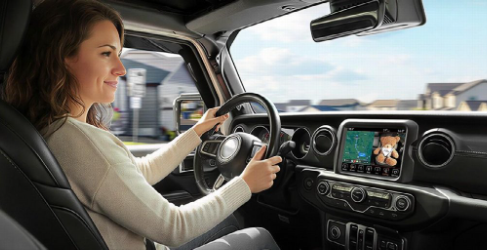
That’s how I came across the Joytutus Cabin Connect Wireless CarPlay Baby Monitor. What caught my attention was the CarPlay integration — the camera feed shows up right on the same screen I already use for navigation and music, instead of needing a separate monitor mounted somewhere else in the car. Since our Outback already has CarPlay built in, it felt like a more streamlined fit for how we actually use the car, rather than adding another accessory competing for space near the dash.
From what I’ve read about it, the camera has a 1080P resolution, a 150-degree wide-angle view, and infrared night vision for driving after dark — all things that made sense for our situation, since a good chunk of our trips happen during nap time or early evening. I’m not going to pretend I’ve run some kind of formal comparison against every product out there. I picked it because it solved the specific annoyance I had — no separate screen, no extra step to check the feed — and it’s been part of our setup since.
What I’ve Actually Changed About How We Drive
I want to be honest here: having a camera in the car hasn’t turned me into a hands-off parent who just watches a screen instead of paying attention to the road. If anything, it’s made me more aware of how important it is to keep my eyes where they belong, which is on driving, not on a monitor.
What’s changed is smaller and more practical than I expected. Instead of twisting around at a red light or asking my husband to play detective from the passenger seat, I can get a quick visual sense of what’s going on with a glance at the screen I’m already using for the map. If she’s dropped a toy, I can see that in a second instead of guessing. If she’s just working through some overtired grumbling and not actually in distress, that’s useful information too; it tells me whether we can keep driving or whether we genuinely need to pull over.
And that’s the other thing I’ve gotten more disciplined about: pulling over. A monitor, no matter how good the camera is, doesn’t replace actually checking on your kid. If she needs her cup, her strap adjusted, or just some direct reassurance, that still means finding a safe place to stop the car. I don’t think any camera setup should be treated as a substitute for that. It’s a tool that helps me understand what’s happening back there a little faster; it’s not a stand-in for actually attending to her when she needs it.
Small Adjustments That Made a Bigger Difference Than I Expected
Looking back, a lot of what’s made road trips easier isn’t one big fix; it’s a handful of small, practical adjustments.
We got better about pre-loading snacks and drinks within her reach before we start driving, so we’re not troubleshooting a dropped cup an hour into the trip. We started timing longer drives around her nap schedule more intentionally instead of just hoping she’d sleep. And we built in actual stops, not just gas station bathroom breaks, but planned ten-minute stretches where we get her out of the seat, let her move around, and reset before the next leg.
The camera setup fits into that same category of small, practical changes. It’s not the reason our trips go smoothly, but it’s removed one specific source of stress: the not-knowing. I don’t have to guess anymore whether a cry means “mildly annoyed” or “actual problem.” I can get a quick read and decide accordingly, without taking my attention off driving to do it.
If you’re a parent who’s found yourself doing the awkward mirror-glance-and-guess routine, or if longer drives are starting to feel more stressful as your kid gets more mobile and more vocal, I get it. It’s a strange kind of parenting problem — not dramatic, just persistently uncomfortable. For us, adjusting our routine and adding a simple way to check the back seat made a real difference, even if it’s not something that shows up in any baby milestone app.
Since going down this research rabbit hole, I’ve also poked around at what else is out there for family car setups — organizers, sunshades, that kind of thing. Joytutus turned out to have a broader lineup of car travel accessories beyond just the monitor, which was useful to know since our road-trip gear list seems to grow every time we take a longer trip.
At the end of the day, none of this is about having the “right” gear or the most advanced setup. It’s about figuring out, trip by trip, what actually makes the drive easier for your specific kid and your specific car. For us right now, that’s meant snacks within reach, a nap-friendly schedule, planned stops, and a quick way to glance at what’s happening in the back seat without taking my eyes off the road for too long. It’s not a perfect system. But it’s a lot better than the guessing game we started with.