
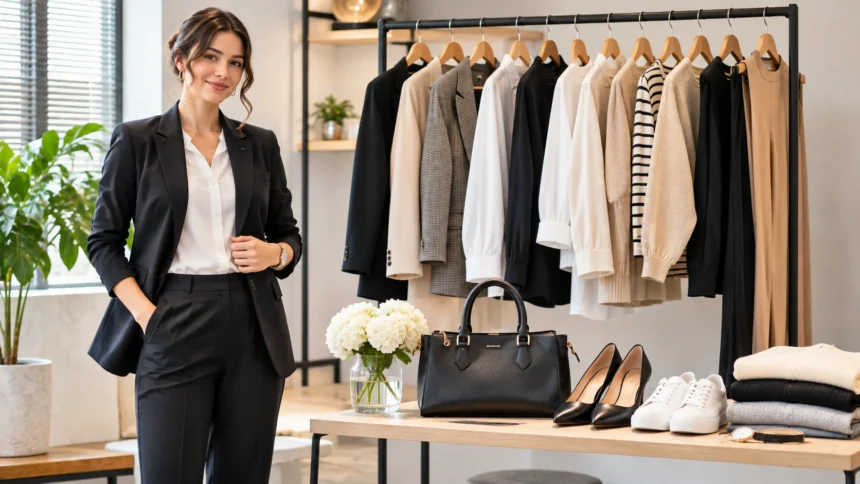
Getting dressed for work every morning can feel challenging when your wardrobe contains too many pieces that do not work well together. Choosing suitable outfits, coordinating colors, and finding comfortable professional clothing can take unnecessary time. Fortunately, creating an office capsule wardrobe can simplify everyday dressing while helping you develop a practical and versatile personal style.
An office capsule wardrobe includes a carefully selected collection of clothing that can be mixed and matched to create different work outfits. Instead of purchasing numerous garments, the focus is on comfortable basics, coordinating colors, and pieces suited to your workplace. Whether you prefer business casual clothing or more formal outfits, this guide explores essential wardrobe items, styling ideas, and practical tips for building a functional work wardrobe.
What Is an Office Capsule Wardrobe?
An office capsule wardrobe is a small collection of professional clothing selected to work together across different outfits. It usually includes versatile trousers, shirts, sweaters, jackets, and suitable footwear. The aim is to simplify everyday dressing without limiting personal style. Each item should serve a practical purpose and coordinate with several other pieces.
Unlike a traditional wardrobe filled with unrelated clothing, a capsule collection focuses on useful combinations. For example, one blazer may work with multiple trousers, skirts, or dresses. Similarly, neutral shirts can complement different jackets and accessories. This approach makes it easier to create fresh outfits without purchasing something new for every occasion.
An office capsule wardrobe does not require following strict rules about clothing quantities. Some people prefer a compact collection, while others need additional options for different work environments. The right size depends on personal preferences, laundry routines, and professional responsibilities. Comfort, practicality, and versatility should guide the selection process.
Benefits of Building a Capsule Wardrobe for Work
One of the main benefits of a work capsule wardrobe is saving time during busy mornings. When clothing pieces coordinate easily, selecting an outfit becomes more straightforward. You spend less time comparing unrelated garments or searching for suitable combinations. This can make preparing for work feel more organized and convenient.
A capsule wardrobe can also support thoughtful spending habits. Instead of purchasing clothing simply because it is fashionable or discounted, you can focus on items that meet actual wardrobe needs. Versatile garments may provide greater value because they work across multiple outfits. However, building a capsule wardrobe does not require replacing clothing you already own.
Another advantage is improved wardrobe organization. A smaller collection of frequently worn pieces can make storage and maintenance easier. You may also notice which clothing items need repairs or alterations. These benefits help create a practical wardrobe that supports everyday work activities and personal fashion preferences.
How to Start an Office Capsule Wardrobe
The first step in creating an office capsule wardrobe is reviewing the clothing you already own. Identify garments that fit comfortably, suit your workplace, and work well with other pieces. Separate frequently worn essentials from items that rarely meet your needs. This helps you understand your existing wardrobe before purchasing anything.
Next, consider your workplace dress code and daily activities. A formal corporate environment may require structured trousers, blazers, and traditional footwear. A business casual office may allow jeans, knitwear, and relaxed shirts. Choosing clothing according to your actual work environment makes the collection more useful.
Finally, identify gaps in your existing clothing combinations. You may need a reliable pair of trousers, an additional shirt, or suitable seasonal footwear. Prioritize these practical needs instead of buying an entirely new collection. Building gradually allows you to make thoughtful decisions and develop a wardrobe that reflects your personal style.
Essential Tops and Shirts for Office Outfits
Tops and shirts form the foundation of many professional outfits. A practical collection may include button-down shirts, simple blouses, lightweight knit tops, and comfortable basic T-shirts when workplace rules permit them. Choosing suitable fabrics and reliable fits helps these garments work across different combinations. Their colors should complement your existing trousers and layers.
A white or light-colored button-down shirt can be paired with tailored trousers, skirts, or a blazer. Neutral knit tops also provide flexible options for business casual environments. Some people prefer relaxed silhouettes, while others enjoy structured designs. Choose styles that allow comfortable movement during ordinary work activities.
Fabric care is another important consideration when selecting office tops. Some materials require ironing or delicate washing, while others are easier to maintain. Review garment labels before purchasing and consider your daily routine. Clothing that is comfortable and convenient to care for is more likely to become a useful wardrobe essential.
Choose Versatile Trousers and Work Pants
Trousers are important components of an office capsule wardrobe because they can be styled with many different tops. Straight-leg, wide-leg, and tapered designs provide practical options for professional settings. Neutral colors such as black, navy, gray, and beige are particularly versatile. However, your collection can also include colors you enjoy wearing.
A pair of tailored black trousers can work with blouses, shirts, sweaters, and blazers. Beige or navy trousers provide additional outfit combinations without requiring complicated styling. Chinos may also be appropriate for workplaces with more relaxed dress codes. Selecting different cuts allows you to experiment with personal preferences.
When buying work trousers, check the waistband, leg length, and overall comfort. Sit, walk, and move naturally to evaluate the fit. Some garments may require minor hemming adjustments to match your preferred footwear. Choosing trousers that support everyday activities is more useful than selecting them solely for appearance.
Add Blazers, Cardigans, and Smart Layers
Layering pieces can transform simple clothing combinations into more structured office outfits. Blazers, cardigans, and lightweight jackets provide flexibility for different workplace environments and temperatures. A well-chosen layer can complement several tops and trousers. This makes outer layers valuable additions to a compact professional wardrobe.
A neutral blazer can be paired with tailored pants for meetings or worn with appropriate jeans in business casual offices. Cardigans provide another option for comfortable everyday dressing. During cooler weather, a lightweight sweater may work beneath a jacket. These combinations allow familiar garments to serve different purposes.
Choose layers that fit comfortably over the clothing you normally wear underneath. Shoulder movement, sleeve length, and fabric thickness influence everyday convenience. Avoid purchasing pieces that require constant adjustment or feel restrictive. A practical selection of layers helps your wardrobe adapt to changing seasons and professional occasions.
Office Capsule Wardrobe Ideas With Dresses and Skirts
Dresses and skirts can provide additional variety within a professional capsule wardrobe. Shirt dresses, wrap dresses, midi skirts, and simple structured designs may suit different workplace environments. Their suitability depends on the dress code and your personal preferences. Selecting versatile pieces helps create several outfits without excessive clothing purchases.
A simple dress can be paired with a blazer for a meeting or worn with a cardigan during an ordinary office day. Similarly, a neutral skirt can complement several shirts and sweaters. Accessories and footwear can change the overall appearance. These combinations make dresses and skirts useful options for a flexible wardrobe.
Pay attention to garment fit, fabric, and movement when choosing dresses or skirts. Clothing should remain comfortable while sitting, walking, and completing daily tasks. Some workplaces have specific expectations regarding garment length or style. Understanding these requirements helps you select items that work naturally within your professional environment.
Best Colors for an Office Capsule Wardrobe
Choosing coordinating colors can make an office capsule wardrobe easier to organize. Neutral shades such as black, white, navy, gray, beige, and brown are common foundations because they combine easily. However, a capsule wardrobe does not need to exclude brighter colors. Personal style should remain an important part of the process.
One practical approach is selecting two or three main colors that work well together. Additional shades can be introduced through shirts, sweaters, or accessories. For example, navy trousers may complement white, light blue, cream, or patterned tops. Coordinating colors provides variety without making outfit planning complicated.
Patterns can also be included when they suit your preferences and workplace. Subtle stripes, checks, and small prints may coordinate with solid-colored basics. Bold patterns can work as statement pieces within an otherwise simple collection. The goal is to create combinations you enjoy rather than follow a fixed color formula.
Choose Comfortable Shoes and Practical Accessories
Footwear is an essential part of a work wardrobe because it affects comfort throughout the day. Loafers, flats, ankle boots, and other suitable shoes can complement different office outfits. Some workplaces also allow clean, simple sneakers. The most appropriate footwear depends on dress expectations and daily activities.
A small selection of versatile shoes may be enough for several outfit combinations. Neutral footwear can work with trousers, skirts, dresses, and other wardrobe pieces. Consider walking distance, weather, and the amount of time spent standing. Comfortable fit and suitable support should guide your purchasing decisions.
Accessories provide additional styling opportunities without requiring numerous garments. Belts, scarves, bags, watches, and jewelry can introduce different colors or textures. Choose items that reflect your preferences and practical needs. A few versatile accessories can refresh familiar outfits while keeping the wardrobe organized and manageable.
Easy Office Capsule Wardrobe Outfit Combinations
Creating outfits becomes easier when the main wardrobe pieces coordinate naturally. One simple combination involves tailored trousers, a button-down shirt, and comfortable loafers. Adding a blazer can create a more formal appearance when needed. This outfit works well for many professional settings, depending on workplace expectations.
For a relaxed business casual look, consider chinos with a lightweight sweater and suitable shoes. Another option involves straight-leg trousers paired with a knit top and cardigan. These combinations provide comfortable alternatives to structured outfits. Small changes in colors and accessories can create different looks using the same clothing pieces.
Dresses and skirts also offer useful styling flexibility. A neutral midi dress can be worn with different jackets, while a skirt may complement several tops. Experiment with combinations before purchasing additional garments. Discovering new ways to wear existing clothing can make a compact wardrobe feel more versatile.
How to Create a Seasonal Office Capsule Wardrobe
Seasonal changes can influence the fabrics, layers, and footwear required for comfortable office dressing. During warmer months, lightweight shirts, breathable trousers, and suitable dresses may be practical choices. Cooler conditions often require sweaters, coats, and additional layers. A flexible wardrobe can accommodate these differences without complete replacement.
Start by identifying clothing that works across several seasons. Neutral trousers, button-down shirts, and lightweight cardigans may remain useful throughout much of the year. Add seasonal pieces only when necessary. This approach helps reduce unnecessary purchases and makes wardrobe transitions easier.
Storage and garment care also matter when changing seasonal clothing. Clean items before storing them and follow their care instructions. Keep frequently used garments accessible while placing less relevant pieces in suitable storage. A simple seasonal review helps maintain organization and identify useful wardrobe adjustments.
Common Office Capsule Wardrobe Mistakes to Avoid
One common mistake is purchasing an entirely new wardrobe before reviewing existing clothing. This can create unnecessary expenses and lead to items that are rarely worn. Begin with garments that already fit comfortably and suit your daily needs. New purchases should address practical gaps rather than duplicate useful pieces.
Another mistake involves following strict capsule wardrobe rules that do not match your lifestyle. Some people require additional clothing because of workplace expectations, climate, or laundry schedules. Others prefer a smaller collection. The right wardrobe should make everyday dressing easier rather than create pressure to meet an arbitrary number.
Ignoring garment care and fit can also reduce the usefulness of a capsule wardrobe. Clothing that requires complicated maintenance or feels uncomfortable may remain unused. Choose practical materials and make minor alterations when necessary. A successful capsule collection depends on how well its pieces support everyday life.
Conclusion
An office capsule wardrobe offers a practical way to simplify workday dressing while maintaining comfort and personal style. Versatile trousers, shirts, blazers, sweaters, and suitable footwear can create numerous outfit combinations. Coordinating colors and thoughtful layering make styling easier. The collection should reflect your workplace requirements and personal preferences.
Building a useful capsule wardrobe does not require expensive purchases or strict clothing limits. Start with existing garments, identify missing essentials, and gradually add pieces that coordinate with your wardrobe. Choosing comfortable fabrics and reliable fits helps improve everyday convenience. Proper care and organization can also extend the usefulness of your clothing.
Ultimately, a capsule wardrobe is about making thoughtful clothing choices rather than limiting creativity. A smaller collection of versatile garments can support different professional occasions and seasonal needs. Experiment with outfit combinations and adjust the wardrobe as your preferences change. With practical planning, you can develop a professional style that feels organized, comfortable, and easy to maintain.
Frequently Asked Questions (FAQs)
What is an office capsule wardrobe?
An office capsule wardrobe is a carefully selected collection of versatile work clothing that can be mixed and matched. It usually includes trousers, tops, layers, shoes, and accessories suited to your workplace.
How many pieces should an office capsule wardrobe have?
There is no fixed number of items required. Some people prefer around 15 to 25 core clothing pieces, excluding accessories, while others need more. The ideal quantity depends on work routines and personal needs.
What are the essential items for a work capsule wardrobe?
Useful essentials include tailored trousers, button-down shirts, comfortable knit tops, a blazer, a cardigan, and suitable office footwear. Dresses, skirts, and accessories can provide additional variety according to personal preferences.
What colors work best for an office capsule wardrobe?
Neutral colors such as black, navy, gray, beige, and white are versatile because they coordinate easily. You can also include brighter colors and patterns to reflect your personal style.
How can I build an office capsule wardrobe on a budget?
Start with clothing you already own, identify practical gaps, and purchase versatile pieces gradually. Consider secondhand options, maintain garments properly, and avoid buying items that do not coordinate with your existing wardrobe.


