
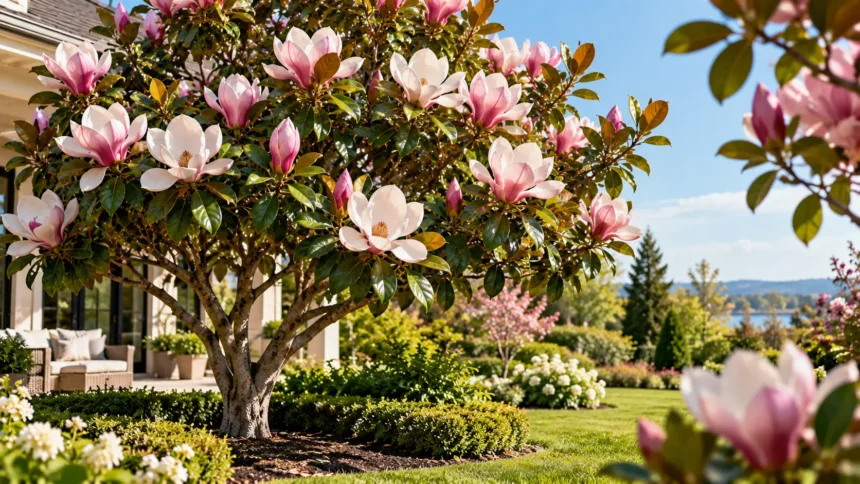
Magnolia trees are among the most beautiful flowering trees, admired for their large blossoms, elegant branches, and attractive foliage. These ornamental trees bring natural beauty to gardens, landscapes, and outdoor spaces with their impressive spring or summer flowers. Depending on the variety, magnolia flowers may appear white, pink, purple, yellow, or creamy, creating a stunning display that attracts attention throughout the blooming season.
Growing a healthy magnolia tree requires understanding its sunlight, soil, watering, and maintenance needs. Although many varieties are relatively easy to care for once established, young trees benefit from consistent attention during their early growing years. This guide explains magnolia tree care, growing tips, popular varieties, pruning techniques, and common problems to help you grow a beautiful, long-lasting tree.
What Is a Magnolia Tree?
Magnolia trees belong to the Magnoliaceae family and are known for their distinctive flowers and attractive growth habits. These flowering trees are native to different regions of Asia and the Americas, where they grow in various climates and natural environments. Some species develop into large shade trees, while others remain compact enough for smaller gardens and residential landscapes.
One of the most recognizable features of magnolia trees is their large, often fragrant blossoms that appear during spring or summer. Many deciduous varieties produce flowers before new leaves emerge, creating an impressive seasonal display. Evergreen magnolias maintain their foliage throughout the year, providing greenery and decorative value even when the trees are not actively flowering.
Magnolia trees are popular in landscaping because they combine ornamental beauty with long-term garden value. Their distinctive flowers, attractive leaves, and natural branching patterns make them excellent focal points. Choosing a species that matches the available space, local climate, and soil conditions helps ensure successful growth and reduces the need for complicated maintenance.
Best Growing Conditions for Magnolia Trees
Magnolia trees grow best when their planting location provides enough sunlight, suitable soil, and protection from stressful environmental conditions. Most varieties prefer full sun to partial shade, although their individual requirements vary. Selecting a location that receives sufficient natural light encourages strong growth, healthy foliage, and reliable flowering during the appropriate blooming season.
Space is another important factor because magnolia trees vary considerably in mature height and canopy width. Large varieties need enough room to develop their natural branching structure without becoming crowded by buildings or nearby trees. Smaller cultivars are better suited to compact gardens, courtyards, and residential landscapes where available planting space may be limited.
Young magnolia trees can benefit from protection against strong winds and extreme temperature changes. Late spring frosts may damage developing flower buds on early-blooming deciduous varieties, particularly in colder regions. Choosing a sheltered location with good drainage and appropriate sunlight creates favorable conditions for healthy growth while reducing unnecessary environmental stress.
How Much Sunlight Does a Magnolia Tree Need?
Most magnolia trees perform best in locations receiving approximately six hours of direct sunlight daily. Adequate light encourages healthy foliage development and supports the production of attractive flowers. However, some species tolerate partial shade, especially in warmer climates where intense afternoon sunlight may create additional stress during hot summer weather.
Deciduous magnolias generally flower most abundantly when they receive sufficient sunlight throughout the growing season. Trees planted in heavily shaded locations may produce fewer blossoms and develop a less balanced branching structure. Observing how sunlight moves across your garden helps identify suitable planting positions before introducing a young magnolia tree into the landscape.
In particularly hot regions, some magnolias benefit from morning sunlight combined with light afternoon shade. This arrangement can reduce moisture stress while still providing enough light for healthy growth. Because different varieties have different tolerances, matching the tree’s requirements with your local climate is more effective than applying the same lighting recommendations to every magnolia.
Choosing the Right Soil for Magnolia Trees
Magnolia trees generally prefer fertile, well-draining soil enriched with organic matter. Many species grow particularly well in slightly acidic conditions, although suitable soil pH varies among varieties. A loose, moisture-retentive growing environment supports root development without allowing excessive water to accumulate around the underground portions of the tree.
Heavy clay soil can create difficulties when drainage is poor, especially during periods of frequent rainfall. Adding organic matter over time may improve soil structure, but planting directly into a poorly draining location can still create problems. Before planting, observe how quickly water drains from the area and choose another location if the soil remains waterlogged.
Applying organic mulch around the base of a magnolia tree helps conserve moisture and moderate soil temperatures. Materials such as shredded bark or leaf compost can gradually improve the surrounding soil as they decompose. Keep mulch away from direct contact with the trunk to reduce moisture-related damage and encourage healthy conditions around the root system.
How to Plant a Magnolia Tree Correctly
The best planting time depends on the magnolia variety and local climate, but mild weather generally helps young trees establish successfully. Deciduous magnolias are often planted during dormancy, while container-grown evergreen varieties may be planted during suitable spring or autumn conditions. Avoid planting during periods of extreme heat, severe frost, or unusually wet weather.
Begin by selecting a location that accommodates the tree’s expected mature height and spread. Dig a planting hole approximately twice as wide as the root ball but no deeper than its existing root system. Position the tree so the root flare remains at or slightly above the surrounding soil surface, helping prevent problems caused by planting too deeply.
Backfill the hole using the excavated soil unless local conditions require a different planting approach. Water thoroughly to settle the soil around the roots and remove large air pockets. Finish by applying a layer of organic mulch around the planting area, leaving a small gap beside the trunk to support healthy establishment.
How Often Should You Water Magnolia Trees?
Newly planted magnolia trees require consistent soil moisture while their root systems become established. During the first growing seasons, check the surrounding soil regularly and water deeply when conditions begin to dry. The exact frequency depends on rainfall, temperature, soil drainage, and tree size, making observation more reliable than a rigid watering schedule.
Established magnolia trees often tolerate moderate periods of dryness, although prolonged drought can reduce growth and flowering. Deep watering during extended dry weather encourages moisture to reach the active root zone. Frequent shallow watering is generally less effective because it may leave deeper portions of the soil insufficiently moist during demanding summer conditions.
Excessive watering can be just as harmful as prolonged dryness, particularly in poorly draining soils. Yellowing leaves, declining growth, and persistently saturated ground may indicate root stress. Maintaining evenly moist but well-drained conditions during establishment, followed by appropriate watering during dry periods, helps support strong roots and healthy foliage.
Ideal Temperature and Climate for Magnolia Trees
Magnolia trees grow across a wide range of climates because different species have adapted to varying temperatures and seasonal conditions. Some deciduous magnolias tolerate cold winters, while evergreen varieties such as southern magnolia generally prefer milder regions. Checking the recommended hardiness zone for a particular species is essential before choosing it for your garden.
Early-flowering magnolias can be vulnerable to late frosts because their buds sometimes open before the risk of freezing temperatures has passed. A sudden cold spell may damage blossoms even when the tree itself remains healthy. Selecting later-blooming varieties or planting in suitable protected locations can reduce the likelihood of disappointing spring flower displays.
Hot weather presents different challenges, especially for young trees with developing root systems. Adequate soil moisture and organic mulch help moderate temperature fluctuations around the roots. Choosing climate-appropriate varieties and avoiding unnecessary environmental stress allows magnolia trees to develop more reliably while maintaining attractive foliage and seasonal flowering.
How to Fertilize Magnolia Trees for Healthy Growth
Magnolia trees growing in fertile garden soil may require little additional fertilizer once established. Their nutritional needs depend on soil quality, growth rate, and overall tree condition. Before applying fertilizer, consider whether the tree shows signs of nutrient deficiency, because unnecessary feeding can create problems rather than improve healthy plant development.
When fertilizer is needed, a balanced slow-release product suitable for ornamental trees may provide useful nutrients. Early spring is often an appropriate application period for actively growing magnolias, depending on the species and local conditions. Following product instructions and using soil test results when available helps prevent excessive application and unnecessary salt accumulation.
Overfertilizing may encourage excessive leafy growth, damage sensitive roots, or interfere with the tree’s natural development. Yellowing foliage should not automatically be treated with fertilizer because poor drainage, unsuitable soil pH, or environmental stress can produce similar symptoms. Addressing the underlying problem supports healthier growth than repeatedly applying nutrients without identifying the actual cause.
Popular Magnolia Tree Varieties for Gardens
Southern magnolia, botanically known as Magnolia grandiflora, is a well-known evergreen species admired for its glossy green leaves and large, fragrant white flowers. It can develop into a substantial landscape tree in suitable climates. Compact cultivars such as ‘Little Gem’ offer a smaller growth habit, making them useful where traditional southern magnolias would become too large.
Saucer magnolia, commonly classified as Magnolia × soulangeana, produces impressive pink, white, or purple-toned blossoms during early spring. Star magnolia, Magnolia stellata, is another popular deciduous species with delicate, star-shaped flowers. Both are admired for their seasonal beauty, although exposed flower buds may suffer damage when unexpected late frosts occur.
Sweetbay magnolia, Magnolia virginiana, produces fragrant white flowers and grows well in suitable moist conditions. Magnolia liliiflora offers striking purple or pink blossoms, while yellow-flowering hybrids provide additional ornamental choices. Each variety differs in size, climate tolerance, growth rate, and flowering characteristics, so careful selection helps achieve the desired garden appearance.
How to Grow Magnolia Trees in Small Gardens
Growing magnolia trees in smaller gardens is possible when suitable compact varieties are selected. Some cultivars remain significantly smaller than full-sized landscape species, making them appropriate for limited outdoor spaces. Understanding the mature height and canopy width helps prevent overcrowding and reduces the need for excessive pruning as the tree develops.
Compact magnolias can create attractive focal points near patios, garden borders, or open lawn areas. However, even smaller trees need enough space for healthy root development and adequate air circulation. Avoid positioning them too close to buildings, underground utilities, or narrow pathways where expanding branches could eventually interfere with surrounding structures.
Certain dwarf or slow-growing magnolia cultivars can also grow in large containers when suitable care is provided. Container-grown trees need dependable drainage, consistent moisture monitoring, and occasional root management. Because restricted root space can limit long-term growth, choose varieties specifically suited to container cultivation rather than attempting to confine naturally large magnolia species.
When and How to Prune Magnolia Trees
Magnolia trees generally require less pruning than many ornamental landscape plants because their natural branching structure contributes to their appearance. Removing dead, damaged, or diseased branches helps maintain tree health and improves safety. Extensive pruning should usually be avoided because magnolias may respond poorly to unnecessary cutting, particularly when large branches are removed.
The appropriate pruning period depends on the species and its flowering habits. Spring-flowering deciduous magnolias are often pruned lightly after blooming to avoid removing developing flower buds. For evergreen varieties, timing can vary according to climate and growth patterns, making species-specific care recommendations important before undertaking major structural work.
Use clean, sharp pruning tools and make appropriate cuts outside the branch collar without leaving unnecessarily long stubs. Avoid removing large portions of the canopy in a single season, which can stress the tree. When substantial branches require removal or structural problems develop, consulting a qualified arborist is safer than attempting complicated pruning without appropriate experience.
Common Magnolia Tree Problems and Solutions
Yellow leaves may appear when magnolia trees experience poor drainage, nutrient limitations, drought, or natural seasonal changes. Evergreen magnolias also shed older leaves periodically, which does not necessarily indicate disease. Examining soil moisture, leaf patterns, and overall growth helps determine whether the condition requires attention or reflects a normal part of the tree’s development.
Brown leaf edges can result from water stress, exposure to harsh weather, or unfavorable soil conditions. Sudden temperature changes may also damage young foliage and developing flower buds. Addressing drainage issues, maintaining suitable moisture, and avoiding unnecessary fertilizer applications can help reduce environmental stress without introducing additional problems.
Poor flowering sometimes develops when magnolias receive insufficient sunlight, experience frost damage, or undergo unsuitable pruning. Younger trees may also need several years before producing abundant blossoms. Reviewing the variety’s normal flowering season and growing requirements helps identify practical improvements while avoiding unrealistic expectations about how quickly ornamental trees should mature.
Magnolia Tree Pests and Diseases to Watch For
Magnolia trees can occasionally experience problems with scale insects, aphids, and other common garden pests. Magnolia scale may appear as unusual bumps along branches and can produce sticky honeydew that encourages sooty mold. Regular inspection of stems and leaves allows gardeners to identify developing pest populations before they become severe.
Fungal leaf spots and other diseases may appear under stressful growing conditions, particularly when moisture remains on foliage for extended periods. Many minor leaf spots are primarily cosmetic, although severe or recurring symptoms deserve closer examination. Good air circulation, appropriate watering practices, and the removal of heavily affected fallen leaves can help reduce some disease pressures.
Root-related diseases are especially concerning when magnolias grow in persistently saturated soil. Declining foliage, poor growth, and branch dieback may indicate serious underlying problems that require professional diagnosis. Avoid applying pesticides or fungicides without identifying the cause, because proper treatment depends on the specific pest, disease, or environmental condition involved.
How to Encourage More Magnolia Flowers
Healthy flowering begins with selecting a magnolia variety that suits the garden’s climate and receives appropriate sunlight. Many deciduous species form flower buds well before they bloom, making seasonal conditions important. Consistent care during the growing season supports bud development and helps establish the energy reserves needed for future flower displays.
Avoid excessive nitrogen fertilizer because it may encourage leafy growth without improving flowering performance. Pruning at the wrong time can also remove flower buds, particularly on spring-blooming magnolias. Understanding the tree’s natural flowering cycle helps gardeners maintain an appropriate care routine without accidentally reducing the number of blossoms produced during the following season.
Patience is equally important because young magnolia trees do not always bloom heavily soon after planting. Flower production may increase naturally as the tree matures and establishes a stronger root system. Providing suitable growing conditions, protecting vulnerable blossoms from avoidable damage, and limiting unnecessary disturbance help encourage reliable flowering over time.
Conclusion
Magnolia trees are beautiful ornamental plants that bring impressive flowers, attractive foliage, and lasting character to gardens and landscapes. Their wide range of sizes, colors, and growth habits makes it possible to find suitable varieties for different outdoor spaces. Understanding basic magnolia tree care helps gardeners establish healthy plants and enjoy their seasonal beauty for many years.
Successful growth depends on choosing the right planting location, maintaining suitable soil conditions, and providing adequate moisture during establishment. Appropriate sunlight, careful pruning, and sensible fertilizer use also contribute to healthy development. Because magnolia species vary in their environmental requirements, matching the tree to the local climate is one of the most important decisions.
With patience and consistent care, magnolia trees can become valuable long-term features of a home landscape. Their spectacular blossoms create memorable seasonal displays, while their branches and foliage provide ornamental interest beyond flowering periods. Whether you choose southern magnolia, saucer magnolia, star magnolia, or another variety, thoughtful maintenance helps these remarkable trees thrive.
Frequently Asked Questions (FAQs)
How Fast Do Magnolia Trees Grow?
Magnolia growth rates vary by species, climate, and growing conditions. Some varieties grow slowly, while others develop at a moderate rate. Adequate sunlight, suitable soil, and consistent watering support healthy development.
Do Magnolia Trees Need Full Sun?
Most magnolia trees prefer full sun to partial shade, with approximately six hours of direct sunlight supporting good flowering. Some varieties benefit from afternoon shade in particularly hot climates.
How Often Should You Water a Magnolia Tree?
Newly planted magnolias need regular deep watering while roots establish. Mature trees generally require additional moisture during prolonged dry periods. Check soil conditions rather than following an identical schedule throughout the year.
What Is the Best Magnolia Tree for a Small Garden?
Compact selections such as Magnolia grandiflora ‘Little Gem’ and certain star magnolia cultivars can suit smaller gardens. Always check the variety’s mature height and spread before choosing a planting location.
Why Is My Magnolia Tree Not Flowering?
Insufficient sunlight, late frost damage, improper pruning, and immaturity can reduce magnolia flowering. Check the tree’s age, variety, and growing conditions before making changes, as some trees need time to establish.


