
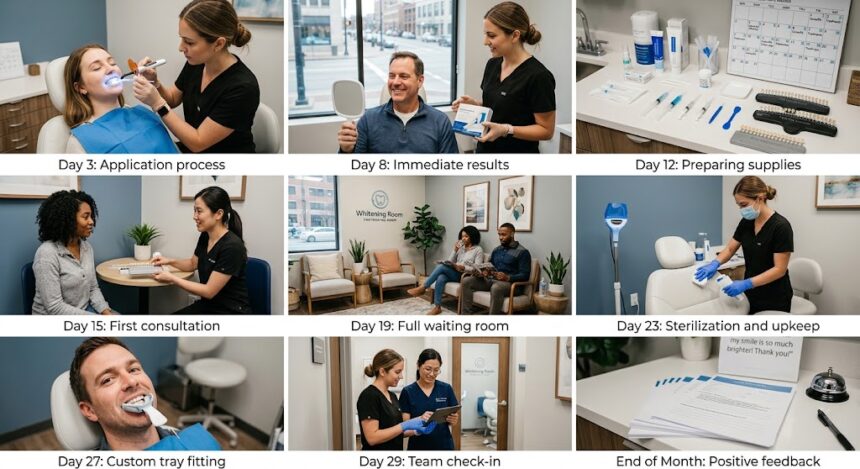
Picture an ordinary March at a small clinic in Indianapolis. The book is full, spring reliably lifts demand for whitening, and people are tidying up their smiles ahead of wedding season. The first two weeks run smoothly.
Then the Zoom lamp stops. It does not break; it counts its way to the limit and locks. The front desk calls the four patients on the book, two reschedule, and one walks to the competitor around the corner. A rush order for a new light guide arrives with a premium for speed. The chair sits idle for three days, and three idle days at peak demand cost far more than the guide itself.
It is a familiar story for anyone running this system. A month like that is usually what pushes owners to look not for another spare part, but for a way to remove the restriction altogether.
There is one. A Zoom Advanced Power activator lifts the factory limit on cycles, and the lamp stops quitting in the middle of the schedule. Same unit, same protocol, minus the counter that always picks the worst moment to shut everything down. It can come pre-installed, with no technical fuss and no pause in appointments.
After that, March looks different. The same full book, the same spring rush, but not a single appointment cancelled over a lockout. Patients who would once have been pushed to another week simply get their treatment, and the revenue that used to leak into reschedules and rush orders stays in the practice. Each subsequent procedure costs less, because guides are no longer bought on a loop.
The economics shift quietly but noticeably. The outlay is one time and fixed, while the return accrues with every appointment, so a busy schedule pays it back quickly. Compatibility with the common Advanced Power version means nothing needs retrofitting, and courier delivery lands within two to five days, insured.
It is worth pausing on that call to the patient who has to be rescheduled. It rarely goes smoothly. They took time off work, got themselves ready, and now they are being told the machine is down. Some accept a new date; some nod politely and book somewhere else instead. A cancellation caused by equipment dents not just that day’s revenue but a reputation that takes a long time to rebuild in a smaller city.
Now picture the same room the following spring, with the limit gone. Demand is just as high, the chair is booked tighter than before, and the front desk never once picks up the phone to apologize for a dead lamp. The freed-up attention goes into running the schedule well rather than cleaning up after it. The change in atmosphere is felt even more than the change in the numbers, though the numbers speak for themselves too.
If you boil the whole month down to one idea, it is about predictability. An owner does not want heroics; they want the lamp to work when people are booked for it. A removed limit delivers exactly that: the schedule is planned around demand and the team’s hands, not around how many flashes are left in the unit. Run that way, whitening finally behaves like a normal service rather than a lottery.
The moral is plain and unglamorous. In a competitive city, the clinic that wins is the one whose chair is not sitting idle for no reason. Removing the limit crosses off the single most common cause of a whitening room going dark.