
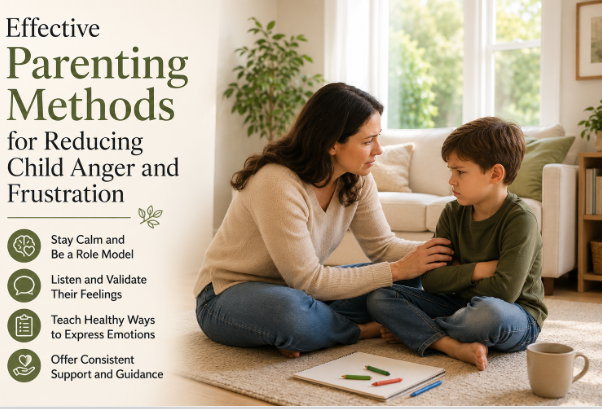
Understanding Child Anger and Frustration
Child anger and frustration are innate emotional responses that can significantly impact a child’s behavior and interactions with others. Understanding these feelings is crucial for parents seeking effective parenting methods to mitigate them. Common triggers for anger and frustration in children often include unmet needs, apparent injustice, inability to express themselves, and significant changes in their environment, such as moving to a new house or experiencing parental separation.
During early childhood, a child’s ability to regulate emotions is still developing. Children typically encounter various developmental stages where they begin to understand their feelings and how to express them appropriately. For example, toddlers may throw tantrums due to their limited verbal skills, leading to frustration when they cannot convey what they want. As children grow, they may face different situations eliciting feelings of anger, including peer conflicts or difficulty in learning tasks—which highlights their need for parental guidance in navigating these emotions.
Importantly, recognizing that anger and frustration are normal parts of childhood is essential. These emotions serve as signals that something may be wrong or that a child needs support in certain circumstances. By validating their feelings and offering appropriate coping strategies, parents can foster a sense of security, allowing children to express their emotions constructively. For instance, teaching children to communicate their frustrations verbally or encouraging them to engage in calming activities, like deep breathing or drawing, can be beneficial. Understanding the complexities of child anger and frustration will help parents adopt more effective parenting methods, resulting in better emotional outcomes for their children.
The Role of Communication in Managing Emotions
Effective communication serves as a cornerstone in managing a child’s emotions, particularly anger and frustration. By establishing open and honest dialogues, parents create a nurturing environment where children feel safe to express their feelings. This approach allows parents to engage with their children on a deeper emotional level, ultimately paving the way for better understanding and emotional regulation.
Creating a safe space for expression involves cultivating a non-judgmental atmosphere. Parents should encourage their children to share their thoughts and feelings without fear of reprimand. This means actively inviting children to talk about what frustrates or angers them and showing genuine interest in their experiences. When children realize they can share their feelings openly, it reduces their anxiety and enables them to articulate their emotional responses more effectively.
Active listening plays a pivotal role in this communication process. Parents must not only hear the words spoken but also understand the emotions behind them. This entails maintaining eye contact, nodding in acknowledgment, and paraphrasing what children say to validate their feelings. By demonstrating that their feelings matter, parents reinforce their child’s self-worth and encourage further communication. Children who feel understood are less likely to bottle up their emotions, which can lead to more manageable emotional responses.
In essence, the act of communicating is not merely about exchanging words; it reflects a deeper relational bond. Emotionally intelligent parents can guide their children towards healthier emotional expression through dialogue, fostering resilience against experiences that may trigger anger or frustration. By prioritizing meaningful conversation, parents not only assist in alleviating immediate emotional tensions but also equip their children with lifelong skills for handling feelings in a constructive manner.
Setting Clear Expectations and Boundaries
Establishing clear rules and expectations is crucial in effective parenting, especially when aiming to reduce child anger and frustration. Children thrive in environments where they understand what is expected of them. When parents articulate their expectations explicitly, they minimize ambiguity, which can often lead to the child feeling overwhelmed. For example, when a parent sets a clear expectation regarding screen time, instead of leaving it open-ended, the child is more likely to comply, thereby reducing instances of frustration when limits are enforced.
Furthermore, consistency in enforcing boundaries plays a pivotal role in fostering a sense of security for the child. Children need to comprehend that rules are reliably upheld; inconsistency can lead to confusion and insecurity. For instance, if a child knows that bedtime is strictly at 8 PM each night, they will feel more secure in their routine and less likely to act out when it’s time to sleep. A consistent approach nurtures a stable environment where children can feel safe, which is essential for their emotional well-being.
It’s important for parents to involve their children in the process of establishing rules when appropriate. This not only gives them a sense of ownership but also allows them to understand the reasoning behind certain boundaries. When children participate in setting expectations, they may be less likely to feel resentment toward those rules, thereby making it easier for parents to enforce them. Ultimately, clear expectations and consistent boundaries can significantly mitigate feelings of anger and frustration in children, leading to a more harmonious household.
Teaching Problem-Solving Skills
Effective problem-solving skills are pivotal for children as they navigate through conflicts, frustrations, and emotional challenges. By teaching these skills, parents can empower their children to address issues proactively and constructively. Problem-solving involves several stages, including recognizing the problem, brainstorming potential solutions, evaluating the options, and making informed decisions. Each of these steps is crucial in helping children manage anger and frustration in their daily lives.
The first step involves recognizing problems, which can be rather complex for young children. Parents can encourage this recognition by engaging in discussions about various situations. For instance, asking children to describe what they are feeling during a frustrating moment helps them identify their emotions. When children can articulate what is bothering them—whether it’s a quarrel with a sibling or difficulty with schoolwork—they take the first crucial step toward resolution.
Next, parents should guide children through brainstorming solutions. This can be achieved through guided conversations where children are encouraged to think of multiple solutions collaboratively. Providing a safe space to explore various outcomes fosters creativity and critical thinking. Parents might say, “What do you think we could do about this situation?” This open-ended questioning invites children to engage in the problem-solving process actively.
Once children have generated several potential solutions, it is essential to evaluate these options together. Discussing the pros and cons of each solution allows children to weigh their choices. This phase not only helps them in selecting an appropriate course of action but also reinforces the understanding that every decision carries potential outcomes.
Ultimately, teaching children to make responsible decisions empowers them to face life’s challenges with confidence. By instilling these problem-solving techniques, parents can equip their children with valuable skills, transforming potential sources of anger and frustration into opportunities for growth and development.
Modeling Emotional Regulation
Demonstrating healthy emotional regulation is essential for parents aiming to reduce their children’s anger and frustration. Children are observant and often mimic the emotional responses they see in their caregivers. Therefore, parents who effectively manage their emotions create a living example for their children.
To model emotional regulation, one effective strategy is to practice self-awareness. Parents should regularly reflect on their own emotional triggers and responses. By recognizing the feelings that arise during stressful situations, parents can demonstrate to their children how to acknowledge and articulate their emotions. For instance, when feeling overwhelmed, a parent might say, “I am feeling frustrated right now; I need to take a moment to calm down before we talk about it.” This verbalization provides children with vocabulary and context for their emotions.
Additionally, parents can employ coping mechanisms such as deep breathing, mindfulness, or taking a brief timeout to regain composure. By incorporating these techniques into daily routines, parents reinforce the idea that feeling angry or frustrated is normal, but managing these feelings is crucial. For example, engaging in a breathing exercise together before a difficult discussion can lead to a calmer environment for both parent and child.
Furthermore, acknowledging one’s own mistakes and demonstrating how to rectify them is an excellent way to teach resilience and emotional management. If a parent reacts sharply to a child’s misbehavior, they can later apologize and explain how they could handle the situation better next time. This action not only shows the child the importance of taking responsibility but also encourages them to express their own emotions constructively.
In conclusion, parents who model emotional regulation not only enhance their emotional intelligence but also provide their children with essential skills for managing anger and frustration. By embracing and demonstrating these practices, parents pave the way for their children to develop healthier emotional responses.
Introducing Relaxation Techniques
In today’s fast-paced environment, children often experience feelings of anger and frustration that can be challenging to manage. Introducing relaxation techniques into their daily routines can provide essential tools to help them cope with overwhelming emotions. Techniques such as deep breathing exercises, mindfulness practices, and meditation can significantly aid in calming a child’s mind and body.
Deep breathing exercises are one of the most effective methods for helping children regulate their emotions. By teaching children to take slow, deep breaths, they can activate their body’s relaxation response. A simple approach involves guiding them to inhale deeply through their nose for a count of four, holding the breath for a count of four, and exhaling slowly through the mouth for another count of four. This rhythmic pattern not only reduces immediate feelings of anxiety but also cultivates a habit of self-regulation over time.
Mindfulness is another valuable technique that promotes awareness and focus. It encourages children to pay attention to the present moment without judgment. Simple mindfulness activities can include paying attention to the sensations of an object, such as a soft toy or a favorite blanket, or listening intently to ambient sounds. Engaging in these practices helps children develop emotional awareness and learn to navigate their feelings more effectively.
Meditation can also play a significant role in managing emotions. Children can benefit from guided visualizations or meditations specifically designed for their age group. Such practices can provide them with a mental space to explore their thoughts and feelings, ultimately leading to increased emotional resilience.
Integrating these relaxation techniques into a child’s routine can empower them to cope with feelings of anger and frustration, fostering a more peaceful and balanced emotional state.
Positive Reinforcement and Encouragement
Positive reinforcement is a widely recognized approach that focuses on encouraging desirable behaviors by offering rewards and recognition. This strategy is particularly effective in shaping the emotional responses of children, especially when addressing anger and frustration. By recognizing and rewarding appropriate emotional reactions or coping strategies, parents can create an environment that fosters good behavior and emotional regulation.
For instance, when a child successfully uses words to express their feelings instead of resorting to anger, acknowledging this effort with praise or a small reward can solidify this behavior. Parents might say, “I really appreciated how you explained your feelings calmly when you felt upset. That’s a great way to handle frustration.” Such recognition not only reinforces the positive behavior but also boosts the child’s emotional intelligence, as they learn to understand the value of appropriate expression.
Moreover, consistency in applying positive reinforcement is key. When children see that good behavior leads to praise or rewards, they become more likely to repeat these behaviors in the future. This creates a positive feedback loop where children feel encouraged to replace anger with coping strategies, thus reducing occurrences of frustration. Parents can facilitate this process by keeping the rewards meaningful and relevant to the child, ensuring that they feel appreciated and understood.
In essence, positive reinforcement cultivates an atmosphere of support and encouragement, pivotal for helping children learn to manage their emotions effectively. This method not only addresses immediate challenges associated with anger but also lays the groundwork for long-term emotional resilience and healthier coping mechanisms.
Creating a Supportive Environment
The physical space and emotional climate within the home play pivotal roles in shaping a child’s emotional well-being. Establishing a supportive environment is essential for reducing feelings of anger and frustration in children. This begins by ensuring that the home is a safe and nurturing place where children feel secure and valued.
To foster a supportive environment, parents can start by creating physical spaces that promote tranquility and comfort. This can involve organizing designated areas for relaxation, play, and emotional expression. A clutter-free and well-organized home can significantly reduce distractions and stress, allowing children to feel more relaxed. Having soft furnishings, adequate lighting, and calming colors can also contribute to a positive atmosphere, encouraging children to express their feelings more openly.
In addition to the physical environment, the emotional climate is crucial. Children thrive in homes where they experience unconditional acceptance and love. Parents should make it a priority to engage in active listening, validating emotions, and encouraging open dialogue. When children know that their feelings are respected and understood, they are more likely to handle their emotions constructively, reducing the likelihood of anger and frustration.
Furthermore, incorporating routines into daily life can help children feel more secure. Establishing predictable structures for mealtimes, homework, and bedtime can provide children with a sense of stability. This predictability can alleviate anxiety, as children understand what to expect from their day. When consistency is coupled with emotional support, children are better equipped to navigate their feelings and frustrations.
Overall, creating a supportive environment involves thoughtful consideration of both the physical space and emotional connections within the home. By fostering an atmosphere of security, acceptance, and openness, parents can significantly contribute to their children’s emotional resilience and reduce feelings of anger and frustration.
Seeking Professional Help When Necessary
Parenting can be a challenging journey, and while many children experience occasional anger and frustration, there are certain signs that may indicate a need for professional intervention. It is essential for parents to recognize these signals to ensure their child receives the appropriate support. Severe behavioral issues, such as uncontrollable outbursts, extreme tantrums beyond the age-appropriate range, or signs of aggression towards themselves or others, can be clear indicators that assistance is required.
Moreover, persistent emotional struggles, including prolonged sadness, anxiety, or withdrawal from friends and activities, may suggest deeper issues that need to be addressed by a professional. If a child’s anger appears to be rooted in trauma, significant life changes, or if there is a noticeable decline in academic performance linked to emotional distress, seeking guidance from a qualified expert is advisable. Parents should trust their instincts; when a child’s behavior seems out of control or disproportionate to the situations they are facing, professional help can provide clarity and direction.
When considering professional assistance, various types of specialists can provide support. For example, child psychologists and therapists can offer effective strategies tailored to the child’s specific needs. Additionally, pediatricians are often a good first point of contact, as they can evaluate whether the child’s issues are behavioral, emotional, or potentially linked to medical concerns. Engaging with educational psychologists might also be beneficial, especially for children facing difficulties in school environments.
Encouraging open communication with the child about their feelings and those experiences while navigating this process can greatly improve the outcomes. In conclusion, recognizing the need for professional help is a crucial step in managing a child’s anger and frustration, ultimately ensuring a nurturing and supportive environment that promotes emotional health and resilience.