Transforming Modern Healthcare Operations
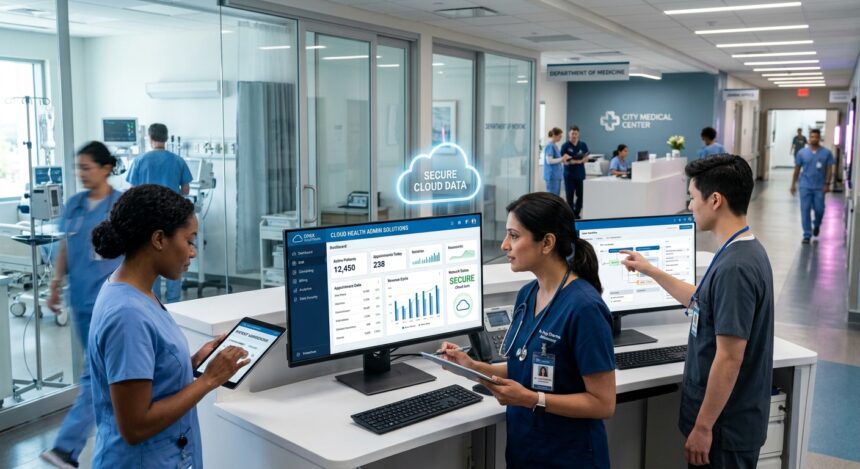
Healthcare organizations manage enormous volumes of sensitive information every day, from member enrollment and claims to provider records, billing, and benefit administration. As these processes become more complex, cloud-based healthcare administration solutions are helping insurers, third-party administrators (TPAs), and provider networks modernize their operations. One example is MCSI – Visova, which provides a cloud-native, HIPAA-compliant Platform as a Service (VPaaS) designed to support automated claims processing, enrollment, member management, premium billing, provider network management, capitation, and HRA/HSA integration.
What Are Cloud-Based Healthcare Administration Solutions?
Cloud-based healthcare administration solutions are software platforms that allow healthcare organizations to manage administrative processes through secure cloud infrastructure rather than relying exclusively on traditional on-premises systems. These platforms can centralize information and automate workflows across multiple departments.
For healthcare payers and administrators, this can mean managing claims, eligibility, billing, providers, members, and financial processes within an interconnected environment. Instead of moving information manually between disconnected applications, organizations can use integrated systems to create more consistent workflows.
Cloud technology can also make it easier to scale administrative operations as membership, claims volume, or organizational requirements change.
Streamlining Claims Management
Claims processing is one of the most demanding administrative functions in healthcare. A single claim may involve eligibility verification, benefit rules, provider information, coding, pricing, and payment decisions.
A modern claim routing tool can help direct claims through the appropriate processing workflows based on predefined rules and business requirements. Automated routing reduces unnecessary manual intervention and helps ensure that claims reach the correct processing stage.
Organizations can also use specialized claims adjudication software to evaluate claims against benefit plans, eligibility information, contractual rules, and other relevant criteria. Automating these decisions can improve consistency while reducing the administrative workload associated with high claim volumes.
When routing and adjudication capabilities are integrated with other healthcare administration functions, organizations can create a more connected claims lifecycle.
Improving Enrollment and Member Management
Enrollment and eligibility information directly affect claims, billing, benefits, and member services. Cloud-based platforms can help organizations maintain centralized member records while automating many routine enrollment processes.
Administrators can manage changes such as new enrollments, eligibility updates, plan changes, and member status adjustments through structured workflows. Keeping this information synchronized can help reduce data inconsistencies and improve the accuracy of downstream processes.
Member management can also extend beyond basic eligibility. Organizations may need to coordinate benefits, financial accounts, communications, and other administrative requirements. An integrated cloud platform provides a foundation for bringing these activities together.
Managing Premium Billing and Financial Operations
Premium billing is another important component of healthcare administration. Insurers and administrators must track premiums accurately while coordinating billing information with enrollment and membership data.
Cloud-based systems can automate billing workflows and connect financial administration with other operational processes. This can reduce repetitive data entry and provide administrators with a more complete view of account activity.
Integrated capabilities can be particularly useful when organizations manage different plans, employer groups, members, or billing arrangements across a large administrative environment.
Provider Network and Capitation Management
Healthcare administration also requires effective management of provider relationships. Provider network management involves maintaining information about participating providers, contracts, specialties, locations, and other relevant details.
Cloud-based administration platforms can help centralize provider information and connect it with claims and payment workflows. This creates opportunities for greater consistency across provider-related processes.
Capitation management is another area where integrated technology can support healthcare organizations. When payment arrangements depend on defined member populations and contractual terms, automated systems can help administrators manage calculations and associated workflows more efficiently.
Integrating HRA and HSA Processes
Healthcare benefits increasingly include consumer-directed arrangements such as Health Reimbursement Arrangements (HRAs) and Health Savings Accounts (HSAs). Managing these programs can require coordination between eligibility, member information, benefit structures, and financial processes.
Cloud-based platforms can provide integration capabilities that connect HRA/HSA information with broader healthcare administration workflows. This can help organizations reduce fragmented processes and maintain better visibility across different components of benefit administration.
Why Cloud-Native Platforms Matter
A cloud-native approach can provide healthcare organizations with greater flexibility than legacy systems that were designed around fixed infrastructure. Cloud-native platforms are built to operate within modern cloud environments, making scalability, integration, and centralized management important considerations.
For insurers, TPAs, and provider networks, this can support the gradual modernization of healthcare administration without requiring every process to operate as an isolated system.
Security and compliance are equally important. Healthcare organizations handle highly sensitive information, so platforms must incorporate appropriate safeguards and support regulatory requirements such as HIPAA. A cloud-based solution should therefore be evaluated not only for functionality but also for security, compliance, integration, reliability, and data management capabilities.
Creating End-to-End Healthcare Administration
The biggest advantage of an integrated healthcare administration platform is the ability to connect processes that traditionally operate separately. Claims, enrollment, member management, billing, providers, capitation, and healthcare spending accounts can all contribute to the same operational ecosystem.
MCSI – Visova’s VPaaS approach demonstrates how a cloud-native platform can bring these capabilities together for healthcare organizations. By supporting automated claims processing, enrollment, premium billing, provider network management, capitation, and HRA/HSA integration, such platforms can help insurers, TPAs, and provider networks streamline workflows and manage healthcare operations more efficiently from end to end.
As healthcare administration continues to become more data-intensive and complex, cloud-based technology will remain an important tool for organizations looking to automate routine processes, connect operational systems, and create more efficient administrative environments.