Understanding Toddler Communication Development
Toddler communication development is a remarkable period that typically unfolds between the ages of one and three. During this time, children achieve crucial milestones as they begin to express themselves both verbally and non-verbally. In the first year of life, infants utilize crying and other sounds to indicate their needs. As they approach their first birthday, many begin to utter simple words such as “mama” and “dada,” which are foundational elements of language.
By around 18 months, toddlers typically expand their vocabulary to around 50 words and may begin to combine two-word phrases, such as “more juice” or “big truck.” This combination of words marks a significant leap in their ability to communicate effectively. Between the ages of two and three, toddlers may create simple sentences and further expand their vocabulary, reaching up to 200 words or more. During this stage, it is also common for children to engage in what is known as “telegraphic speech,” where they convey meaning using only the essential components of a sentence.
Listening skills are equally important during this developmental stage. As toddlers learn to communicate, they also develop the ability to understand spoken language. This comprehension is facilitated by their exposure to conversations and various auditory stimuli in their environment, which help to enhance their cognitive and linguistic skills. Engaging in activities such as reading aloud or singing can significantly contribute to their language acquisition.
These early stages of communication establish a strong foundation for future language development. Encouragement from caregivers and a supportive environment can foster a toddler’s confidence in expressing themselves. Understanding and promoting these milestones are essential for any adult involved in the care and education of toddlers, helping to ensure they reach their communication potential as they grow.
Creating a Language-Rich Environment
Fostering a language-rich environment is essential for promoting communication skills in toddlers. This type of environment is characterized by the frequent use of words, exposure to a variety of linguistic interactions, and opportunities for children to express themselves verbally. Parents and caregivers play a crucial role in this developmental stage, and there are several effective strategies to implement.
Reading together is one of the most effective ways to enhance a toddler’s language development. By introducing age-appropriate books, caregivers can expose their children to new vocabulary, different sentence structures, and engaging storytelling techniques. Moreover, making reading a daily habit not only strengthens the bond between parent and child but also encourages active participation, as toddlers often enjoy pointing at pictures or guessing what happens next in a story.
Another significant aspect of creating a language-rich environment is daily conversation. Engaging toddlers in meaningful dialogues throughout daily routines helps them practice speaking and understanding language in context. Simple questions, descriptions of activities, or narrating events can significantly enrich their vocabulary and comprehension skills. It is important for caregivers to listen attentively and respond to toddlers, which promotes a sense of validation and encourages continued communication.
Incorporating songs and rhymes is also a powerful tool for language development. Music enhances memory retention and language rhythm, allowing toddlers to learn new words while enjoying themselves. Singing familiar songs or introducing new ones can stimulate interest in language and foster phonemic awareness. The repetitive nature of rhymes further helps toddlers anticipate language patterns, making it easier for them to learn and use new words.
By consciously creating a language-rich environment through reading, conversation, and music, parents and caregivers greatly contribute to the foundational communication skills of toddlers, setting the stage for their future linguistic development.
Utilizing Play as a Learning Tool
In the realm of childhood development, play serves as an essential vehicle through which toddlers can acquire fundamental communication skills. Engaging in play-based activities not only facilitates language development but also encourages children to express their thoughts, feelings, and emotions. Through play, children learn to articulate their needs, ask questions, and engage in meaningful dialogue. This natural and enjoyable method of learning fosters an environment that promotes creativity and exploration, key components of effective communication.
One effective approach is role-playing, where caregivers can involve toddlers in various scenarios that mimic everyday life. For instance, acting out a restaurant scene allows children to learn vocabulary related to food and dining while encouraging them to ask for what they desire or express preferences. Such interactive experiences promote turn-taking in conversation and help them understand the importance of listening and responding appropriately.
Pretend play is another activity that significantly contributes to the enhancement of communication. When toddlers engage in imaginative scenarios, such as playing house or pretending to be a doctor, they are given the opportunity to use their language skills in different contexts. This type of play helps children to experiment with new words, phrases, and social cues. As they navigate these roles, toddlers also learn to share ideas, negotiate roles, and express their viewpoints, all of which are critical components of effective communication.
Various resources can support this type of learning through play. Educational toys and storytelling can be beneficial in encouraging dialogue between toddlers and their peers or caregivers. These activities help to bridge the gap between play and communication, making it easier for toddlers to develop the necessary skills to communicate effectively in various situations.
Encouraging Interactive Communication
To foster effective communication skills in toddlers, it is essential to encourage interactive communication. One of the most fundamental aspects of this process is eye contact. Engaging a toddler through sustained eye contact not only helps them feel valued but also enhances their understanding of social cues. Eye contact acts as a nonverbal prompt that encourages toddlers to express themselves, establishing a connection that facilitates mutual comprehension.
Responsive interactions play a crucial role in building a toddler’s communication capabilities. When caregivers respond quickly and thoughtfully to a child’s attempts at expressing themselves, whether through words, gestures, or facial expressions, it reinforces the idea that their communication efforts are meaningful. This responsiveness supports language development as toddlers learn the effect of their words and actions, encouraging them to experiment more boldly with their communication.
Another effective technique to enhance interactive communication is implementing turn-taking during conversations. This method involves allowing toddlers the opportunity to speak and then responding in turn. Engaging in turn-taking helps children understand the flow of dialogue and gives them practice in articulating their thoughts. Simple games or activities such as ‘pretend play’ or ‘storytelling’ can be excellent opportunities for turn-taking, making the learning process enjoyable and motivating for toddlers.
Furthermore, incorporating questions can invite toddlers to engage more deeply in conversations. Asking open-ended questions, such as “What do you think about this?” encourages them to express their ideas and opinions. By applying these strategies, caregivers can significantly enhance a toddler’s communicative competence, laying a solid foundation for their future verbal interactions.
Incorporating Visual Aids and Gestures
In the process of teaching toddlers basic communication skills, integrating visual aids and gestures can significantly enhance their understanding and ability to express themselves. Visual aids, such as pictures and illustrations, play a crucial role in bridging the gap between verbal expression and comprehension. By presenting concepts visually, toddlers are able to process information more effectively, allowing them to grasp new vocabulary and ideas.
For instance, using a picture schedule can help children anticipate daily activities and express their needs more clearly. When children see images that represent different routines—like meal times, playtime, or story time—they can communicate their preferences or emotions associated with each activity. This method not only aids comprehension but also empowers toddlers to engage in conversations about their experiences and feelings.
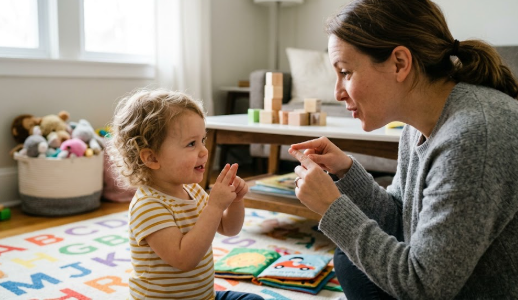
Additionally, incorporating gestures alongside verbal communication can reinforce understanding and engagement. Simple gestures, such as waving, pointing, or clapping, can provide physical cues to complement the words being spoken. This multisensory approach caters to various learning styles and can greatly improve retention of language. Research indicates that toddlers who are exposed to gestures while learning are often better equipped to express their thoughts and emotions.
Moreover, utilizing sign language as a supplementary tool is beneficial. Teaching toddlers basic signs for common words like “more,” “eat,” or “help” can help them communicate their needs before they develop advanced verbal skills. This method not only facilitates communication but also reduces frustration, fostering a more positive interaction environment.
Overall, the use of visual aids and gestures stands out as a powerful strategy in enhancing toddlers’ communication skills. By implementing these techniques, caregivers and educators can provide an enriching environment that promotes effective expression and understanding, laying a solid foundation for further language development.
Using Songs and Rhymes for Language Growth
Incorporating songs and rhymes into the learning process for toddlers can significantly enhance their communication skills. The auditory and rhythmic characteristics of music make learning engaging and enjoyable for young children. This type of learning not only aids in vocabulary expansion but also plays a pivotal role in developing phonemic awareness, which is crucial for early literacy.
The beauty of songs lies in their repetitive structure and predictable patterns. These characteristics help children anticipate what comes next, promoting engagement and participation. When toddlers sing along, they practice pronunciation and inflection, integral components of effective communication. Furthermore, the playful nature of songs fosters a positive learning environment where children feel more comfortable exploring language.
Rhymes, similarly, leverage rhythm and rhyme schemes that capture a child’s attention. The auditory appeal paired with visual stimuli can create memorable associations with words and phrases. For instance, nursery rhymes such as “Baa Baa Black Sheep” or “Twinkle Twinkle Little Star” employ simple vocabulary and concepts that toddlers can easily grasp. These familiar tunes can be instrumental in helping toddlers transition to more complex language as they grow.
Moreover, the process of singing and reciting rhymes offers incidental learning opportunities. Through these methods, children are exposed to a broader range of vocabulary and sounds, enhancing their ability to distinguish between different phonetic elements. This exposure is essential in helping them build a solid foundation in language development, ultimately benefiting their communication abilities.
Therefore, integrating songs and rhymes into daily routines can be a highly effective strategy for nurturing essential communication skills in toddlers, making the whole learning process both fun and relevant.
Modeling Language Behavior
Modeling language behavior is a pivotal method for teaching toddlers essential communication skills. Adults play a crucial role in this developmental phase by exemplifying clear and grammatically correct language. When caregivers consistently use rich vocabulary and complex sentence structures in their everyday interactions, they provide toddlers with linguistic models that are vital for effective language acquisition.
By intentionally incorporating varied vocabulary into conversation, adults can enrich the child’s language environment. For instance, instead of simply saying “Go outside,” a caregiver might elaborate, “Let’s go outside to play in the sunshine and feel the fresh air on our faces.” This not only nurtures the child’s understanding of words but also exposes them to different contexts and sentences. It is important that while adults expand vocabulary, they maintain an approachable and relatable tone that resonates with toddlers.
Furthermore, repeating phrases and asking open-ended questions can encourage toddlers to respond, thereby facilitating language use. For example, when reading a story, an adult might pause to ask, “What do you think the character feels right now?” Such interactions invite toddlers to think critically and practice their expressive abilities. It is beneficial to adapt language complexity to a level that is comprehensible yet slightly above what the child knows, prompting growth in communication skills.
By imbuing everyday language exchanges with structured dialogue, caregivers create a rich tapestry of communicative experiences from which toddlers can learn. Thus, modeling language behavior effectively encourages toddlers to emulate these behaviors, enhancing their vocabulary, sentence structure, and overall verbal expression.
Setting Up Routine Conversations
Establishing regular times for engaging in conversations with toddlers plays a pivotal role in their development of basic communication skills. Incorporating communication into daily routines, such as during meal times or playtime, fosters an environment where children feel secure and supported. Predictable interactions encourage toddlers to participate actively and express themselves, reinforcing their confidence in using language.
Meal times offer a unique opportunity for dialogue, as they provide a comfortable and relaxed setting. This setting can stimulate discussions about the food being eaten, allowing toddlers to learn new vocabulary and concepts related to their environment. Asking open-ended questions invites toddlers to share their thoughts and preferences, promoting both communication and critical thinking skills. For instance, asking “What do you think about this color on your plate?” encourages toddlers to engage with their surroundings and practice language skills without pressure.
Similarly, playtime serves as an ideal moment for fostering communication. When adults engage in play with toddlers, they can model language through storytelling, narrating actions, or asking questions about the activities at hand. Words and phrases associated with different types of play, such as ‘catch’, ‘build’, or ‘share’, are naturally integrated into these interactions, enhancing the child’s vocabulary in a contextual manner. By incorporating routine conversations during these enjoyable moments, toddlers are more likely to respond positively and extend their language skills organically.
Creating a consistent schedule for conversations with toddlers not only aids in skill acquisition but also builds a strong emotional bond. This connection lays the groundwork for future conversations, empowering toddlers to explore communication freely. As routines become established, both parents and caregivers can observe notable improvements in their toddler’s ability to articulate thoughts and engage meaningfully in dialogues.
Monitoring Progress and Adjusting Techniques
Monitoring the communication progress of toddlers is essential for caregivers who aim to foster their child’s language development effectively. Regular assessment helps in identifying the strengths and weaknesses in their communication skills, allowing caregivers to adjust their teaching techniques accordingly. One of the most effective methods of tracking progress is through consistent observation of the child’s verbal and non-verbal responses during interactions.
A simple yet impactful way to assess communication skills is through the use of play-based activities. Engaging toddlers in games that require verbal interaction can provide insight into their willingness to communicate, vocabulary usage, and ability to form simple sentences. Caregivers should take note of the words or phrases that a toddler frequently uses, which can indicate areas of confidence or difficulty.
Another method involves maintaining a communication journal. In this journal, caregivers can jot down significant milestones, including new words learned, instances of successful communication, and any struggles observed. This ongoing record allows caregivers to identify patterns over time, which is critical in determining whether to continue using certain techniques or to explore new strategies.
Recognizing common communication hurdles, such as frustration during attempts to express needs or preferences, is key. In such cases, caregivers might consider implementing alternative approaches, such as using visual aids or incorporating sign language, to provide additional support. Visual cues can often bridge the gap during moments of difficulty, enhancing understanding and encouraging expression.
Ultimately, monitoring communication progress entails a flexible approach that evolves with the child’s needs. By being vigilant and responsive to the toddler’s development, caregivers can create a nurturing environment that promotes continual language growth, thereby setting a strong foundation for future communication skills.