Your son insists his new pyjamas are “too itchy and tight,” but the tag says his exact size. Sound familiar? Pyjama sizing rarely lines up with daytime clothes, and guessing by age alone often leaves kids stuck in a snug top or ankle-baring pants. This boys’ pyjamas size guide walks you through measuring correctly, reading a size chart with confidence, and spotting the signs that a fit needs adjusting.
Why Boys’ Pyjamas Sizing Works Differently Than Daywear
Sleepwear needs more room to move than a school outfit. A shirt that fits fine at the dinner table can pull tight across the shoulders once a child curls up or stretches out overnight. Loose-but-not-baggy is the goal, since fabric that bunches or rides up can wake a light sleeper.
Comfort Affects Sleep Quality
Kids shift positions dozens of times a night, and pyjamas that restrict movement can interrupt that process. A pair sized correctly moves with the body rather than against it, reducing middle-of-the-night waking caused by discomfort rather than noise or light.
Step-by-Step: How to Measure Kids for Pyjamas
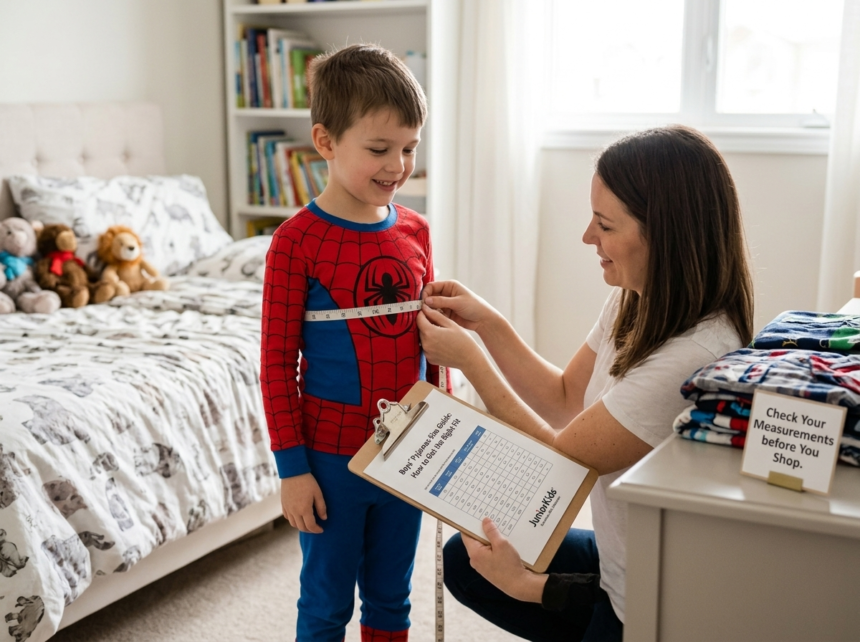
Skip the guesswork and grab a soft measuring tape before you shop. These steps work whether you’re buying in person or browsing a boys’ pajamas and loungewear selection online, and they take less than five minutes once your child is standing still.
Step 1 — Measure Chest and Height
Wrap the tape around the fullest part of the chest, keeping it level and snug but not tight. Then measure height from the top of the head to the floor, since most size charts sort by these two numbers together rather than age alone.
Step 2 — Check the Waist and Inseam
Measure the natural waistline where the pants will actually sit, not where a belt would go on jeans. For the inseam, run the tape from the crotch seam down to the ankle bone, a measurement that matters more during growth spurts than most parents expect.
Step 3 — Compare Against the Brand’s Chart
Every brand’s sizing runs a little differently, so match your numbers to that specific chart rather than assuming a size 6 top translates the same way across labels. When a child falls between two sizes, sizing up usually beats sizing down for sleepwear.
Reading a Pyjama Size Chart by Age, Height, and Weight
Most size charts blend three data points: age, height, and weight, since kids of the same age can vary by several inches in either direction. A boys’ pyjama sizing chart based on height and weight tends to be more accurate than age-based brackets alone, especially for kids who run tall or are still filling out.
When Age and Size Don’t Match
A seven-year-old on the smaller side might still need a size 8 for length, even though the age label reads younger. Trust the measurements over the printed age range whenever the two disagree, since fabric that’s too short will show it fast.
Signs the Fit Is Off (and What to Do About It)
Even with careful measuring, growth spurts and different fabrics mean adjustments come up during the year. Watch for a few telltale signs before assuming the size chart failed you.
Too Tight
Red marks around the waistband or wrists after wear, or sleeves that ride up past the forearm, usually mean it’s time to size up. Snug necklines are also worth watching, since they can feel restrictive even when the rest of the fit looks fine on the hanger.
Too Loose
Pants that bunch at the ankle or fabric that pools around the waist can be as much a tripping hazard as a comfort issue. If a top constantly slides off one shoulder during sleep, that’s a fit problem rather than a styling quirk.
Picking the Right Fabric for the Season
Size isn’t the only variable that affects how pyjamas fit and feel through the night. Fabric weight changes how snug or loose a garment should be, so it’s worth factoring into the sizing decision alongside the measurements above.
Lightweight Cotton for Warmer Months
Thin cotton knits run closer to the body and rarely shrink much after washing, so sizing true to the chart usually works well. If a child tends to run warm at night, a slightly looser fit in this fabric still won’t add much bulk under the blanket.
Fleece and Flannel for Colder Nights
Heavier fabrics like fleece add bulk, which can make a true-to-size fit feel snugger than the same size in cotton. Sizing up one notch in fleece pyjamas often gives kids the same range of motion they’d have in a properly fitted cotton set, without cutting into growth room too soon.
These kids’ pyjama fit tips help catch sizing issues before they turn into nightly battles over what to wear to bed, and they take less guesswork out of ordering online.
Where To Find Your Boy’s Pyjamas
JuniorKids has been dressing Canadian kids in comfortable, well-made everyday and sleepwear since 1994. Parents can cross-check their measurements against our brand’s size guide before ordering.
Conclusion
That’s really what a good boys’ pyjamas size guide comes down to: real measurements, not a guess based on age or whatever fit last season. A few minutes with a soft tape measure now can save weeks of complaints about itchy collars or ankle-baring pants later. What’s your go-to trick for getting kids to sit still long enough to measure them?