
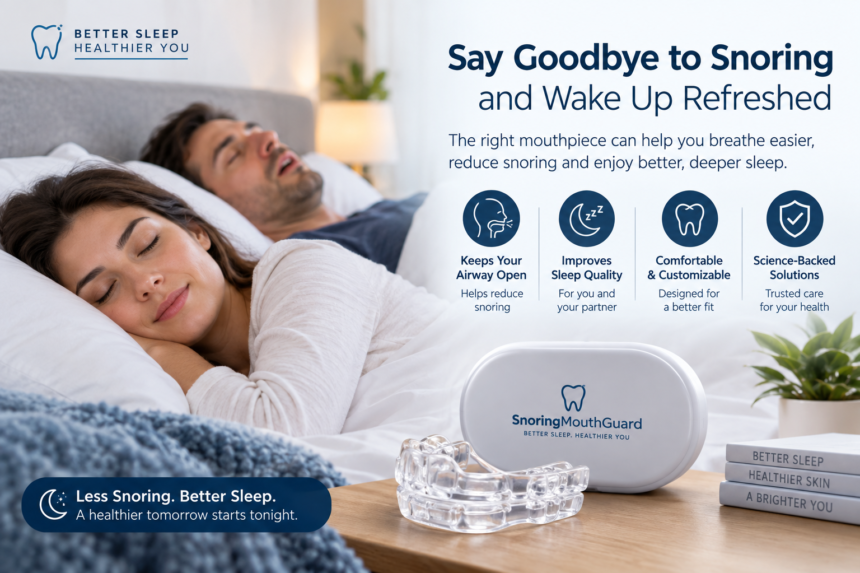
SnoringMouthGuard can help consumers research different approaches to managing nighttime snoring and understand what to consider when comparing oral devices. Snoring is common, but its causes can vary considerably from person to person. For some people, an anti-snoring mouthpiece may be a practical option, while others may need professional evaluation to determine whether an underlying sleep disorder is involved.
Why Do People Snore?
Snoring generally occurs when airflow through the upper airway becomes partially restricted during sleep. As air moves through narrowed tissues, surrounding structures can vibrate and produce the familiar sound.
Several factors can contribute to snoring. Sleeping position, nasal congestion, alcohol consumption, body weight, anatomy, and changes in muscle tone during sleep can all play a role.
Occasional snoring may simply be an annoyance, but frequent and disruptive snoring deserves more attention, particularly when it occurs alongside other symptoms such as excessive daytime sleepiness, witnessed breathing pauses, gasping, or choking during sleep.
These symptoms can sometimes be associated with obstructive sleep apnea, so persistent concerns should not automatically be treated as ordinary snoring.
How Anti-Snoring Mouthpieces Work
Many oral appliances designed for snoring use a principle called mandibular advancement. The device positions the lower jaw somewhat forward during sleep, which can help maintain a more open upper airway.
The American Academy of Sleep Medicine and American Academy of Dental Sleep Medicine have recognized oral appliance therapy as an established treatment approach for certain adults with obstructive sleep apnea and for primary snoring in appropriate circumstances.
However, not every mouthpiece works in exactly the same way. Designs can vary in adjustability, materials, fit, and how much movement they allow.
Understanding these differences is important when comparing products.
Custom and Adjustable Devices
One of the first distinctions consumers may encounter is the difference between custom-made and non-custom oral appliances.
Some devices are designed to be fitted by a dental professional, while others are prefabricated and intended for home fitting. Adjustable designs may allow the jaw position to be changed gradually.
A custom device can provide a more individualized fit, while an over-the-counter option may be more accessible for someone who wants to explore a simpler approach.
The appropriate choice depends on the person’s dental health, jaw structure, symptoms, and intended use. Professional guidance may be particularly important when snoring is frequent or when sleep apnea is suspected.
Why Proper Fitting Matters
A mouthpiece needs to stay comfortably in position throughout the night.
If a device is too loose, it may move during sleep and provide inconsistent results. If it is too tight or poorly shaped, it may create unnecessary discomfort and make regular use difficult.
Fit also matters because people naturally have different jaw shapes, tooth arrangements, and oral anatomy.
When using a boil-and-bite or similar device, following the manufacturer’s fitting instructions carefully is important. Consumers should not assume that a device should feel painful simply because it is new.
Persistent discomfort, jaw pain, tooth sensitivity, or other unusual symptoms should be discussed with a dental professional.
Comfort Influences Consistency
An anti-snoring mouthpiece can only be useful if a person can comfortably use it as directed.
This makes comfort an important consideration when comparing products. Look at the materials, size, adjustability, retention system, and fitting process rather than focusing only on marketing claims.
It may take some time for a person to become accustomed to sleeping with an oral appliance. However, significant or persistent discomfort should not simply be ignored.
The goal is to find an approach that fits naturally into the individual’s nighttime routine.
Snoring and Sleep Quality
Snoring can affect more than the person making the noise. A loud or frequent snorer may disturb a partner’s sleep, leading to repeated nighttime awakenings and daytime fatigue for both people.
Improving nighttime breathing and reducing disruptive snoring may therefore have benefits for the overall sleep environment.
At the same time, reducing the sound of snoring does not necessarily mean that an underlying breathing disorder has been resolved. This distinction is particularly important when other symptoms suggest sleep apnea.
Oral appliance therapy for obstructive sleep apnea is generally considered within a broader clinical evaluation rather than simply as a product purchase.
When Snoring May Need Medical Attention
Not all snoring is harmless.
People should consider speaking with a healthcare professional if snoring is loud and persistent or if it is accompanied by symptoms such as pauses in breathing, waking up gasping, morning headaches, significant daytime sleepiness, or difficulty staying awake.
A person may not always notice breathing interruptions themselves. A sleeping partner may be the first person to recognize unusual breathing patterns.
Because obstructive sleep apnea can require diagnosis and treatment beyond simple snoring management, people with concerning symptoms should seek appropriate medical evaluation rather than relying solely on an over-the-counter mouthpiece.
Consider Your Sleeping Position
Sleeping position can influence snoring for some people.
For certain individuals, snoring may be more noticeable when sleeping on the back because gravity can contribute to narrowing of the upper airway.
Changing sleeping position may therefore be one simple strategy worth trying. Side sleeping, for example, can sometimes reduce positional snoring.
However, results vary between individuals. A mouthpiece, positional changes, lifestyle adjustments, or another treatment approach may be appropriate depending on the underlying cause.
Lifestyle Habits Can Also Matter
An oral appliance is not necessarily the only factor worth considering.
Healthy sleep habits can support better overall sleep. Maintaining a consistent bedtime, creating a comfortable sleeping environment, and allowing enough time for rest are basic steps that can improve sleep quality.
Alcohol can also influence nighttime breathing and sleep patterns, so people who experience frequent snoring may want to discuss alcohol use with a healthcare professional when evaluating their symptoms.
Weight management may also be relevant for some individuals, particularly because excess weight can contribute to obstructive sleep apnea risk. However, snoring can occur in people of many body types, so weight should not be assumed to be the sole cause.
Cleaning Your Mouthpiece
An oral appliance spends several hours inside the mouth, making hygiene important.
Follow the manufacturer’s cleaning instructions and avoid using cleaning methods that could damage the material. Depending on the device, cleaning may involve rinsing, brushing with an appropriate method, or using a product specifically recommended for the appliance.
Allowing the device to dry properly and storing it in a suitable case can also help maintain its condition.
Regularly inspect the mouthpiece for cracks, deformation, excessive wear, or other damage. A damaged device may no longer fit correctly.
Look at Durability and Materials
Price should not be the only factor when comparing anti-snoring mouthpieces.
Materials, construction, adjustability, warranty coverage, fitting process, and expected lifespan can all influence the overall value of a device.
A very inexpensive product may appear attractive initially, but frequent replacement can make it less economical over time.
Consumers should also distinguish between general marketing claims and information that is supported by appropriate evidence.
Consider Professional Guidance
People with dental problems, jaw disorders, significant tooth sensitivity, or a history of temporomandibular joint issues may need professional advice before using an oral appliance. Earlier AASM guidance specifically notes that significant TMJ problems and certain dental limitations can affect suitability for oral appliance therapy.
A dentist familiar with sleep-related oral appliances can evaluate the mouth and jaw and help determine whether a particular type of device is appropriate.
Professional assessment can be especially important when an appliance is being considered for diagnosed obstructive sleep apnea rather than simple primary snoring.
Compare Before You Buy
There is no single mouthpiece that is ideal for every person.
When comparing options, consider the fitting method, adjustability, material, comfort, cleaning requirements, durability, and intended purpose.
It is also important to distinguish devices marketed specifically for snoring from oral appliances used as part of obstructive sleep apnea treatment. These are related but not identical situations.
Taking time to understand the differences can help consumers avoid choosing a product based solely on appearance or price.
Final Thoughts
An anti-snoring mouthpiece can be an interesting option for adults looking for ways to reduce primary snoring, and oral appliance therapy also has an established role in appropriate cases of obstructive sleep apnea.
The right choice depends on the cause of snoring, the individual’s oral health, comfort requirements, and whether an underlying sleep disorder is present.
Before purchasing a device, consider how it fits, how it should be cleaned, whether it can be adjusted, and whether professional advice is appropriate. Most importantly, persistent loud snoring or symptoms such as breathing pauses and excessive daytime sleepiness should not be dismissed as merely a nuisance .For more information visit snoringmouthguard.com.
A thoughtful approach that combines good sleep habits, appropriate evaluation, and a suitable oral device can help people make more informed decisions about nighttime breathing and sleep quality.