
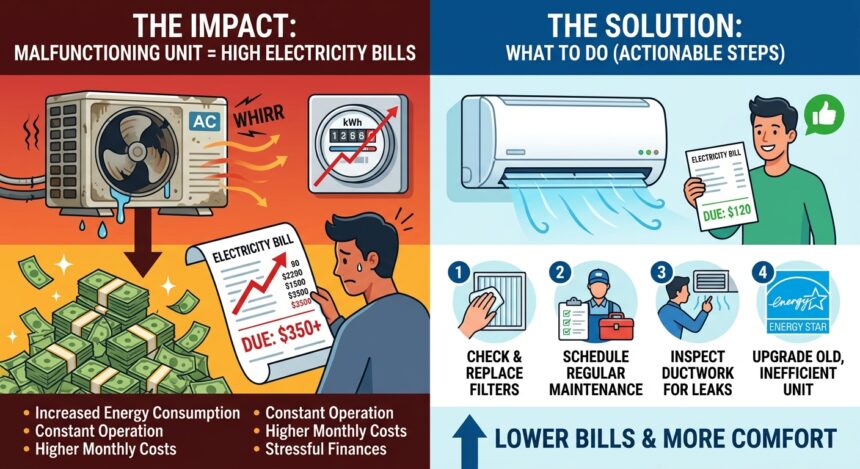
Ever notice your electricity bill creeping up and can’t figure out why? Check your fridge before you check anything else. A refrigerator that’s struggling — running longer than it should, or not cooling properly — quietly becomes one of the biggest energy drains in the house. Most people don’t catch it until the bill arrives, and by then a quick call to a refrigerator repair technician would’ve saved both money and a spoiled grocery run.
Why a Struggling Fridge Costs More Than You Think
A refrigerator is designed to run in short cycles. It cools down, shuts off for a while, then kicks back on when the temperature rises slightly. When something’s wrong — a worn door seal, a dirty condenser coil, a failing compressor — that cycle breaks down. The unit ends up running almost constantly, trying to maintain a temperature it can’t quite reach.
That constant running adds up fast. A fridge that used to cycle on and off throughout the day might end up working two or three times harder just to keep food from spoiling. You won’t necessarily hear it — some units get quieter as they strain, not louder — but the meter definitely notices.When a refrigerator is using more electricity than expected, reviewing direct energy rates can help homeowners better understand how their electricity costs are affected and identify potential ways to manage their monthly bills.
Signs Your Fridge Is Working Too Hard
A few warning signs tend to show up before the bill does:
- The motor runs almost nonstop, rarely shutting off
- Condensation builds up inside, or food spoils faster than usual
- The back or sides of the unit feel unusually hot to the touch
- Ice builds up in the freezer section unevenly
- The door doesn’t seal tightly when you close it
Any one of these on its own might not mean much. Two or three together, though, usually means something’s actually failing, not just aging normally.
When to Call for Home Refrigerator Repair
Cleaning the condenser coils yourself is worth trying first — dust and pet hair buildup back there is a common, cheap-to-fix cause of overwork. But if the coils are clean and the fridge is still running hot and loud, that’s when home refrigerator repair becomes the smarter move rather than waiting it out. A technician can check refrigerant levels, test the compressor, and figure out whether the door seal needs replacing — things that are hard to diagnose without the right tools.
Waiting too long usually backfires. A compressor that’s overworking today can fail completely next month, and a $150 repair turns into a $1,200 replacement. Good refrigeration service and repair companies will usually tell you honestly whether a repair still makes sense or whether the unit’s age makes replacement the better call — that kind of straight answer is worth more than trying to guess it yourself.
A Small Habit Worth Mentioning
It’s a bit like people in hardware-focused communities — groups like m87games, where members obsess over keeping gaming PCs running cool and efficient — talk about thermal management. Dust buildup, poor airflow, a fan working overtime: small issues that quietly drive up power draw until someone actually checks. Refrigerators work on the exact same principle, just with food instead of a graphics card.
Keeping an eye on how your fridge sounds and feels day to day is a small habit that pays off. Catching a struggling compressor early, before it fails outright, usually means a manageable repair bill instead of an emergency replacement — and a power bill that goes back to looking normal.