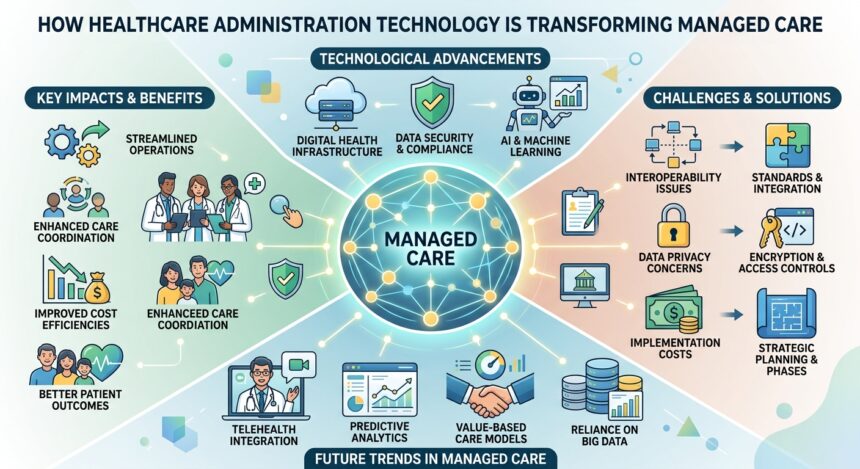
Healthcare organizations increasingly rely on technology to handle complex administrative responsibilities while maintaining accuracy, efficiency, and reliable service. Managed Care Systems, Inc. (MCSI) is one example of a company providing automated healthcare administration software, implementation, and support services for PPOs, ACOs, self-funded employers, and stop-loss carriers. Its technology-focused approach helps healthcare organizations streamline operations, improve efficiency, and manage complex administrative processes with dependable systems.
The Growing Need for Healthcare Administration Technology
Healthcare administration involves much more than scheduling appointments and maintaining patient records. Organizations may need to manage provider networks, claims, eligibility information, billing processes, contracts, reporting, and other operational requirements.
When these activities depend heavily on manual processes or disconnected systems, administrative teams can face delays and unnecessary duplication of work. Technology can bring these functions together, allowing organizations to manage information more consistently and make day-to-day operations easier to oversee.
What Is Managed Care Software?
managed care software refers to technology designed to support organizations responsible for coordinating healthcare services, provider relationships, financial processes, and administrative operations. Depending on the organization and its requirements, software platforms may support functions such as claims administration, provider management, eligibility, reporting, and network administration.
Automation can be particularly valuable when an organization handles a large volume of transactions. Instead of requiring staff to manually process every administrative task, software can help standardize repetitive workflows and reduce the possibility of errors.
Supporting PPOs and ACOs
Preferred provider organizations (PPOs) and accountable care organizations (ACOs) have different operational structures, but both can benefit from technology that helps coordinate complex administrative activities.
A centralized system can make it easier to organize provider information, manage relationships, track transactions, and produce useful reports. For organizations working with numerous providers and healthcare stakeholders, having dependable technology can also improve visibility across administrative workflows.
Technology for Self-Funded Employers and Stop-Loss Carriers
Self-funded employers have specific administrative requirements because they assume greater responsibility for healthcare costs and plan administration. Stop-loss carriers likewise need reliable information and processes when evaluating claims exposure and supporting their business operations.
Technology solutions can help these organizations organize information, automate appropriate administrative functions, and improve communication between different parties. A well-designed platform can also make important data easier to access when teams need it for operational or financial decisions.
Why Automation Matters
Automation is one of the most important advantages of modern healthcare administration technology. Repetitive processes can consume significant staff time when performed manually. Automating suitable workflows allows employees to focus more attention on tasks that require judgment, communication, or specialized knowledge.
Automation can also contribute to consistency. When processes follow defined rules within a software environment, organizations can establish standardized workflows rather than relying entirely on individual employees to remember each step.
Implementation and Ongoing Support
Selecting technology is only part of the process. Successful implementation requires careful planning, configuration, data considerations, user training, and ongoing technical support.
This is where experienced technology providers can add value. A healthcare organization may have unique workflows and administrative requirements, so implementation needs to account for how the software will fit into existing operations. Continued support can then help organizations address technical questions, maintain system performance, and adapt processes as requirements evolve.
The Role of Managed Care Systems in Modern Healthcare
Organizations searching for managed care systems increasingly need solutions that combine automation with dependable administrative capabilities. The objective is not simply to introduce another software platform, but to create an environment where information and workflows can be managed more efficiently.
For PPOs, ACOs, self-funded employers, and stop-loss carriers, the right technology can provide a foundation for organizing complex processes while reducing unnecessary administrative effort.
Looking Ahead
Healthcare administration will continue to become more technology-driven as organizations seek greater efficiency, improved data management, and streamlined workflows. Automated platforms can help healthcare organizations handle growing administrative demands without relying exclusively on manual processes.
By combining capable software with implementation expertise and ongoing support, healthcare technology providers can help organizations create more efficient administrative environments. For businesses operating within managed care, investing in appropriate technology can therefore be an important part of building sustainable and well-organized operations.