
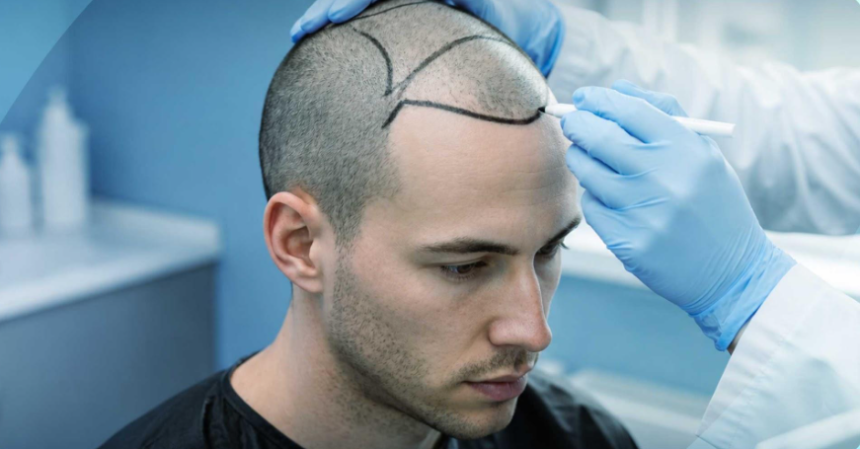
Most information about hair transplants online is written with men in mind, covering receding hairlines and crown baldness in detail while barely mentioning women at all. That gap can leave women experiencing noticeable thinning unsure whether surgery is even an option for them. It is, but the path to getting there looks different in several important ways.
Why female hair loss gets overlooked
Pattern baldness in men follows a fairly predictable script, which is why so much hair transplant content defaults to that experience. Female hair loss doesn’t fit the same script, and it’s often driven by a wider range of underlying causes, which means it doesn’t get the same straightforward treatment in most general hair transplant guides. That gap in information isn’t a reflection of how common the issue is. Female hair loss affects a large share of women at some point in their lives, it just tends to get less attention.
What causes hair loss in women
Several factors can drive hair thinning in women, and they often overlap. Hormonal fluctuations tied to pregnancy, menopause, thyroid disorders, and polycystic ovary syndrome are common contributors. Genetics play a role too, in a pattern sometimes called female pattern hair loss. Nutritional deficiencies, chronic stress, and certain medical conditions can also contribute, which is part of why a proper diagnosis matters before jumping straight to surgical options. Because so many of these causes overlap, two women with similar-looking thinning can end up needing very different treatment plans once the underlying cause is identified.
How it looks different from male pattern baldness
Rather than a receding hairline or a bald spot at the crown, women typically experience diffuse thinning spread across the top of the scalp, most noticeable along the part line. The overall hair density decreases gradually rather than forming a clearly defined bald area. This distinction matters surgically, since transplant planning for diffuse thinning requires a different approach than filling in a well-defined bald patch.
Why candidacy evaluation looks different for women
Not every woman experiencing thinning hair is a good candidate for a transplant, and figuring that out usually takes more than a visual assessment. Because hair loss in women can stem from treatable underlying conditions, a thorough evaluation often includes bloodwork and a detailed scalp exam using tools like trichoscopy to rule out hormonal or nutritional causes before recommending surgery. In some cases, addressing the underlying cause resolves the thinning without surgery being necessary at all, which is why this step shouldn’t be skipped.
Donor hair supply is also evaluated differently for women, since many forms of female hair loss affect the donor area at the back and sides of the scalp too, unlike typical male pattern baldness which usually spares that area. A surgeon needs to confirm there’s enough healthy donor hair before recommending a transplant at all.
Techniques used
Both FUE and FUT can be used for female hair transplants. FUE removes individual follicles without a linear scar, which some women prefer since it allows for shorter styling options during recovery. FUT can yield a larger number of grafts in a single session, which can be useful for more extensive diffuse thinning.
Because the pattern of loss is different, graft placement also works differently for women. Instead of filling in one clearly defined area, the surgeon distributes grafts to increase overall density across the thinning zone, aiming for a natural-looking result that blends with the surrounding hair rather than creating a single dense patch.
Surgery isn’t the only option
A responsible provider will also walk through non-surgical options before recommending a transplant, particularly for women with early-stage or mild thinning. Platelet-rich plasma therapy, low-level laser therapy, and scalp micropigmentation are all used either as standalone treatments or alongside a transplant, depending on the extent of hair loss and a patient’s goals. Surgery tends to make more sense once thinning has progressed and non-surgical approaches alone aren’t producing meaningful results.
Recovery and timeline
Female hair transplants are typically performed as an outpatient procedure under local anesthesia, similar to the process for men. New growth generally starts to appear around the three-month mark, with fuller results visible around nine months as density continues to build. Recovery itself tends to be straightforward, with most patients returning to normal activities within a few days.
What to look for in a provider
Given how different female hair loss can be from male pattern baldness, it’s worth choosing a provider with specific experience treating women, not just a general hair transplant practice. Ask how they evaluate candidacy, whether they investigate underlying causes before recommending surgery, and how they approach graft placement for diffuse thinning specifically. It’s also worth asking to see before-and-after examples from other female patients rather than assuming a clinic’s general portfolio applies to your situation.
Hair loss treatment programs for women, like the one at Hair Restoration Specialists in Atlanta, are a useful example of what a thorough, women-specific evaluation process should include, covering both surgical and non-surgical paths rather than defaulting straight to one option.


