
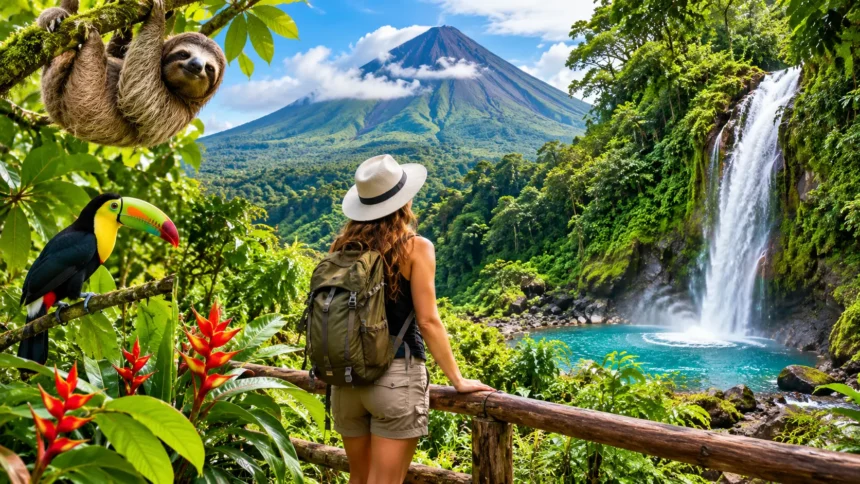
Imagine looking for a vacation destination where you can discover tropical forests, beautiful beaches, colorful wildlife, and fascinating local traditions. Costa Rica keeps appearing in your search results, but you wonder what makes this small Central American country so special. Is it simply another tropical destination, or does it have something more meaningful to offer?
If you have ever wondered, “What is Costa Rica known for?” the answer goes far beyond its beautiful landscapes. The country is internationally recognized for its biodiversity, environmental conservation, volcanic mountains, excellent coffee, peaceful traditions, and relaxed way of life.
Understanding these unique characteristics can help you appreciate Costa Rica beyond ordinary vacation photographs. Whether you are planning a trip or simply learning about different countries, this guide covers its most famous attractions, cultural traditions, history, and interesting facts.
Where Is Costa Rica Located?
Costa Rica is a country in Central America, situated between Nicaragua to the north and Panama to the southeast. It borders the Pacific Ocean on the west and the Caribbean Sea on the east. This geographical location gives the country remarkable natural diversity.
Despite its relatively small size, Costa Rica contains mountains, tropical rainforests, coastal plains, rivers, and volcanic landscapes. Different elevations and regional weather patterns create several distinct environments. Traveling between regions can feel like discovering completely different destinations.
San José is the capital and an important center for business, transportation, education, and culture. Although many travelers associate Costa Rica with beaches and forests, its urban areas also contain museums, historical buildings, and traditional markets.
What Does Costa Rica Mean?
The name Costa Rica translates from Spanish into English as “rich coast.” The name dates back to the early Spanish colonial period. However, historical accounts differ regarding the precise circumstances surrounding its origin.
Today, the name reflects the country’s abundant natural treasures in a broader sense. Its coastlines, fertile landscapes, wildlife, and diverse ecosystems contribute to its remarkable identity. These natural resources also play important roles in tourism and conservation.
Costa Rica demonstrates that a country’s richness is not limited to financial wealth. Its cultural heritage, ecological diversity, and natural beauty provide meaningful reasons for people to explore and appreciate it.
What Is Costa Rica Known for Around the World?
Many people immediately associate Costa Rica with tropical vacations and peaceful beaches. However, its international reputation extends far beyond tourism. The country is also recognized for protecting natural resources, preserving cultural traditions, and maintaining a distinctive approach to national development.
Costa Rica is particularly famous for its extraordinary biodiversity and commitment to environmental conservation. Its protected forests provide habitats for thousands of plant and animal species. These efforts have helped establish the country as an important ecotourism destination.
Other well-known characteristics include its coffee production, volcanic landscapes, traditional food, and Pura Vida philosophy. Together, these features create an identity that distinguishes Costa Rica from many other destinations.
Costa Rica Is Famous for Its Incredible Biodiversity
Finding a destination where wildlife remains closely connected to everyday landscapes can be challenging. In Costa Rica, forests, mountains, rivers, and coastal ecosystems provide habitats for an impressive variety of species. This biological richness is one of the country’s greatest attractions.
Costa Rica contains an estimated 5–6% of the world’s biodiversity despite occupying only a small portion of Earth’s land surface. Its geographical position and varied ecosystems contribute to this remarkable concentration of wildlife. Different regions provide suitable environments for numerous species.
Animals commonly associated with Costa Rica include:
- Two-toed and three-toed sloths.
- Howler monkeys and capuchin monkeys.
- Scarlet macaws and toucans.
- Red-eyed tree frogs.
- Resplendent quetzals.
- Sea turtles.
- Tapirs and jaguars.
Wildlife sightings depend on location, season, and natural conditions. While some animals are relatively easy to observe, others remain elusive. Responsible wildlife watching allows visitors to appreciate these creatures without disturbing their natural habitats.
Beautiful Rainforests and Cloud Forests
If you imagine Costa Rica as a destination filled with palm trees and sandy beaches, you are only seeing part of its natural beauty. The country’s forests contain some of its most impressive landscapes. Tropical vegetation, waterfalls, and mist-covered mountains create unforgettable scenery.
Rainforests generally develop in warm environments with abundant rainfall. Cloud forests occur at higher elevations, where frequent mist creates cooler and particularly humid conditions. Both ecosystems support diverse plant and animal communities.
These forests also perform important environmental functions. They provide wildlife habitats, support freshwater systems, and help regulate the climate. Protecting them benefits both local communities and the wider natural environment.
Monteverde Cloud Forest
Monteverde is among Costa Rica’s most recognizable cloud forest destinations. Its mist-covered trees, mossy branches, and diverse vegetation create a distinctive atmosphere. The region is especially popular among birdwatchers and nature enthusiasts.
The forest provides a habitat for numerous bird species, including the resplendent quetzal. Visitors can learn about the relationships between plants, animals, and environmental conditions through educational experiences. Local conservation initiatives also contribute to protecting the ecosystem.
Corcovado National Park
Located on the Osa Peninsula, Corcovado National Park protects extensive tropical forest and coastal ecosystems. It is internationally recognized for its remarkable biological diversity. The park provides important habitats for many species that depend on relatively undisturbed environments.
Corcovado demonstrates why protecting large natural areas matters. Wildlife needs suitable habitats to survive, reproduce, and maintain ecological relationships. Conservation efforts help preserve these environments for future generations.
Costa Rica Is Known for Its Stunning Beaches
Choosing between a Pacific beach and a Caribbean beach can be difficult when both offer beautiful scenery. Costa Rica benefits from having coastlines along two different bodies of water. Each side provides its own landscapes, cultural influences, and coastal experiences.
The Pacific coast features numerous beach communities, coastal forests, and attractive sunset views. Some areas are known for resort accommodation, while others offer quieter surroundings. The Caribbean coast combines tropical landscapes with distinctive local cultural traditions.
Understanding the differences between these regions helps explain why Costa Rica attracts many types of visitors. Some people prefer lively coastal towns, while others appreciate quieter beaches surrounded by vegetation. Both coastlines contribute significantly to the country’s international reputation.
| Beach destination | Region | What makes it famous |
|---|---|---|
| Tamarindo | Pacific coast | Beach town atmosphere and coastal scenery |
| Manuel Antonio | Central Pacific | Beaches surrounded by tropical forest |
| Santa Teresa | Nicoya Peninsula | Scenic coastline and relaxed atmosphere |
| Puerto Viejo | Caribbean coast | Afro-Caribbean culture and tropical beaches |
| Playa Conchal | Guanacaste | Distinctive shell fragments and clear water |
| Cahuita | Caribbean coast | Coastal national park and coral reef ecosystem |
Beach conditions vary considerably across the country. Some locations experience strong currents, and not every beach is suitable for swimming. Visitors should follow local safety guidance and respect protected coastal environments.
Impressive Volcanoes and Natural Hot Springs
Costa Rica’s mountains are not simply beautiful background scenery. The country lies within a geologically active region where volcanic processes have shaped the landscape over thousands of years. These processes contribute to fertile soils, mountain formations, and geothermal features.
Several Costa Rican volcanoes are internationally recognized for their geological significance and surrounding natural beauty. Their landscapes include craters, forests, volcanic rock formations, and geothermal environments. They also provide valuable opportunities to learn about Earth’s natural processes.
Popular volcano-related destinations include Arenal, Poás, Irazú, and Rincón de la Vieja. Each has different geological features and environmental conditions. Access to volcanic areas depends on official safety restrictions and current activity.
Arenal Volcano
Arenal Volcano is one of Costa Rica’s most recognizable natural landmarks. Its distinctive conical shape rises above the surrounding forests and agricultural landscapes. The nearby town of La Fortuna is closely associated with tourism in the region.
Geothermal activity also contributes to the area’s well-known hot springs. These features reflect the country’s volcanic geology and underground heat sources. The surrounding landscape makes Arenal an important destination for nature-based tourism.
Poás Volcano
Poás Volcano is known for its large summit crater and geothermal activity. Its high-elevation surroundings create environmental conditions that differ significantly from coastal regions. The area provides interesting insights into volcanic landscapes.
Because Poás is an active volcano, visitor access may change depending on safety assessments. Official restrictions help protect people from potentially hazardous conditions. Understanding these limitations is an important part of appreciating active geological environments responsibly.
What Does Pura Vida Mean in Costa Rica?
Travel guides frequently mention Pura Vida, but understanding its meaning requires more than a direct translation. The Spanish phrase translates literally as “pure life.” In Costa Rica, it has developed a broader cultural meaning connected to appreciation, friendliness, and everyday well-being.
People use Pura Vida in several ordinary situations. It can function as a greeting, a farewell, an expression of thanks, or a positive response to someone’s question. Its exact meaning depends on the conversation.
The phrase also represents an internationally recognized aspect of Costa Rican identity. It encourages appreciation for everyday experiences and meaningful connections. However, it should not be interpreted as suggesting that everyone in Costa Rica lives without challenges.
Common situations where you might hear Pura Vida include:
- Greeting someone during a conversation.
- Saying goodbye to a friend.
- Responding when someone asks how you are.
- Expressing appreciation for assistance.
- Acknowledging a pleasant experience.
Understanding the phrase provides a small but meaningful introduction to Costa Rican culture. It demonstrates how everyday language can reflect shared values and traditions. Visitors often remember it long after learning their first Spanish expressions.
Costa Rica Is Famous for Environmental Conservation
Many countries face challenges balancing economic development with environmental protection. Costa Rica has gained international attention for its efforts to address these competing priorities. Conservation has become an important part of its national identity.
Approximately 26% of Costa Rica’s land area receives protection through different conservation arrangements. These include national parks, biological reserves, and other protected areas. Such environments help safeguard wildlife habitats and important natural resources.
Costa Rica has also implemented policies that encourage forest protection and restoration. Its payment for environmental services program recognizes the benefits that forests provide, including biodiversity protection and water regulation. These initiatives have helped support the country’s recovery from earlier deforestation.
Renewable Electricity Production
Costa Rica is widely recognized for its extensive use of renewable electricity. Hydroelectric power, wind energy, geothermal resources, and other renewable sources contribute to its electricity supply. The country’s natural geography supports several of these technologies.
This achievement demonstrates how environmental resources can contribute to national energy systems. However, renewable electricity does not mean that every part of the economy operates without fossil fuels. Transportation and other sectors still present environmental challenges.
Sustainable Tourism
Tourism can create economic opportunities, but it can also place pressure on natural environments. Costa Rica has developed sustainable tourism initiatives to help manage these impacts. The aim is to balance visitor experiences with conservation and community benefits.
Many tourism businesses incorporate environmental practices into their operations. These may involve waste reduction, water conservation, wildlife protection, and cooperation with local communities. Travelers can support these efforts by considering a business’s environmental practices when making decisions.
Famous National Parks in Costa Rica
With so many protected areas, it can be difficult to understand what makes each national park special. Some protect coastal environments, while others preserve forests, volcanic landscapes, or wetlands. Each contributes differently to Costa Rica’s ecological diversity.
National parks also provide opportunities for environmental education and scientific research. Their protected habitats help researchers understand wildlife populations and ecological relationships. Visitors can gain a deeper appreciation of conservation through these experiences.
The following national parks are among the country’s most recognizable natural attractions.
| National park | Main attraction |
|---|---|
| Manuel Antonio National Park | Tropical forest and coastal wildlife |
| Tortuguero National Park | Sea turtle conservation and wetlands |
| Corcovado National Park | Extensive rainforest biodiversity |
| Arenal Volcano National Park | Volcanic landscapes and forest ecosystems |
| Poás Volcano National Park | Volcanic crater and highland scenery |
| Cahuita National Park | Caribbean coastal forests and coral reefs |
| Rincón de la Vieja National Park | Volcanic and geothermal landscapes |
| Marino Ballena National Park | Marine wildlife and distinctive coastline |
Each park has different access requirements, conservation rules, and environmental conditions. Check official visitor information before making plans. Respecting these regulations helps protect both natural environments and visitors.
Costa Rica Is Known for High-Quality Coffee
Coffee lovers often recognize Costa Rica as an important coffee-producing country. However, coffee is more than a popular agricultural product within its borders. It has played a significant role in the country’s economic history and cultural development.
Costa Rica’s mountainous terrain, volcanic soils, and regional climate conditions support coffee cultivation. Different growing environments influence the characteristics of individual coffee varieties. Processing and roasting methods also contribute to their final flavor.
Well-known coffee-producing regions include Tarrazú, the Central Valley, and the West Valley. These regions are associated with distinctive growing conditions and agricultural traditions. Their coffee production connects local communities to international markets.
Traditional coffee preparation also remains an important part of everyday culture. The chorreador, a wooden stand holding a cloth coffee filter, is one recognizable example. It illustrates how ordinary household objects can become meaningful cultural symbols.
Traditional Costa Rican Food and Cuisine
Travelers sometimes expect Costa Rican food to be similar to cuisine from every other Latin American country. However, local ingredients, agricultural traditions, and regional influences create distinctive flavors. Rice, beans, vegetables, plantains, and meat appear frequently in traditional meals.
Many Costa Rican dishes focus on familiar ingredients and satisfying combinations. Regional recipes can vary considerably depending on local agricultural products and cultural influences. Caribbean cuisine, in particular, brings additional ingredients and cooking traditions to the country’s food culture.
Small traditional restaurants known as sodas provide a recognizable example of everyday Costa Rican dining. Their menus often include familiar local meals rather than complicated international dishes. These establishments reflect the importance of traditional food in daily life.
Gallo Pinto
Gallo pinto is one of Costa Rica’s most famous traditional dishes. It combines rice and beans with ingredients such as onions, peppers, and herbs. It is particularly popular at breakfast.
The dish is often served with eggs, plantains, or other accompaniments. Regional and household recipes can differ in seasoning and preparation. Nicaragua also has its own important gallo pinto tradition.
Casado
Casado is a traditional meal that typically combines several foods on one plate. Common components include rice, beans, vegetables, plantains, and a selected protein. Its name translates literally as “married.”
The meal demonstrates how simple ingredients can create a varied and satisfying lunch. Its exact composition changes between restaurants and households. Casado remains a familiar part of Costa Rican everyday cuisine.
Olla de Carne
Olla de carne is a traditional beef stew containing vegetables and root crops. Common ingredients include potatoes, cassava, carrots, and plantains. The dish reflects the availability of agricultural ingredients throughout the country.
Its hearty preparation makes it a comforting meal for many households. Different families may use their own combinations of vegetables and seasonings. Like many traditional dishes, its importance extends beyond a single standardized recipe.
Caribbean Rice and Beans
On Costa Rica’s Caribbean coast, rice and beans often feature coconut milk and distinctive local seasonings. This preparation differs from many versions found in other parts of the country. It reflects the region’s Afro-Caribbean culinary heritage.
Seafood, tropical fruits, and coconut-based preparations also contribute to regional cuisine. These dishes illustrate the cultural diversity that exists within Costa Rica. Exploring regional food provides a deeper understanding of its communities.
Costa Rica Is Famous for Its Peaceful History
One surprising fact about Costa Rica is that it does not maintain a permanent military. While many countries consider armed forces essential to national security, Costa Rica adopted a different constitutional approach. This decision became an important part of its modern history.
Following a civil war in 1948, the country’s leadership announced the abolition of the army. The 1949 Constitution formalized the prohibition of a permanent military. Costa Rica continues to maintain civilian police and other public security institutions.
The country has also developed a strong international association with diplomacy and democratic governance. Nevertheless, it faces public security, economic, and social challenges like other nations. Its peaceful institutional tradition should be understood without assuming that every problem has disappeared.
Costa Rican Culture and Traditional Celebrations
Costa Rican culture cannot be explained through a single expression or tradition. Indigenous heritage, Spanish colonial history, Afro-Caribbean communities, and other cultural influences contribute to its identity. Different regions preserve their own customs, foods, music, and artistic traditions.
Family relationships, community gatherings, and national celebrations are important aspects of cultural life for many people. Festivals often provide opportunities to share traditional music, food, dance, and historical stories. These events help maintain connections between generations.
Learning about local traditions allows visitors to appreciate the country beyond its tourist attractions. Cultural experiences reveal how history and community shape everyday life. They also demonstrate the diversity that exists within a relatively small nation.
Traditional Painted Oxcarts
Decorated oxcarts are among Costa Rica’s most recognizable traditional crafts. Historically, these carts transported coffee and agricultural products between inland communities and coastal ports. Their practical role gradually developed into an important artistic tradition.
Many traditional oxcarts feature brightly colored geometric and decorative patterns. UNESCO recognizes Costa Rica’s oxherding and oxcart traditions as intangible cultural heritage. Their preservation helps maintain traditional craftsmanship and historical knowledge.
Independence Day
Costa Rica celebrates its independence on September 15 each year. The date commemorates independence from Spain in 1821, shared with several other Central American countries. National celebrations often include parades, music, and educational activities.
Schools and community organizations participate in preserving historical traditions. These events provide opportunities to reflect on national identity and cultural heritage. Independence Day remains an important date in the country’s annual calendar.
Football Culture
Football is one of the most popular sports in Costa Rica. Local clubs and the national team attract considerable public interest. Sporting events often bring families, friends, and communities together.
The national team gained international attention during the 2014 FIFA World Cup when it reached the quarterfinals. This achievement became a particularly memorable moment in Costa Rican sporting history. Football continues to contribute to the country’s shared cultural experiences.
Famous Historical and Cultural Places in Costa Rica
Many visitors concentrate entirely on beaches and natural attractions. However, Costa Rica also contains museums, archaeological sites, historic buildings, and cultural institutions. These places provide valuable insights into its history and identity.
San José offers several important museums and architectural landmarks. Other regions contain archaeological evidence of societies that existed long before European colonization. Together, these destinations reveal different chapters of Costa Rican history.
National Theatre of Costa Rica
Located in San José, the National Theatre is one of the country’s most recognizable architectural landmarks. It opened in 1897 and reflects an important period in Costa Rican cultural development. Its decorative interiors and historical design attract considerable interest.
The theatre continues to represent the country’s artistic and performing arts heritage. It demonstrates the importance of cultural institutions alongside natural conservation. Visitors interested in architecture and history often appreciate its distinctive character.
Stone Spheres of the Diquís
The stone spheres of the Diquís are among Costa Rica’s most fascinating archaeological discoveries. These carefully shaped objects were created by Indigenous societies in the country’s southern region. Their precise original purposes remain subjects of archaeological research.
Several archaeological settlements containing these spheres form a UNESCO World Heritage Site. The sites provide evidence of complex societies that existed before European colonization. They highlight the importance of Indigenous history within Costa Rica’s national heritage.
Best Time to Explore Costa Rica
Choosing when to visit Costa Rica can be confusing because weather conditions vary between regions. A sunny period on the Pacific coast may coincide with rainfall elsewhere. Understanding these differences helps travelers develop more realistic expectations.
Much of the Pacific side experiences a drier season from approximately December through April. The greener season generally extends from May into November or December. However, the Caribbean coast follows a different rainfall pattern without an equally distinct dry season.
Both periods provide different opportunities to appreciate the country’s landscapes. Drier conditions may suit coastal sightseeing, while rainier months can reveal especially lush vegetation. Individual preferences should guide travel decisions rather than assuming one season is universally better.
| Travel period | Typical characteristics |
|---|---|
| December to April | Drier conditions in many Pacific regions |
| May to August | Greener landscapes and increasing rainfall |
| September to October | Often wetter along much of the Pacific coast |
| November | Transitional weather in many areas |
| Caribbean coast | Regional rainfall patterns throughout the year |
Weather, wildlife activity, and attraction access can change unexpectedly. Check regional forecasts and official visitor information before traveling. A flexible itinerary allows more room to appreciate different experiences.
Is Costa Rica Expensive to Visit?
Many travelers assume that every Central American destination offers similarly low travel costs. However, Costa Rica can be relatively expensive compared with some neighboring countries. Accommodation, organized transportation, park admission, and tourism services can influence your overall expenses.
Travel budgets vary depending on the season, destination, and preferred accommodation style. Popular resort areas may have different prices from smaller communities. Transportation distances and the number of paid attractions also affect total spending.
Planning major expenses before making reservations helps reduce unexpected costs. Compare accommodation locations, transportation arrangements, and official attraction fees. A realistic budget makes it easier to enjoy your vacation without unnecessary financial pressure.
Interesting Facts About Costa Rica
Costa Rica’s reputation extends across nature, culture, history, and environmental development. Understanding a few essential facts helps provide a clearer picture of the country. These details are particularly useful for students, geography enthusiasts, and first-time visitors.
| Category | Key fact |
|---|---|
| Official name | Republic of Costa Rica |
| Capital city | San José |
| Location | Central America |
| Official language | Spanish |
| Currency | Costa Rican colón |
| Independence Day | September 15, 1821 |
| Administrative divisions | Seven provinces |
| Coastlines | Pacific Ocean and Caribbean Sea |
| National animal symbol | White-tailed deer |
| National bird | Clay-colored thrush |
| Famous cultural expression | Pura Vida |
| International reputation | Biodiversity, conservation, coffee and tourism |
Costa Ricans are commonly known as Ticos and Ticas. These familiar nicknames reflect distinctive aspects of local Spanish usage. Learning such everyday cultural details can make the country feel more familiar.
What Makes Costa Rica Different From Other Countries?
Comparing Costa Rica with other tropical destinations reveals that its appeal comes from several connected characteristics. Beautiful coastlines are only one part of its identity. Forest conservation, cultural heritage, volcanic geography, and peaceful institutional traditions all contribute to its international reputation.
The country’s relatively compact geography allows many different ecosystems to exist within a limited area. Tropical forests, dry forests, cloud forests, wetlands, and marine environments support remarkable ecological diversity. This variety makes Costa Rica particularly important for nature-based education and conservation.
Its cultural identity also extends beyond tourism slogans and picturesque landscapes. Traditional craftsmanship, Indigenous heritage, local cuisine, and agricultural history reveal a more complex society. Understanding these elements helps people appreciate Costa Rica as a country rather than simply a vacation destination.
Frequently Asked Questions
What is Costa Rica most famous for?
Costa Rica is most famous for its biodiversity, tropical rainforests, beautiful beaches, volcanoes, environmental conservation, and Pura Vida culture. It is also internationally recognized for coffee production and sustainable tourism.
Why is Costa Rica called the rich coast?
Costa Rica translates from Spanish as “rich coast.” The name originated during the early Spanish colonial period, although historical accounts differ regarding its precise origin and naming circumstances.
What food is Costa Rica famous for?
Costa Rica is famous for traditional dishes such as gallo pinto, casado, olla de carne, and Caribbean-style rice and beans. Costa Rican coffee and tropical fruits are also widely recognized.
Why does Costa Rica not have an army?
Costa Rica abolished its permanent army following the 1948 civil war, and the decision was formalized in its 1949 Constitution. The country maintains civilian security institutions instead of permanent armed forces.
What is the best thing about Costa Rica?
Many people appreciate Costa Rica for its extraordinary combination of wildlife, natural landscapes, cultural traditions, and conservation efforts. The country’s appeal varies depending on individual interests and preferred experiences.
Conclusion
If you have been wondering what Costa Rica is known for, its reputation extends far beyond tropical beaches and beautiful forests. Its remarkable biodiversity, volcanic landscapes, traditional cuisine, coffee production, and cultural heritage create a distinctive national identity. Its environmental achievements also demonstrate the importance of protecting natural resources.
From the misty cloud forests of Monteverde to the Caribbean traditions of Puerto Viejo, Costa Rica offers many different perspectives within one country. Its Pura Vida philosophy provides another reason people remember it fondly. Together, these characteristics make Costa Rica a fascinating destination to explore and understand.
Start by identifying the aspects of Costa Rica that interest you most, whether they involve wildlife, history, food, or environmental conservation. Explore its different regions and learn more about their communities and natural environments. The more you discover about Costa Rica, the more you understand why its richness extends far beyond its coastlines.