
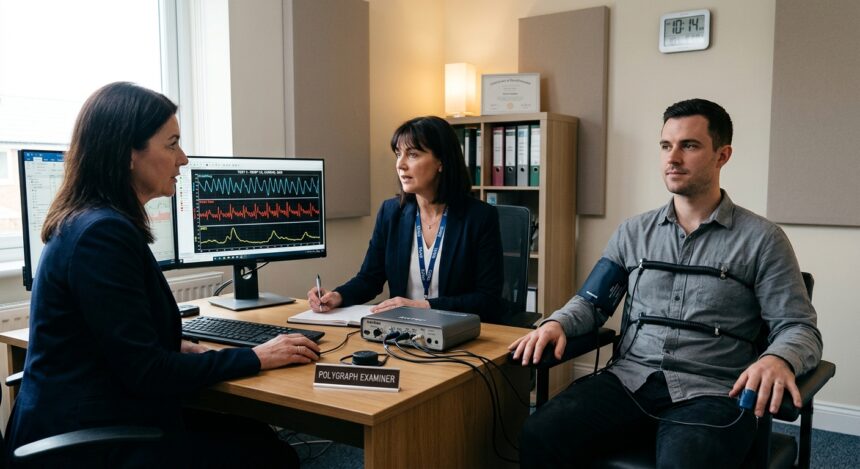
When people need to clarify conflicting accounts or investigate important questions, professional polygraph testing can provide a structured way to assess physiological responses during questioning. A lie detector examination, commonly known as a polygraph test, does not simply identify whether someone is telling the truth or lying. Instead, it records measurable physiological changes while an examiner asks carefully prepared questions.
Modern polygraph examinations combine specialized equipment, structured questioning, and professional interpretation. Understanding how the process works can help people approach testing with realistic expectations and a clearer understanding of what the results can and cannot establish.
What Is a Polygraph Examination?
A polygraph is an instrument designed to monitor several physiological responses while a person answers questions. Depending on the examination, the equipment may record changes associated with:
- Heart rate and cardiovascular activity
- Respiration
- Skin conductivity
- Other physiological reactions relevant to the examination
The examiner reviews these responses in relation to the questions that were asked. The purpose is to identify patterns that may warrant further consideration rather than relying on a single physical reaction.
Why Professional Testing Matters
The quality of a polygraph examination depends on more than the equipment itself. Question formulation, the examination environment, examiner training, and the interpretation of recorded data can all influence the process.
A professionally conducted examination generally begins with a detailed discussion between the examiner and the person being tested. This helps establish the relevant issues and ensures that the questions are understood before the recording phase begins.
How Does a Lie Detector Test Work?
A typical examination involves several stages. While procedures can vary according to the purpose of the test, the general process may include the following:
- Pre-test discussion – The examiner discusses the purpose of the examination and gathers relevant background information.
- Question review – The questions are explained so that the person understands what will be asked.
- Instrument setup – Sensors are attached to monitor relevant physiological activity.
- Questioning – The examiner asks the agreed questions while physiological responses are recorded.
- Data analysis – The recorded information is evaluated using established examination procedures.
- Results discussion – The examiner explains the findings and any appropriate limitations.
This structured approach is important because an examination should not be based simply on whether someone appears nervous. Nervousness, anxiety, excitement, discomfort, and other factors can affect physiological responses.
Situations Where Polygraph Testing May Be Considered
Polygraph examinations can be requested for a range of circumstances. The suitability of testing depends on the specific situation and the questions that need to be addressed.
Common examples include:
| Situation | Potential purpose |
|---|---|
| Relationship concerns | Addressing specific questions involving trust or disputed events |
| Workplace investigations | Examining particular factual allegations |
| Personal disputes | Providing an independent examination process |
| Missing property investigations | Addressing questions surrounding a specific incident |
| Pre-employment screening | Used in certain contexts where legally and practically appropriate |
| Legal matters | Supporting an investigation, subject to applicable rules |
A polygraph should not be viewed as a replacement for documentary evidence, witness testimony, digital records, or other investigative methods. Rather, it can form one part of a broader fact-finding process.
Preparing for a Polygraph Examination
Preparation can make the examination more straightforward. Before attending, it is generally useful to understand the purpose of the test and ensure that the questions being examined are clearly defined.
Consider the following preparation steps:
- Get adequate rest before the appointment.
- Eat normally unless instructed otherwise.
- Avoid arriving under the influence of alcohol or recreational substances.
- Bring relevant information or documentation when requested.
- Tell the examiner about medications or circumstances that could affect the examination.
- Listen carefully to every question before answering.
- Ask for clarification if a question is not understood.
The goal is not to rehearse answers but to make sure the examination is conducted under appropriate and clearly understood conditions.
Understanding the Limitations of Polygraph Testing
No testing method should be presented as infallible. A polygraph records physiological responses; it does not directly measure a person’s thoughts or intentions.
For this reason, professional examiners consider the circumstances surrounding the examination and interpret the recorded data within the established methodology. External factors may also influence physiological responses.
This is why responsible polygraph services avoid presenting the examination as a magical machine that can read someone’s mind. Instead, the process is designed to provide structured information that can be considered alongside other available evidence.
The Importance of Clear Questions
Question design is particularly important. Questions should address specific issues rather than vague assumptions.
For example, a question concerning whether a person took a particular item at a particular time is substantially more specific than a broad question about whether someone is generally trustworthy.
Clear questions help establish a more focused examination and make the resulting physiological data easier to interpret within the context of the test.
Choosing a Professional Polygraph Service
Anyone considering polygraph testing should take time to understand how the examination is conducted before making an appointment. Important factors can include examiner qualifications, testing procedures, confidentiality arrangements, reporting practices, and the specific circumstances for which testing is appropriate.
It is also worth asking what information is required before the appointment and how results will be communicated afterward. A transparent service should explain the examination process without promising certainty that the technology cannot provide.
If you are dealing with a specific dispute or unanswered question and want to understand whether professional polygraph testing could be appropriate, learn more about lie detector examinations and the services available before arranging your appointment. Reviewing the testing process in advance can help you make an informed decision and prepare the relevant questions clearly.