
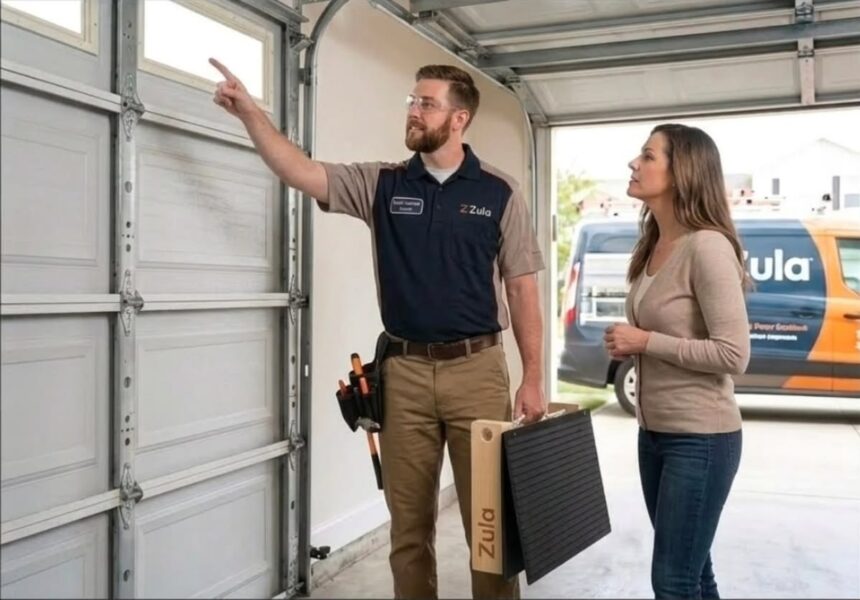
A garage door company installs a personalized door that offers security and seamless operation. The process begins with a thorough consultation, allowing the installer to understand your needs and preferences. Next, you’ll choose the design and materials, and the contractor will schedule professional installation. Here are the steps involved in installing a garage door:
Consultation and Measurements
Garage door installation begins with a discussion of your needs; this can be done online. The discussion includes questions that help the contractor understand your vision, budget, and options. Ask what types of garage doors the contractor installs, or provide sample images.
After consultation, the contractor may visit your home to assess the space and take measurements. Accurate measurements help the garage door company select a unit that fits the opening; they can suggest standard or custom solutions. The contractor measures the width, height, and available headroom inside the garage to help choose the right door. They also check side room and backroom spaces because they affect installation requirements. Contractors may also inspect:
- Existing frames for damage or uneven areas
- Structural concerns that need attention before the new door is installed
- Ceiling and surrounding walls to determine clearance for proper door operation
Selection and Preparation
Garage door installers offer multiple options, including carriage doors that combine modern functionality with the classic aesthetic of swinging barn doors. You can also choose traditional designs or contemporary and specialty doors with expansive glass panels within aluminum frames. Upload an image of your home to help the contractor visualize how different designs will look; review choices that fit your home’s aesthetic. You may also customize your door’s style, windows, and hardware.
Preparation involves clearing the garage opening and removing the existing door if necessary. Contractors will disconnect the old hardware and remove damaged panels, tracks, springs, and other components. The work area is then prepared for the new system, often on the day of installation.
Installation and Testing
Garage door installation includes several components, such as tracks, rollers, and springs. These components work together to support smooth function. The contractor installs the tracks along the sides of the opening to guide the door as it moves. The contractor then fits hinges, rollers, brackets, and panels according to the manufacturer’s specifications. The installer also installs the spring system during this stage to balance the door and support its movement.
After installation, the contractor tests the garage door several times to identify alignment problems, unusual movement, or operating issues. The installer may also check the opener and safety features. The contractor fixes any issues identified, then runs another test to confirm functionality and aesthetics.
Review and Closure
Once everything is installed, the contractor performs a final review. This stage involves checking the outcome against the concept and confirming that all needs are met. Door balance, alignment, movement, and safety sensors should meet safety and operation standards; the contractor closes the project once you’re satisfied.
Speak To a Garage Door Company Today
Experienced contractors should install your garage door because they understand the process and have the right equipment. You can involve a contractor at any stage, including before or after making selections. Speak to a garage door company today to start planning your installation.