
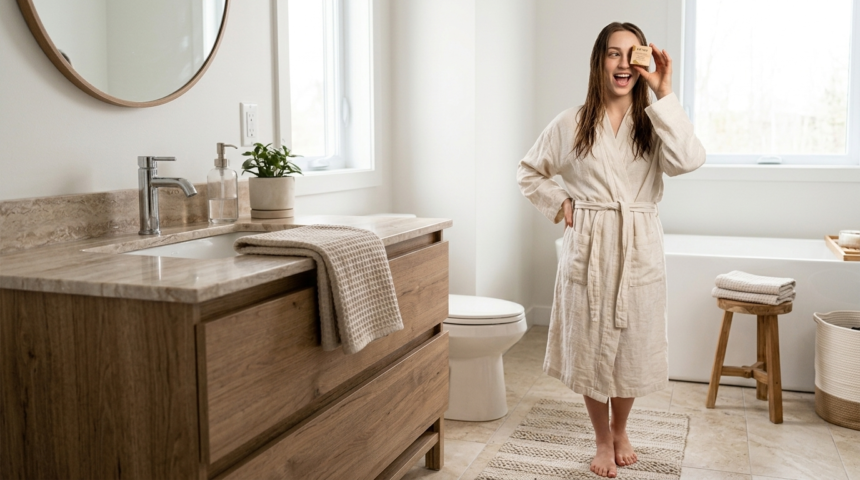
You unwrap your first shampoo bar, wet your hair, rub the bar across your scalp, and wait for the foam. A few seconds later, you’re looking at a thin film of bubbles and wondering what went wrong.
Nothing went wrong. Solid hair care simply works a little differently than a bottle, and a few small habits make all the difference.
This guide covers how to lather, rinse, and condition, what to expect in your first weeks, and how to keep your bars going wash after wash.
Why Learning How to Use a Shampoo Bar Takes a Few Tries
Two things make the first week feel unfamiliar: the formula itself and your scalp.
Solid Doesn’t Always Mean Soap
Many modern bars are syndet bars, short for synthetic detergent. They clean with gentle surfactants instead of the traditional soap base you’d find in a body bar.
That matters because of pH, the scale that measures how acidic or alkaline something is. Your hair and scalp sit on the slightly acidic side, and a well-made syndet bar stays close to that level, while classic soap is more alkaline and can leave strands feeling rough.
Your Scalp May Need a Reset
When you start switching to shampoo bars, your hair can feel a little different for the first few washes. Some people notice extra weight or a slightly coated feel while the scalp adjusts to a new formula.
This usually settles on its own. Give it about two weeks before you decide a bar isn’t for you.
How to Wash With a Shampoo Bar in 4 Steps
Once you know the rhythm, learning how to use a shampoo bar feels as natural as reaching for a bottle. Whichever shampoo bars you choose, the method below stays the same.
1. Soak Your Hair and the Bar
Saturate your hair completely with warm water, right down to the scalp. Then wet the bar itself for a few seconds.
Dry spots are the top reason a bar seems to lather poorly. Water is what activates the cleansers, so be generous here.
2. Build the Lather
Rub the bar directly onto your scalp in a few short strokes, or work it between your palms until you have a creamy foam. If your hair is long or thick, work in sections from front to back.
There’s no need to drag the bar from root to tip. Two or three passes on the scalp are usually plenty.
3. Massage Your Scalp
Set the bar down and use your fingertips, not your nails, to massage the lather into your roots. Spend a full minute here, since the scalp is where oil and buildup collect.
The suds that run through your lengths as you rinse will clean them gently.
4. Rinse Longer Than You Think
Rinse until your hair feels clean rather than slick. Under-rinsing is the most common cause of the waxy feel that new bar users complain about.
Where a Conditioner Bar Fits In
A conditioner bar works just like a classic rinse-out conditioner, only in solid form. Paired with a shampoo bar, it gives you a plastic-free routine, which is a big part of the appeal of zero-waste hair care.
1. Glide It Over Your Lengths
After rinsing out your shampoo, glide the bar down your mid-lengths and ends a few times.
Keep it away from your roots. Conditioner on the scalp is the fastest route to flat, greasy-looking hair.
2. Detangle, Then Rinse
Comb through with your fingers or a wide-tooth comb so the product spreads evenly. Leave it on for a minute or two, then rinse until your hair feels soft but not slippery.
Using a Shampoo Bar in Hard Water
If your bar still won’t foam after all of the above, the problem may be your water rather than the product. Hard water is water high in minerals like calcium and magnesium, and those minerals can block lather and leave a dull film.
- Lather in your hands first:Building foam in your palms before it touches your hair gives the cleansers a head start. It also shows you how much product you’re actually using.
- Use a little less:Extra product is harder to rinse out of mineral-heavy water. A lighter pass on the scalp is often all you need.
- Clarify once in a while:A clarifying rinse is an occasional deeper cleanse that lifts mineral and product buildup. Once every few weeks is plenty for most hair types.
Make Your Bars Last Longer
A well-kept bar can last for dozens of washes, but only if it dries out between uses. A bar left sitting in a puddle turns soft and wears away far faster.
- Use a draining dish:Choose a dish with slats or holes so water runs off instead of pooling. A dry base keeps the bar firm.
- Keep it out of the spray:Store your bars on a shelf away from the direct shower stream. Constant water exposure is what melts them down.
- Let it dry before you travel:Pack your bar only once it’s dry, then keep it in a ventilated tin. Solid bars are also easy to fly with, since they generally aren’t subject to carry-on liquid limits.
Give Your New Routine Two Weeks
Learning how to use a shampoo bar comes down to a few habits: wet everything well, lather at the scalp, rinse longer than feels necessary, and keep your bars dry. Add a conditioner bar on your ends, and your routine is complete.
Most early frustrations fade within a few washes once these habits click. Have you tried switching to shampoo bars yet, and what surprised you most about your first week?