
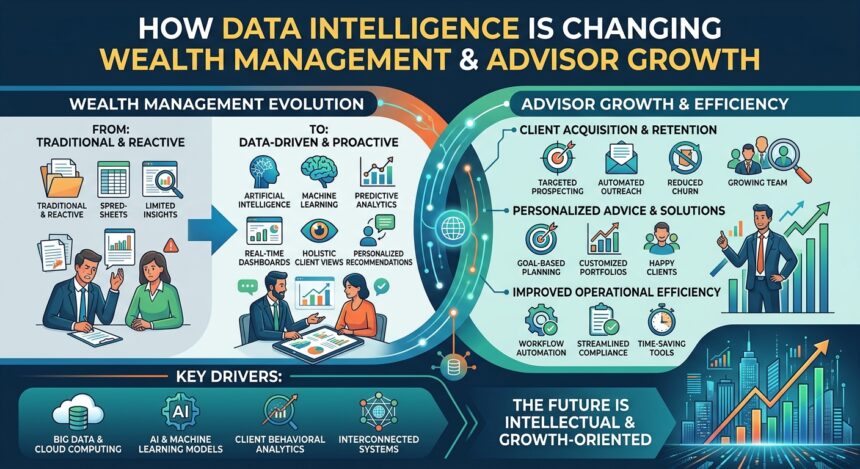
The wealth management industry is becoming increasingly data-driven. Financial advisors, registered investment advisors (RIAs), asset managers, and family offices are using technology not only to manage portfolios but also to identify opportunities, understand markets, and build stronger relationships with prospective clients and professional partners. As competition increases, having access to accurate and actionable information can make a significant difference in how efficiently firms develop their businesses.
The Growing Role of Data in Wealth Management
Traditional business development methods often depend on personal networks, referrals, conferences, and broad marketing campaigns. While these approaches remain useful, modern wealth management firms can supplement them with detailed market intelligence. Data can help organizations understand where potential clients are located, which advisory firms are expanding, and what characteristics may indicate a strong business opportunity.
For RIAs and asset managers, this information can be particularly valuable when developing targeted sales strategies. Rather than approaching a large audience with the same message, firms can use relevant data to identify specific segments and tailor their outreach accordingly.
Technology for Modern Financial Advisors
Advisor technology has expanded well beyond portfolio management and financial planning software. Today, firms have access to tools designed to support prospecting, relationship management, marketing, research, and sales intelligence.
Platforms such as AdvizorPro provide data and sales intelligence designed specifically for the wealth management industry. By bringing relevant information about advisors, firms, and opportunities into a centralized platform, this type of technology can help financial services businesses conduct research and make their business-development efforts more focused.
For sales and distribution teams, having structured industry data can also reduce the amount of time spent manually researching prospects. Instead of relying solely on disconnected sources, professionals can use technology to organize information and identify potential relationships that align with their firm’s objectives.
Supporting RIA Growth
Registered investment advisors operate in a competitive environment where attracting new clients and developing professional relationships are essential to long-term growth. Smaller and independent RIAs may have limited resources compared with larger financial institutions, making efficient prospecting particularly important.
Data intelligence can help RIAs better understand their competitive landscape and identify potential opportunities. For example, firms may examine advisor demographics, organizational structures, assets under management, locations, and other relevant business information when developing a prospecting strategy.
The objective is not simply to collect more data. Effective technology turns information into something that can support practical decisions, allowing advisors and business-development teams to prioritize their time more effectively.
Family Offices and Investment Distribution
Family offices also represent an important part of the modern wealth management ecosystem. Their investment requirements can be sophisticated, and relationships with asset managers, private investment firms, technology providers, and other financial professionals often develop over time.
Investment distribution teams can use industry intelligence to gain a clearer understanding of the organizations and professionals they want to reach. Better information can support account research, territory planning, relationship development, and personalized communication.
As investment products and wealth management services become increasingly specialized, understanding the structure of the market becomes just as important as having a strong offering.
Why Accurate Information Matters
Data quality is one of the most important considerations when adopting sales intelligence technology. Outdated contact details, inaccurate organizational information, or incomplete market profiles can reduce the effectiveness of even a well-designed sales strategy.
Financial services firms therefore benefit from solutions that are built around the specific characteristics of the wealth management market. Industry-focused data can provide more relevant context than generic business databases, particularly when professionals need to understand advisors, RIAs, asset managers, and other participants within the investment ecosystem.
Ultimately, technology should complement professional judgment rather than replace it. Advisors and business-development professionals still need to evaluate relationships, understand individual circumstances, and communicate with prospects appropriately. Data simply provides a stronger foundation for those activities.
The Future of Wealth Management Intelligence
As wealth management continues to adopt digital tools, data intelligence is likely to become an increasingly important component of business development. Firms that combine professional expertise with reliable market information can build more structured approaches to prospecting, distribution, and relationship management.
For RIAs, family offices, asset managers, and financial technology providers, the ability to quickly understand the market can support better planning and more informed decisions. The broader trend is clear: wealth management technology is moving beyond operational efficiency toward tools that help firms understand their markets and develop sustainable business relationships.


