
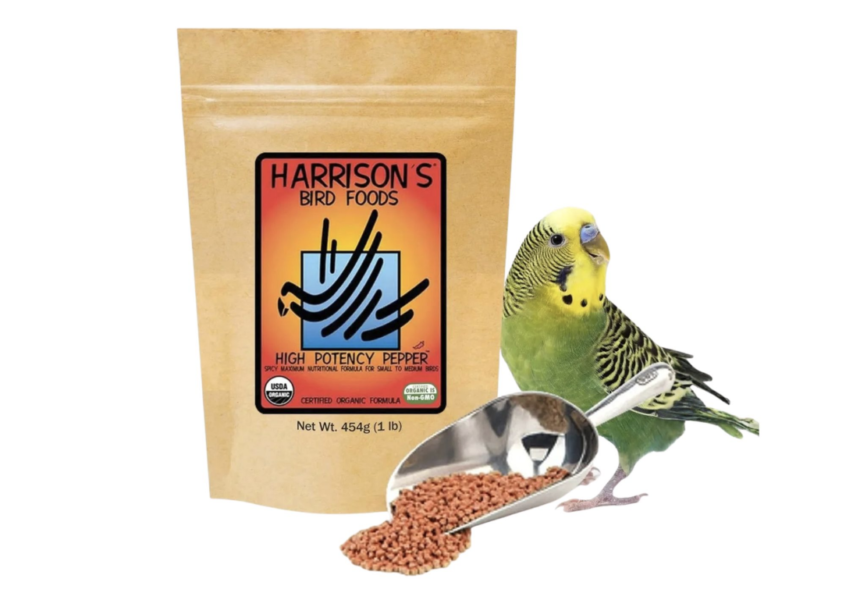
Watch a parrot work through a seed bowl. It spreads the millet, splits the sunflower seeds first, and leaves anything nutritious sitting there like homework. Birds do not consume healthy food. They eat what tastes rich. Avian vets deal with the fallout all the time: fatty liver, brittle feathers, egg binding in hens who never got enough calcium. That is the whole case for Harrison’s organic bird food. Every piece tastes the same, so there is nothing left to pick around.
Why Vets Keep Naming This Brand
Here’s something most people don’t know. Many of the bird pellets on the market have their roots in poultry science. Chickens get processed at six weeks. Your African grey could live fifty years. Those two animals do not have the same nutritional problem to solve.
Dr. Greg Harrison, DVM, ran the first all-bird clinic in the United States. He developed his formulas alongside other avian vets and PhD nutritionists, drawing on parrot research rather than livestock feed data. The pellets are certified organic and Non-GMO Project verified. Whole grains and legumes do the heavy lifting. No dyes, no chemical preservatives.
Worth noting too: several competing brands lean on alfalfa as a base ingredient. Alfalfa was developed for horses and cattle. It contains significantly more fiber than a budgie’s digestive system was ever designed to handle.
What Sets Harrison’s Organic Bird Food Apart
- Certified organic grains and legumes, grown without synthetic pesticides
- Zero artificial color. Birds can’t use red dye, and you’d be paying for it anyway
- Grinds ranging from Super Fine to Coarse, so a finch and a macaw aren’t wrestling the same pellet
- Little or no extra supplementation once your bird is fully converted
- Decades of documented feeding and breeding trials sitting behind the label
Which Formula, and When
The naming trips people up, so:
- High Potency contains more fat and protein. It’s the starting point for the first six months, and the right pick for molting birds, breeders, chicks under a year, seniors, and anyone recovering from illness.
- Adult Lifetime is your maintenance diet. Most healthy adults land here eventually.
- HOPP (Harrison’s Organic Premium Pellets) gives you certified organic maintenance nutrition at a friendlier price, aimed at healthy adult small and medium birds.
Run your choice past an avian vet first. A cockatiel carrying a lipoma and a breeding pair of conures need completely different handling.
Getting a Seed Addict to Switch
Nobody converts a stubborn parrot in a weekend. Some take a month. A few take longer than that, and it’s normal.
- Start by mixing a small handful of Harrison’s organic bird food into the usual seed, then shift the ratio slowly
- When the appetite is at its peak, serve pellets early in the morning.
- Eat one in front of your bird. You are the flock, and parrots imitate the flock.
- Warm it slightly or add a splash of water so it smells like something
- Weigh your bird on a gram scale every morning during the transition
That last point isn’t optional advice. A bird can look like it’s eating while quietly dropping weight, and the scale spots it days before you would. Losing more than about 3% of body weight means you should stop and call your vet.
Where Volkman Bird Food Fits In
Pellets cover nutrition. They don’t cover boredom, and a bored parrot picks at feathers. That’s the job a good seed blend does.
Volkman has been blending seed in California since 1863, out of the San Joaquin Valley, where many of the ingredients are grown. Their seed has a reputation for being clean, and that’s not marketing language. Everything is cleaned twice before it’s blended.
- Avian Science Super diets come species-specific, with separate mixes for canaries, finches, parakeets, cockatiels, lovebirds, and the bigger hookbills
- Featherglow blends bring in fruit, nuts, and vegetables, which makes them useful for foraging toys
- Bags are carbon dioxide flushed, so what you open is still fresh
Keep Volkman bird food in the treat and training category rather than the main meal, and it works beautifully next to a pellet base.
What a Day Might Look Like
- Pellets as the foundation, somewhere around 60 to 70 percent of intake
- Chopped vegetables and leafy greens, offered fresh in the morning
- Seeds and nuts measured out for training rewards, not left in the bowl all day
- Water changed twice daily, more if your bird enjoys dunking food
- Nothing containing avocado, chocolate, caffeine, alcohol, or heavy salt
Questions People Actually Ask
What is the shelf life of an open bag?
Give or take six to eight weeks. Squeeze out the air, keep it dark and cool, and freeze whatever you won’t get through.
Is organic genuinely worth the extra cost?
Per feeding, the gap is narrower than the sticker suggests, mostly because pellets don’t get shelled and flung across the room the way seed does. One vet bill for a diet-related illness wipes out a year of savings.
Can I feed pellets and seed side by side?
You can, as long as you control the amounts. Fill both bowls freely, and the seed vanishes while the pellets sit.
My bird flatly refuses. What now?
Slow down and stay boring about it. Never starve a bird into converting. Two weeks with no progress means it’s time for a supervised plan from your avian vet.
None of this has to happen quickly. Order the smallest bag, start mixing, keep the scale handy, and let your bird move at its own pace.


