
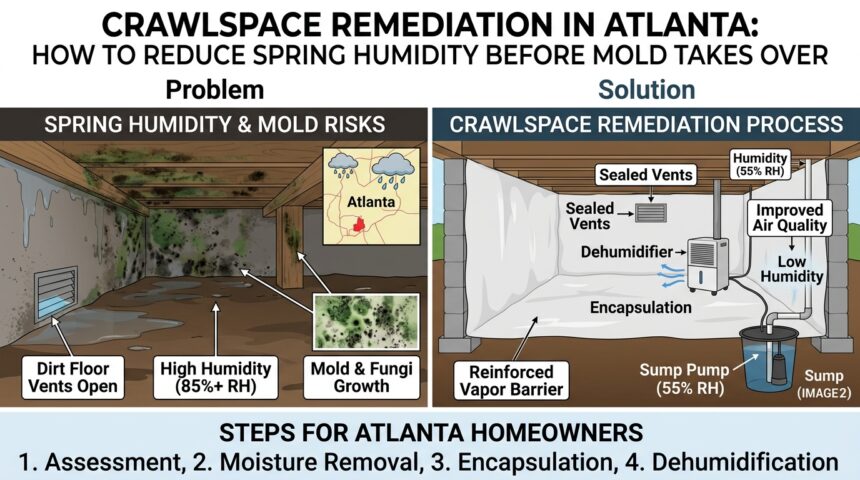
Why Crawlspace Humidity Becomes a Serious Spring Problem
Spring in Atlanta often brings warmer temperatures, heavy rain, rising humidity, and rapid changes in soil moisture around the home. While many homeowners focus on roof leaks, landscaping, or gutter cleanup during this season, the crawlspace is often one of the first areas to show signs of moisture trouble.
For homeowners looking into crawlspace remediation in Atlanta, spring is an important time to inspect the area beneath the home before damp conditions turn into a larger mold or structural concern. When rain saturates the ground around a foundation, water vapor and damp air can collect below the house. If that moisture remains trapped, it can contribute to mold growth, wood deterioration, musty odors, damaged insulation, and poor indoor air quality.
Crawlspace humidity is not just a summer concern. Spring sets the stage for the hotter, more humid months ahead, which makes early moisture control especially important. That is why crawlspace encapsulation services in Atlanta can be a useful part of a broader remediation plan when homeowners need to seal, dry, and protect the space.
The good news is that spring crawlspace moisture can usually be reduced with a combination of drainage improvements, vapor control, air sealing, humidity management, and professional crawlspace waterproofing when needed.
What Causes Crawlspace Humidity in Atlanta During Spring?
Crawlspace humidity often develops when rainwater, ground moisture, and poor air circulation combine. In Atlanta, spring weather can make these conditions worse because frequent storms and warming temperatures increase the amount of moisture around and beneath the home.
Common causes include:
- Spring rain that saturates the soil near the foundation
- Clogged gutters or short downspouts that discharge water too close to the home
- Exposed dirt floors that release ground moisture into the crawlspace
- Foundation vents that allow damp outdoor air to enter
- Poor grading that directs runoff toward the foundation
- Leaky plumbing or condensation on pipes
- Missing, damaged, or poorly installed vapor barriers
- Standing water after storms
- Gaps, cracks, or unsealed crawlspace access points
Once moisture enters the space, it can be difficult for the crawlspace to dry out on its own. Repeated spring rain may keep the ground damp for long periods, especially when the area beneath the home cannot fully dry between storms.
Why Spring Crawlspace Moisture Should Not Be Ignored
Spring moisture matters because the crawlspace is connected to the rest of the home. Air from below can move upward through small gaps, floors, plumbing penetrations, and other openings. When the crawlspace is damp, musty smells and airborne particles may affect the indoor environment.
Moisture can also damage materials over time. Wood framing, floor joists, subflooring, insulation, and stored items may all be affected if humidity remains elevated. As temperatures rise, damp spaces may also become more attractive to insects and other pests.
Homeowners may notice warning signs such as:
- Musty odors inside the home
- Soft or uneven floors
- Condensation on ducts or pipes
- Damp or sagging insulation
- Visible mold or mildew
- Increased indoor humidity
- Pest activity
- Water stains or moisture on crawlspace walls
- Muddy areas or standing water after spring storms
These symptoms do not always mean a major structural issue is present, but they do signal that the crawlspace should be inspected and corrected before moisture problems continue into summer.
What Is Crawlspace Remediation?
Crawlspace remediation is the process of identifying and correcting moisture, mold, drainage, insulation, and air-quality issues within a crawlspace. The goal is to make the area cleaner, drier, and less vulnerable to future damage.
Depending on the condition of the crawlspace, remediation may include removing damaged insulation, treating mold-affected surfaces, sealing moisture entry points, installing a vapor barrier, improving drainage, adding a dehumidifier, or completing crawlspace waterproofing.
Remediation corrects existing moisture or mold-prone conditions, while waterproofing helps limit future water intrusion. In Atlanta, the two often work together because a crawlspace may need both cleanup and long-term moisture prevention.
How to Reduce Crawlspace Humidity This Spring Before Mold Becomes a Problem
Reducing crawlspace humidity starts with finding where the moisture is coming from. A quick surface-level fix may not be enough if spring runoff is entering from outside, vapor is rising from exposed soil, or damp air is moving through open vents.
Spring is also a practical inspection window. It gives homeowners a chance to evaluate the crawlspace after winter weather and before summer humidity makes damp conditions harder to manage.
Check for Water Intrusion After Spring Rain
Spring storms can reveal crawlspace vulnerabilities quickly. After a period of heavy rain, homeowners should look for signs of water entry around the foundation, crawlspace walls, piers, and low areas of the ground.
Pooling water, damp soil, water stains, and muddy areas can indicate that drainage improvements may be needed. If the yard slopes toward the home or downspouts discharge too close to the foundation, runoff may collect near the crawlspace and raise moisture levels.
Improving exterior drainage reduces the amount of water reaching the foundation. This may include cleaning gutters, extending downspouts, correcting grading, removing debris near the foundation, or installing drainage systems where appropriate.
Clean Gutters and Direct Runoff Away From the Foundation
Spring is a good time to inspect gutters and downspouts because leaves, twigs, pollen, and storm debris can prevent water from moving away from the roofline properly. When gutters overflow or downspouts drain too close to the home, water can collect around the foundation and increase crawlspace moisture.
Downspout extensions should move water several feet away from the foundation when possible. Homeowners should also check that splash blocks, buried drains, and drainage paths are not clogged or directing water back toward the house.
This simple maintenance step can make a meaningful difference when repeated spring rainfall is contributing to damp conditions beneath the home.
Install or Repair a Crawlspace Vapor Barrier
A vapor barrier helps separate the crawlspace from moisture rising out of the ground. In homes with exposed soil, ground moisture can evaporate into the crawlspace every day, especially as temperatures rise in spring.
A properly installed vapor barrier should cover the crawlspace floor and be sealed at seams, edges, piers, and penetrations as appropriate. Thin, loose, torn, or incomplete plastic may offer limited protection and allow water vapor to keep entering the air.
For homes with recurring moisture concerns, a professional can determine whether a basic vapor barrier is enough or whether a more complete encapsulation or waterproofing approach is needed.
Seal Gaps and Openings That Let Damp Air In
Many homeowners assume crawlspace vents always help moisture escape. In humid climates, however, open vents can allow warm, moisture-heavy air to enter the crawlspace. During spring, damp outdoor air can move into the crawlspace and create condensation when it meets cooler surfaces beneath the home.
Sealing uncontrolled openings limits the amount of humid outdoor air entering the space. This may include crawlspace doors, foundation gaps, utility penetrations, and poorly sealed vents. The right approach depends on the home, the crawlspace design, and whether other moisture-control systems are in place.
Improve Drainage Around the Foundation
Crawlspace humidity is often connected to drainage problems. Even if water does not visibly flood the crawlspace, saturated soil around the foundation can increase moisture levels below the home.
Homeowners should make sure landscaping does not trap water against the house, mulch is not piled too high against the foundation, and low areas near the home are not collecting rainwater. In some cases, interior or exterior drainage systems may be needed to manage water that regularly collects around or beneath the crawlspace.
A drainage solution should address the source of the water rather than simply drying the area after each storm.
Remove Wet or Damaged Insulation
Crawlspace insulation can hold moisture once it becomes damp. Wet insulation may sag, lose effectiveness, and contribute to odors or mold growth. If insulation has been exposed to long-term humidity, leaks, or spring flooding, it may need to be removed and replaced as part of the remediation process.
Removing damaged materials reduces moisture reservoirs inside the crawlspace. It also gives professionals a clearer view of joists, subflooring, and other structural materials that may need attention before the hotter months arrive.
Use a Crawlspace Dehumidifier When Appropriate
A crawlspace dehumidifier is used to manage airborne moisture, especially when paired with sealing, drainage, and vapor control. However, a dehumidifier should not be the only solution if water is actively entering the crawlspace or the ground is uncovered.
The best results usually come from controlling moisture at the source first. Once bulk water and vapor intrusion are reduced, a dehumidifier can maintain more stable humidity levels through spring and into summer.
Schedule a Professional Crawlspace Inspection
Some crawlspace problems are easy to miss from the access door. A professional inspection can identify hidden moisture sources, mold-prone areas, drainage concerns, damaged insulation, and structural warning signs.
For homeowners researching crawlspace waterproofing in Atlanta, APS Waterproofing provides crawlspace solutions that address moisture intrusion and support long-term protection. A professional evaluation can clarify whether the home needs drainage work, vapor barrier installation, encapsulation, mold-related remediation, or another moisture-control approach.
Common Spring Crawlspace Moisture Mistakes Homeowners Make
Crawlspace moisture problems often get worse when the underlying source is not addressed. A temporary fix may make the space look better for a short time, but humidity can return if rainwater, ground vapor, and damp air continue entering the area.
Common mistakes include:
- Waiting until summer to address spring moisture problems
- Covering visible mold without correcting the moisture source
- Installing a dehumidifier before managing drainage or ground vapor
- Ignoring musty odors because the living space still feels comfortable
- Using thin plastic that is not sealed properly
- Allowing downspouts to discharge near the foundation
- Leaving wet insulation in place
- Assuming open vents will solve humidity problems in a humid climate
- Overlooking gutter clogs, grading issues, or storm runoff patterns
The most effective approach is to view the crawlspace as a system. Drainage, air sealing, vapor control, insulation, and humidity management all work together.
When Is Crawlspace Waterproofing Needed?
Crawlspace waterproofing may be needed when moisture problems are recurring, when water enters during rain, or when humidity remains high despite basic repairs. Waterproofing helps manage water before it causes mold, wood damage, odors, or structural concerns.
A waterproofing plan may include interior drainage, sump pump installation, vapor barrier upgrades, encapsulation, sealing, or other measures based on the crawlspace conditions. Not every home needs the same solution. The right plan depends on how water enters, how often moisture appears, and what materials have already been affected.
Homeowners should consider professional help if they see standing water, repeated dampness after spring storms, mold growth, sagging insulation, wood damage, or persistent musty smells.
A Drier Crawlspace Starts With Spring Moisture Control
Spring is one of the best times to address crawlspace humidity because it allows homeowners to correct moisture issues before summer heat makes the problem harder to manage. By checking for water intrusion, cleaning gutters, improving drainage, sealing openings, installing an effective vapor barrier, and addressing damaged materials, homeowners can reduce the risk of mold and protect the home from avoidable moisture damage.
Crawlspace remediation in Atlanta is most effective when it focuses on prevention as well as repair. Instead of waiting for mold to spread or structural materials to deteriorate, homeowners can use spring as a practical window to create a cleaner, drier, and more stable crawlspace.