
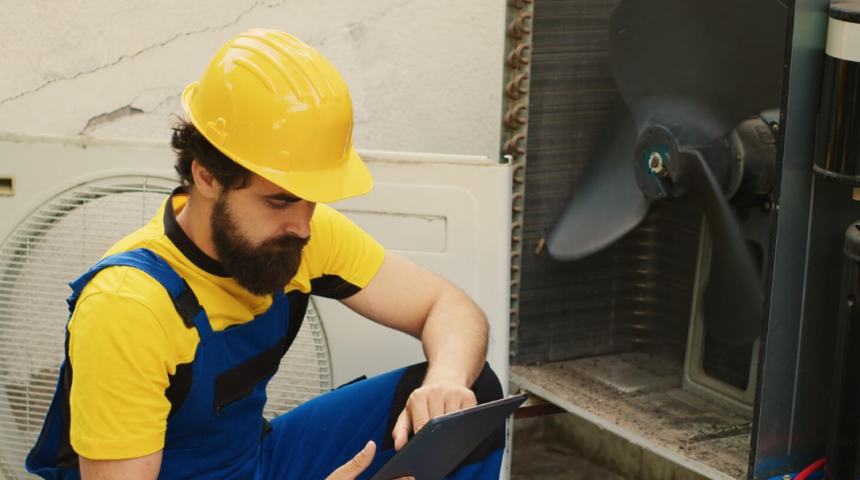
A homeowner who buys new construction in Peoria, Arizona reasonably expects a few trouble-free years from the mechanical systems before anything needs attention. For plumbing fixtures and appliances, that expectation usually holds. For the air conditioning system, it does not always hold the same way, and the reason has less to do with the equipment itself than with the conditions under which it was installed. Peoria has been one of the fastest-growing cities in the Phoenix metro for several years running, and that growth rate has real consequences for how carefully any single HVAC system gets commissioned before the next one on the schedule takes priority.
A City Built Faster Than Almost Anywhere Else in the Valley
Peoria has grown by roughly 18 percent over a five-year stretch, adding housing units at a rate of more than 20 percent over the same period. Roughly half of the city’s land remains undeveloped, meaning this pace of construction is not a temporary spike but an ongoing condition that will continue for years. For an HVAC installation crew, this kind of sustained volume creates a very different working environment than a single custom home build. Crews move from house to house on a schedule set by the broader construction timeline, not by how long a single system’s commissioning would ideally take.
What Volume Construction Does to Installation Quality
None of this means new Peoria homes receive defective equipment. It means the margin for the small errors that any installation can produce becomes tighter when a crew is completing several installations in a single day rather than one installation with time to spare. A refrigerant charge that is slightly outside specification, a service valve not fully seated, or an electrical connection that is technically functional but not torqued to the ideal specification are all conditions that a rushed final commissioning check is more likely to miss than a slower one. None of these produce an immediate failure. They produce a system that runs adequately at first and then develops a problem earlier than a system installed under less time pressure would.
Early Warning Signs in a System Under Two Years Old
The signs that a builder-grade system may have a commissioning issue rather than a normal wear issue are somewhat different from the signs homeowners typically associate with an aging unit. A system less than two years old that already shows reduced cooling capacity on the hottest days, that cycles more frequently than seems reasonable for its rated size, or that has needed a refrigerant top-off within the first year are all patterns worth paying attention to. A properly charged, correctly commissioned system should not need refrigerant added at all during this period, since the refrigerant circuit in a new system is sealed and should hold its factory charge indefinitely absent a leak. Any refrigerant addition on a young system points toward either an undercharge from installation or a leak that was present from day one.
What to Ask About the Original Installation
Homeowners in newer Peoria developments have more leverage than they might realize when it comes to getting clear information about how their system was installed. Builders and HVAC subcontractors are generally required to document refrigerant charge verification, static pressure testing, and airflow measurement as part of a proper commissioning process, even when the pace of construction is fast. Asking for this documentation, whether at closing or after moving in, establishes a baseline. If the documentation does not exist or the numbers on it look inconsistent with what a technician measures during a later visit, that is useful information for understanding why an early repair need might have developed.
The Difference Between Symptom and Cause in a Young System
When a two-year-old system needs a repair, the instinct is often to treat it the same way a ten-year-old system’s repair would be treated: fix the immediate symptom and move on. For new-construction systems in fast-growth areas, this approach can miss the underlying cause. A capacitor that failed early might be a coincidence, or it might be running under more electrical stress than it should because of an installation issue elsewhere in the circuit. A technician who takes the time to verify refrigerant charge, static pressure, and electrical readings against manufacturer specifications during a repair visit, rather than simply replacing the failed part and leaving, is far more likely to catch whether the original installation left something uncorrected.
Why This Matters Beyond the Immediate Repair
A young system with an uncorrected installation issue does not necessarily fail catastrophically. More often, it simply performs below its rated efficiency and needs more frequent service than it should for its age, quietly costing the homeowner more in energy use and repair calls than a correctly commissioned system would over the same period. Catching this early, ideally during the first service call rather than after several repeat visits, is the difference between a minor correction and years of paying for a problem that should have been caught at installation.
What This Means for New Peoria Homeowners
None of this is a reason to distrust new construction generally. It is a reason to treat the first year or two of a new system’s life with a bit more attentiveness than the marketing materials suggest is necessary. A system that needs AC repair in Peoria, AZ well before the age most homeowners expect is not necessarily a sign of bad luck. In a city growing as fast as Peoria, it is often a sign worth investigating at the level of the original installation rather than treating as an isolated component failure.