
Washington DC is one of the most fascinating travel destinations in the United States, known for its historic monuments, world-famous museums, beautiful parks, and important national landmarks. However, choosing the best time to visit Washington DC can make a significant difference to your travel experience. Weather conditions, seasonal attractions, tourist crowds, and accommodation prices change throughout the year, making certain months more suitable for sightseeing.
The nation’s capital experiences four distinct seasons, each offering something unique for visitors. Spring brings beautiful cherry blossoms and colorful gardens, while summer offers long daylight hours and lively outdoor activities. Autumn transforms the city’s parks with vibrant foliage, whereas winter provides a quieter atmosphere for exploring museums, historic buildings, and popular cultural attractions.
Whether you are planning a family vacation, educational trip, or weekend getaway, understanding Washington DC’s seasonal differences helps you choose suitable travel dates. This guide explains the best months to visit Washington DC, average temperatures, seasonal attractions, and practical travel tips. It will help you plan a comfortable and memorable visit based on your interests, budget, and preferred weather conditions.
When Is the Best Time to Visit Washington DC?
The best time to visit Washington DC is generally from March to May and September to November. These periods offer a combination of pleasant sightseeing conditions, beautiful seasonal scenery, and opportunities to explore major attractions. Spring is particularly popular for cherry blossoms, while autumn provides cooler temperatures and colorful landscapes throughout the capital’s parks and historic districts.
April and May are excellent choices for travelers who enjoy outdoor sightseeing and comfortable walking conditions. Average daytime temperatures gradually rise from approximately 19°C in April to 24°C in May. Visitors can explore the National Mall, Lincoln Memorial, Washington Monument, and surrounding gardens without the intense summer heat that often affects the city.
September and October are equally attractive, especially for travelers who prefer exploring the city after the busiest summer vacation period. September remains relatively warm, while October typically brings daytime temperatures around 21°C. These months are ideal for walking tours, visiting historic neighborhoods, enjoying outdoor attractions, and discovering Washington DC’s cultural landmarks.
Understanding Washington DC Weather and Climate
Washington DC has a humid subtropical climate, characterized by hot summers, relatively cold winters, and noticeable seasonal changes. Summer temperatures commonly reach 30°C to 32°C during the day, with humidity making the weather feel considerably warmer. Winters are colder, with average daytime highs often ranging between 7°C and 10°C during December, January, and February.
Spring weather gradually becomes warmer, although occasional rain showers and sudden temperature changes are common. March can still feel chilly, while April and May offer more comfortable outdoor conditions. Autumn follows the opposite pattern, with September retaining summer warmth before October and November introduce cooler mornings, shorter daylight hours, and increasingly crisp weather.
Rainfall occurs throughout the year, sometimes accompanied by thunderstorms during the warmer months. Snow is possible during winter, although the amount varies considerably between years. Travelers should check weather forecasts before departure and prepare for seasonal conditions, particularly when planning extended walking tours, outdoor photography, or visits to monuments across the National Mall.
Visiting Washington DC in Spring: March to May
Spring is one of the most beautiful seasons for visiting Washington DC because flowering trees and gardens transform the city’s landscape. March brings gradually improving weather, with average daytime temperatures around 14°C. April becomes noticeably milder, while May offers warmer conditions that are particularly comfortable for sightseeing, walking tours, and exploring the capital’s outdoor attractions.
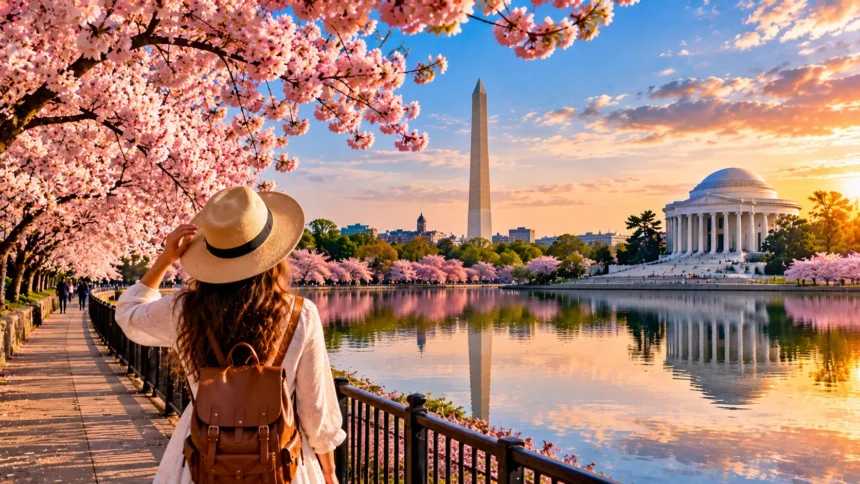
The famous cherry blossoms are a major reason travelers visit Washington DC during spring. The trees surrounding the Tidal Basin create spectacular pink and white scenery, attracting photographers and visitors from around the world. Other popular spring attractions include the National Mall, United States Botanic Garden, and landscaped grounds surrounding important historic landmarks.
However, spring is also one of Washington DC’s busiest tourist seasons, especially during peak cherry blossom periods. Hotels near major attractions can become expensive, and popular areas may experience large crowds. Travelers should reserve accommodation early, carry a lightweight waterproof jacket, and allow flexibility because cherry blossom timing and spring weather vary from year to year.
Visiting Washington DC in Summer: June to August
Summer is a popular travel season in Washington DC, particularly for families and visitors planning school vacations. June offers warm temperatures, while July and August are usually the hottest months of the year. Average daytime highs often reach approximately 31°C, and humidity can make outdoor sightseeing uncomfortable during the warmest afternoons.
Long daylight hours provide plenty of opportunities to explore the city’s monuments, parks, and cultural attractions. Visitors can enjoy evening walks around the National Mall, explore waterfront areas, and attend seasonal performances or community events. Smithsonian museums also provide excellent indoor alternatives when temperatures become too high for extended outdoor activities.
Summer sightseeing requires additional preparation because intense sunshine, humidity, and occasional thunderstorms can affect travel plans. Carrying drinking water, wearing comfortable clothing, and using sun protection are important during outdoor activities. Scheduling monument visits for mornings or evenings can make exploration more comfortable while leaving the hottest hours for museums and other indoor attractions.
Visiting Washington DC in Autumn: September to November
Autumn is an excellent season for exploring Washington DC because temperatures gradually become cooler and outdoor conditions are often pleasant. September typically remains warm, with average daytime temperatures around 27°C, while October becomes noticeably milder. November brings colder weather and shorter days, making indoor museums and historic attractions increasingly appealing.
The city’s parks and tree-lined streets become especially beautiful as leaves turn shades of yellow, orange, and red. Rock Creek Park is a popular destination for enjoying autumn scenery, walking trails, and peaceful natural surroundings. Visitors can also explore the National Arboretum and landscaped areas surrounding major monuments while appreciating the changing seasonal colors.
September and October are particularly suitable for travelers who enjoy walking between attractions without intense summer humidity. Tourist crowds may become more manageable after the main summer vacation period, although weekends and special events can remain busy. Packing layers and comfortable walking shoes helps visitors adjust to cooler mornings, warmer afternoons, and changing autumn temperatures.
Visiting Washington DC in Winter: December to February
Winter offers a quieter and often more affordable opportunity to explore Washington DC’s museums, monuments, and historic buildings. December features holiday decorations and seasonal celebrations, while January and February generally experience fewer leisure tourists. Average daytime temperatures range from approximately 7°C to 10°C, although freezing conditions and colder weather can occur.
Indoor attractions are especially appealing during winter, including the Smithsonian National Museum of Natural History and National Museum of American History. Visitors can also explore the National Gallery of Art and other cultural institutions without depending on favorable outdoor weather. Seasonal displays and illuminated landmarks create additional sightseeing opportunities during the holiday period.
Winter travelers should prepare for cold winds, occasional snowfall, and shorter daylight hours. Warm coats, gloves, scarves, and waterproof footwear are useful when exploring outdoor monuments and historic neighborhoods. Although accommodation rates can be lower outside major events, holidays, presidential inaugurations, and large conventions may increase hotel demand and prices.
Best Time to See Cherry Blossoms in Washington DC
Cherry blossom season is one of Washington DC’s most celebrated annual attractions, drawing visitors who want to experience the capital’s beautiful flowering trees. Peak bloom typically occurs between late March and early April, although exact dates depend on winter temperatures and changing spring weather. The blossoms create especially attractive scenery around the Tidal Basin.
The National Cherry Blossom Festival celebrates the historic relationship between the United States and Japan through cultural activities and seasonal events. Visitors can admire flowering trees near the Jefferson Memorial and other locations throughout the city. Early morning visits are particularly appealing because softer sunlight and fewer crowds can create a more peaceful sightseeing experience.
Travelers should remember that cherry blossom peak bloom is difficult to predict far in advance. Unusually warm weather can encourage earlier flowering, while colder temperatures may delay the season. Visitors planning specifically around the blossoms should monitor seasonal updates, book flexible arrangements where possible, and avoid assuming that flowers will peak on the same dates every year.
Washington DC Weather by Month: January to December
Understanding monthly weather patterns helps travelers choose suitable dates for visiting Washington DC. January and February are usually the coldest months, with average daytime temperatures around 8°C to 10°C. March becomes gradually milder, while April and May provide increasingly comfortable conditions for enjoying parks, monuments, gardens, and walking tours.
June introduces summer warmth, followed by the hottest conditions during July and August. Daytime temperatures commonly reach around 30°C to 32°C, with high humidity making some afternoons uncomfortable. September remains relatively warm, while October generally provides excellent weather for exploring historic districts, outdoor attractions, and the colorful scenery of autumn.
November marks the transition toward winter, with average daytime highs near 15°C and increasingly cool evenings. December brings colder temperatures, holiday decorations, and shorter daylight hours. Monthly averages provide general guidance rather than guaranteed conditions, so travelers should review current weather forecasts shortly before departure and pack clothing suited to potential changes.
Average Monthly Temperatures in Washington DC
| Month | Average Daytime High | Weather Conditions |
|---|---|---|
| January | 8°C | Cold, possible snow |
| February | 10°C | Cold, occasional frost |
| March | 14°C | Cool, early spring |
| April | 19°C | Mild, spring blossoms |
| May | 24°C | Pleasant, occasional rain |
| June | 29°C | Warm, increasing humidity |
| July | 32°C | Hot and humid |
| August | 31°C | Hot, occasional thunderstorms |
| September | 27°C | Warm, gradually cooling |
| October | 21°C | Mild, colorful autumn |
| November | 15°C | Cool, shorter days |
| December | 10°C | Cold, holiday atmosphere |
Best Time to Visit Washington DC for Budget Travelers
Budget-conscious travelers should consider visiting Washington DC during January, February, or selected periods in November and early December. These months may offer more affordable hotel rates compared with the popular spring cherry blossom season. However, accommodation prices depend on conventions, political events, holidays, and the location of your chosen hotel.
Traveling during the shoulder seasons can also provide good value while offering more comfortable sightseeing temperatures. Late October and certain weeks in early March may be attractive alternatives for visitors seeking a balance between cost and weather. Comparing weekday and weekend hotel rates is useful because Washington DC’s accommodation demand is influenced by business travel.
Washington DC is particularly appealing for budget travelers because many major museums and monuments offer free admission. Most Smithsonian museums are free, although some attractions require advance timed-entry passes. Using public transportation, planning walkable sightseeing routes, and choosing affordable restaurants can help reduce expenses without limiting access to the city’s most memorable attractions.
Best Time to Visit Washington DC for Sightseeing and Events
April, May, September, and October are among the most comfortable months for sightseeing across Washington DC. These periods usually offer pleasant temperatures for exploring the National Mall and surrounding historic landmarks. Visitors can spend several hours walking between the Lincoln Memorial, Washington Monument, World War II Memorial, and nearby museums without facing extreme seasonal weather.
Washington DC also hosts cultural celebrations and public events throughout the year. Spring is associated with the National Cherry Blossom Festival, while summer brings Independence Day celebrations, outdoor performances, and seasonal activities. Autumn offers cultural programs and community events, while December introduces holiday displays and festive experiences across the capital.
Travelers should plan around major events because public celebrations can affect accommodation availability, transportation, and access to popular attractions. The Fourth of July is particularly busy around the National Mall, while cherry blossom weekends attract large numbers of visitors. Checking event schedules and booking necessary attraction tickets in advance helps prevent unexpected disruptions.
Practical Travel Tips for Visiting Washington DC
Choosing a convenient location can make exploring Washington DC much easier, especially for first-time visitors. Downtown, Penn Quarter, and areas near the National Mall provide access to many important attractions. Neighborhoods such as Dupont Circle and Capitol Hill offer different surroundings, restaurants, and transportation connections that may appeal to travelers seeking a broader city experience.
Washington DC has an extensive public transportation network, including Metrorail and Metrobus services connecting neighborhoods and tourist attractions. Walking is also convenient around the National Mall, although distances between monuments can be greater than expected. Comfortable footwear, a realistic sightseeing schedule, and sufficient breaks are important when planning full days of exploration.
Visitors should also check museum opening hours, security requirements, and reservation policies before arrival. Some popular attractions, including the Washington Monument, require timed tickets, while certain Smithsonian museums use free entry passes. Packing appropriate seasonal clothing and allowing flexibility for weather changes will help make your Washington DC vacation more comfortable and organized.
Conclusion
The best time to visit Washington DC depends on your preferred weather, travel budget, and sightseeing interests. Spring and autumn generally provide the most comfortable conditions, with April, May, September, and October standing out as excellent choices. These months offer pleasant temperatures, beautiful scenery, and opportunities to explore the capital’s monuments, museums, and historic neighborhoods.
Summer attracts travelers with long daylight hours, cultural events, and family-friendly activities, although heat and humidity can make outdoor sightseeing challenging. Winter provides a quieter atmosphere, seasonal celebrations, and opportunities to explore indoor attractions. Cherry blossom season is particularly memorable, but its popularity means visitors should prepare for crowds and higher accommodation demand.
Before planning your Washington DC vacation, consider the attractions you want to visit and how seasonal conditions may affect your itinerary. Comparing accommodation prices, checking event schedules, and preparing suitable clothing can improve your experience. With thoughtful planning, Washington DC offers enjoyable sightseeing opportunities and memorable cultural experiences throughout the year.
Frequently Asked Questions
What is the best month to visit Washington DC?
April, May, September, and October are among the best months to visit Washington DC because they offer comfortable sightseeing temperatures. Spring brings beautiful blossoms, while autumn provides colorful foliage and pleasant conditions for outdoor exploration.
What is the cheapest time to visit Washington DC?
January and February are often among the most affordable months for visiting Washington DC outside major events. Travelers may find lower hotel rates, although prices depend on political events, conventions, and accommodation availability.
When is cherry blossom season in Washington DC?
Cherry blossom peak bloom usually occurs between late March and early April. However, the exact timing changes annually depending on weather conditions, so visitors should check seasonal bloom forecasts before planning their trips.
How many days do you need to explore Washington DC?
Three to four days are generally enough to explore major Washington DC attractions, including the National Mall, historic monuments, and several Smithsonian museums. Additional days allow more time for neighborhoods and cultural experiences.
Is Washington DC better to visit in spring or fall?
Both seasons offer excellent sightseeing conditions. Spring is especially popular for cherry blossoms and colorful gardens, while autumn provides comfortable temperatures, beautiful foliage, and opportunities to explore outdoor attractions with potentially fewer crowds.


