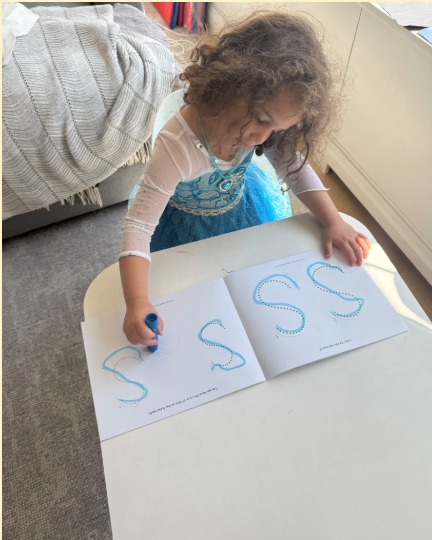
A child learning to read this way might be singing a letter’s sound, tapping the table once for each sound in a word, and drawing a circle around a particular letter on the page. It looks like play, and it is, but it is also the reason the letters stick. Reading draws on more than one sense, and teaching it as though it uses only the eyes leaves a lot of learning on the table.
One Sense Is a Weak Hook
A letter seen once and named is easy to forget, because it is stored in only one place. The same letter seen on the page, said aloud, traced by a finger, and set to a short tune is stored several times over, in what the child heard, said, felt, and did. Recall then has more than one path back to it. This is a big part of why multi-sensory teaching tends to move faster than repetition alone. It is not that the child works harder, but that each letter and sound is anchored in several kinds of memory at once, and any one of them can bring it back.
Movement and Rhythm Do Real Work
The specific techniques are not decoration. Each one turns an abstract code into something a young child can physically hold:
- Tapping out the sounds in a word breaks it into parts the child can feel
- Singing uses rhythm and melody, which memory latches onto easily
- Color coding groups related sounds so the eye sorts them without being told
- Tracing a letter ties its shape to the movement of the hand
Materials like Phonics Summer Workbooks fold these techniques into the exercises themselves, so the practice is multi-sensory by design rather than by a parent’s improvisation. A sound a child has tapped, sung, and traced is far harder to lose than one only pointed at on a flashcard. The body becomes part of how the letter is remembered.
Attention Is the Real Bottleneck
For young children, the limit on learning is rarely ability. It is attention. A young child will not sit through rote drilling for long, and the moment the work stops feeling like play, the learning stops with it. Multi-sensory practice holds attention because it keeps changing what the child is doing, singing one moment, tapping the next, tracing after that. That constant shift is what keeps a child engaged long enough for the phonics to take hold, instead of turning a short session into a battle of wills.
Play That Happens to Teach
The point of all of it is that a child does not experience any of this as studying. Programs built on early, play-based literacy tend to weave sound, color, and movement through the practice, so a child is playing a game and learning to read at the same time. The learning is real, and it lands precisely because the child was glad to be doing it.
A letter pointed at once is easily forgotten. A letter sung, tapped, traced, and circled is held in several places at once, which is what makes the play look effortless and the reading stick.