
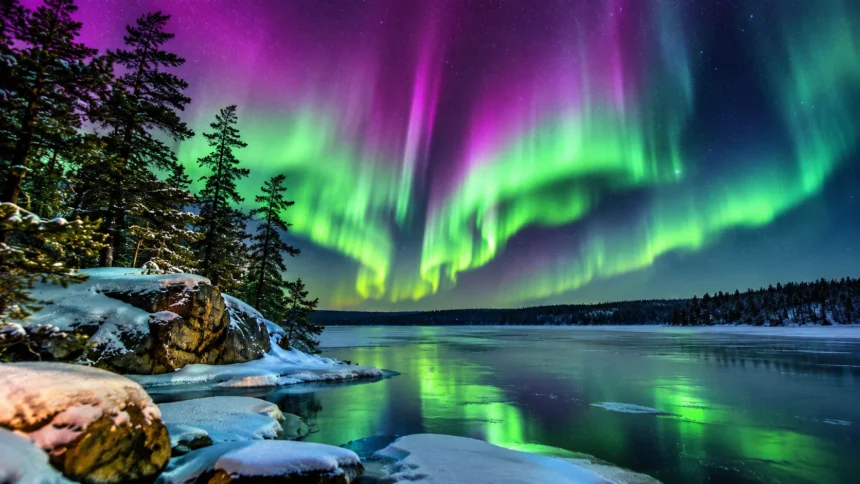
You drive miles away from the city, find a quiet spot beneath the stars, and wait for the sky to change. An hour passes, but nothing happens. Seeing the northern lights sounds simple until unpredictable weather, light pollution, and changing solar activity interfere with your plans.
The northern lights in Minnesota are among the state’s most beautiful natural attractions. With its northern location, peaceful lakes, expansive forests, and dark skies, Minnesota provides excellent opportunities to witness the aurora borealis.
However, seeing this remarkable phenomenon requires preparation and favorable conditions. This guide explains the best viewing locations, ideal travel seasons, aurora forecasts, and practical tips to help you make the most of your northern lights adventure.
What Are the Northern Lights?
The northern lights may look like colorful clouds moving across the night sky. However, this natural phenomenon occurs because of interactions between charged particles from the sun and gases in Earth’s atmosphere.
When these particles interact with atmospheric gases, they produce glowing displays of light. Oxygen commonly produces green and red colors, while nitrogen can contribute blue, purple, and pink shades.
The scientific name for the northern lights is aurora borealis. Their appearance varies depending on solar activity, atmospheric conditions, and geographical location, making every display slightly different.
Can You See the Northern Lights in Minnesota?
Many people believe they must travel to Iceland, Norway, or Alaska to experience the northern lights. Fortunately, Minnesota’s geographical location makes it possible to witness this natural phenomenon within the continental United States.
Northern Minnesota provides particularly favorable viewing conditions because of its proximity to Canada and relatively low light pollution. Its remote forests, lakes, and protected wilderness areas provide expansive views of the night sky.
During stronger geomagnetic storms, the aurora may also become visible across central and southern Minnesota. However, clear skies, sufficient darkness, and favorable solar activity remain essential for successful viewing.
Best Time to See the Northern Lights in Minnesota
Planning a trip during the wrong season can reduce your opportunities to see the aurora. Although the northern lights can occur throughout the year, longer nights provide more time to observe them.
September through March is generally a favorable period for aurora viewing in Minnesota. Autumn and early spring are particularly attractive because geomagnetic activity tends to increase around the equinoxes.
Winter provides extended darkness but introduces freezing temperatures and potentially difficult weather conditions. Summer sightings are possible, although shorter nights reduce the available viewing window.
| Season | Viewing Conditions | Important Considerations |
|---|---|---|
| Spring | Favorable aurora activity | Changing weather conditions |
| Summer | Possible but limited darkness | Shorter nights |
| Autumn | Longer nights and favorable activity | Cooler temperatures |
| Winter | Extended darkness | Snow and freezing temperatures |
September, October, February, and March are worth considering when planning an aurora-focused vacation. However, no specific month can guarantee a successful northern lights sighting.
What Time Do the Northern Lights Appear in Minnesota?
One common mistake is expecting the northern lights to appear at a fixed time every evening. Unlike sunrise or sunset, aurora displays depend on changing space weather conditions.
The hours between 10 PM and 2 AM local time are often favorable for viewing the northern lights. However, strong displays can occur earlier in the evening or later during the night.
Check aurora forecasts before making your plans and choose a viewing location with convenient access. There is no need to remain outdoors for hours when temperatures become uncomfortable or weather conditions deteriorate.
8 Best Places to See the Northern Lights in Minnesota
Choosing a suitable location can make a significant difference to your experience. Bright streetlights, buildings, and thick tree cover can prevent you from seeing even a reasonably strong aurora display.
The following destinations provide opportunities to discover Minnesota’s beautiful landscapes while enjoying favorable conditions for nighttime skywatching.
1. Voyageurs National Park
Voyageurs National Park is one of Minnesota’s most attractive destinations for viewing the northern lights. Its extensive lakes, remote landscapes, and limited artificial lighting create excellent conditions for observing the night sky.
The park is recognized as an International Dark Sky Park. Designated viewing locations include the upper parking area at Rainy Lake Visitor Center and the Meadwood Road Day Use Area.
Check park access information, weather conditions, and available accommodation before visiting. Choose established viewing locations rather than unfamiliar wilderness areas, especially when traveling with family members.
2. Boundary Waters Canoe Area Wilderness
The Boundary Waters Canoe Area Wilderness provides exceptionally dark skies across a remarkable landscape of forests and freshwater lakes. Its limited development helps preserve natural nighttime conditions.
Recognized as an International Dark Sky Sanctuary, the region provides opportunities to observe stars, the Milky Way, and occasional aurora displays. Its peaceful surroundings also appeal to nature photographers.
First-time visitors can stay at established accommodation near the wilderness and enjoy the sky from accessible locations. Check permit requirements and access restrictions before entering protected wilderness areas.
3. Grand Marais
Grand Marais is a scenic town located along Lake Superior in northeastern Minnesota. Its combination of waterfront scenery, local accommodation, and nearby dark-sky areas makes it an appealing vacation destination.
Although lights within the town can affect visibility, surrounding rural areas provide better opportunities to observe the northern lights. An unobstructed northern horizon is especially helpful when aurora activity is relatively weak.
Spend your daytime exploring local shops, restaurants, and scenic viewpoints. Ask your accommodation provider about nearby authorized nighttime viewing areas before making evening plans.
4. Gunflint Trail
The Gunflint Trail extends inland from Grand Marais through forested landscapes and lake country. Its relatively low light pollution makes the surrounding region attractive to astronomy enthusiasts and nature lovers.
Several established resorts and lodges provide convenient access to dark nighttime skies. The area’s natural scenery also offers interesting photographic backgrounds when favorable aurora conditions occur.
Choose accommodation with a clear view toward the northern sky. Staying near your viewing location reduces unnecessary nighttime travel and makes it easier to enjoy the experience comfortably.
5. Lake of the Woods
Situated in far northern Minnesota, Lake of the Woods provides expansive water views and relatively dark surroundings. Its geographical location creates favorable opportunities for observing aurora activity.
The lake’s southern shore is particularly interesting because suitable locations may provide open views toward the north. Nearby communities, including Baudette and Warroad, provide accommodation and essential travel services.
Ask local accommodation providers about accessible shoreline viewing areas. Enjoy the scenery from established locations on land rather than approaching unfamiliar shorelines or frozen water after dark.
6. Ely
Ely is a popular gateway to Minnesota’s northern wilderness. Surrounded by forests and lakes, the town provides convenient access to landscapes with significantly less light pollution than major metropolitan areas.
Visitors can combine their northern lights experience with nature photography, cultural attractions, and scenic daytime activities. Nearby accommodation options make longer stays relatively convenient.
Choose a property with unobstructed sky views and ask about designated observation areas. This approach is particularly useful for travelers who want to enjoy the northern lights without undertaking remote wilderness excursions.
7. Split Rock Lighthouse State Park
Split Rock Lighthouse State Park is known for its dramatic Lake Superior scenery and historic lighthouse. Its natural surroundings also make the area attractive to nighttime photography enthusiasts.
During favorable geomagnetic activity, aurora displays may become visible above the surrounding landscape. The combination of forest silhouettes, rocky scenery, and stars can create memorable photographic opportunities.
Confirm park operating hours and overnight access arrangements before visiting. Registered camping or authorized nighttime programs may provide suitable alternatives when regular day-use areas are closed.
8. Rural Areas Near Minneapolis and St. Paul
Travelers staying in the Twin Cities may wonder whether they need to journey to northern Minnesota. During significant geomagnetic storms, the northern lights can sometimes become visible closer to Minneapolis and St. Paul.
Rural areas beyond the metropolitan region provide darker conditions than city centers. Established astronomy observatories, authorized viewing areas, and public stargazing events can provide useful alternatives.
Check local astronomy organizations for scheduled events and confirmed nighttime access. Although sightings are less reliable than in northern Minnesota, favorable conditions can occasionally produce impressive displays.
How to Check the Northern Lights Forecast in Minnesota
Traveling without checking the aurora forecast can lead to unnecessary disappointment. Even the darkest viewing location will not produce visible northern lights when geomagnetic activity is insufficient.
The NOAA Space Weather Prediction Center provides information about predicted aurora activity and geomagnetic conditions. Its short-term aurora forecasts help visitors understand where displays may become visible.
Before planning an observation session, check three important factors:
- Aurora forecast: Indicates expected geomagnetic activity and potential visibility.
- Weather forecast: Helps determine whether clouds may block your view.
- Moon conditions: A darker night can make weaker aurora displays easier to distinguish.
Remember that aurora forecasts are predictions rather than guarantees. Conditions can change quickly, so review updated information before traveling to your selected viewing location.
Understanding the Kp Index for Northern Lights Viewing
Aurora forecasts often include a measurement called the Kp index. Understanding this number helps visitors interpret space weather information without becoming overwhelmed by scientific terminology.
The Kp index measures global geomagnetic disturbance on a scale from zero to nine. Higher values generally indicate stronger disturbances that may allow auroras to become visible farther south.
| Kp Index | General Geomagnetic Conditions |
|---|---|
| 0–2 | Relatively quiet conditions |
| 3–4 | Increased geomagnetic activity |
| 5–6 | Minor to moderate geomagnetic storms |
| 7–9 | Strong to extreme geomagnetic storms |
Northern Minnesota may experience visible auroras at lower Kp values than southern Minnesota. However, the Kp index alone cannot predict exactly what you will see because local conditions and other space weather factors also matter.
How to Know if the Northern Lights Are Visible Tonight
Searching for the northern lights in Minnesota tonight can produce conflicting predictions. Some forecasts may indicate strong solar activity while others suggest poor visibility because of local weather conditions.
Begin by checking NOAA’s aurora prediction for your geographical area. Then review local cloud coverage, weather warnings, and moonlight conditions to determine whether an observation session is worthwhile.
Look for a combination of favorable geomagnetic activity, clear skies, darkness, and accessible viewing locations. Avoid making long journeys based solely on an unverified social media prediction or an outdated forecast.
How to Photograph the Northern Lights in Minnesota
Seeing a beautiful aurora display can be exciting, but capturing its colors requires some preparation. Ordinary camera settings may produce dark, blurry, or overly bright photographs.
A camera with manual controls or a smartphone with a suitable night photography mode can capture the northern lights. A stable tripod helps reduce unwanted movement during longer exposures.
For cameras with manual settings, consider these starting points:
- Aperture: Approximately f/2.8 or the widest available setting.
- ISO: Between 800 and 3200.
- Shutter speed: Around 2–10 seconds, depending on brightness and movement.
- Focus: Manually focus on a distant star when possible.
- File format: RAW, if your camera supports it.
Adjust these settings according to actual lighting conditions. Faster-moving auroras may require shorter exposures, while weaker displays may benefit from longer exposures.
What Should You Bring for Northern Lights Viewing?
Standing outdoors during a cool Minnesota evening can become uncomfortable without suitable preparation. Cold temperatures, wind, and moisture can quickly interrupt an otherwise enjoyable experience.
Bring essential items that help you remain comfortable during your visit:
- Weather-appropriate clothing and insulated layers.
- Warm gloves, socks, and a hat.
- A flashlight with a dim red-light setting.
- A fully charged mobile phone.
- A portable charging bank.
- Drinking water and snacks.
- A camera and tripod if desired.
Choose accommodation or a designated viewing area with convenient access to shelter. Families should plan regular indoor breaks and end their observation session if anyone becomes excessively cold or tired.
Common Mistakes When Watching the Northern Lights
Missing an aurora display can feel frustrating, particularly after spending money on transportation and accommodation. However, avoiding several common planning mistakes can improve your overall experience.
Some frequent mistakes include:
- Choosing locations with excessive artificial lighting.
- Ignoring cloud coverage and weather warnings.
- Expecting every aurora display to appear bright green.
- Relying entirely on the Kp index.
- Visiting parks without checking nighttime access.
- Expecting guaranteed sightings on specific dates.
- Traveling without suitable clothing.
Another important consideration is that cameras may capture colors more vividly than the human eye. Weaker auroras can sometimes appear as pale or grayish light, while brighter displays may reveal more noticeable colors.
How to Plan a Northern Lights Weekend in Minnesota
A weekend dedicated entirely to seeing the aurora can become disappointing if weather conditions change. Combining nighttime observation with enjoyable daytime activities creates a more rewarding travel experience.
Day 1: Arrive and Explore
Choose a northern Minnesota destination such as Grand Marais, Ely, or the Voyageurs National Park area. Settle into your accommodation and identify suitable observation locations during daylight.
Enjoy nearby restaurants, scenic landscapes, or cultural attractions. Review updated weather and aurora forecasts before deciding whether evening conditions are suitable for viewing.
Day 2: Enjoy Nature and Check the Forecast
Spend your day discovering established parks, visitor centers, and scenic attractions. Keep your schedule flexible rather than committing to an exhausting series of activities.
If nighttime conditions are favorable, visit an authorized viewing area close to your accommodation. Enjoy the experience at a comfortable pace and return indoors when necessary.
Day 3: Discover More Local Attractions
Finish your weekend with photography, local dining, or additional sightseeing. Even if the northern lights do not appear, Minnesota’s landscapes provide plenty of opportunities to create memorable experiences.
Consider planning several nights rather than relying on a single evening. Additional viewing opportunities can improve your chances without creating unnecessary pressure.
Frequently Asked Questions
What month is best for seeing the northern lights in Minnesota?
September, October, February, and March are favorable months because of extended darkness and seasonal geomagnetic activity. However, aurora sightings remain possible throughout the year when appropriate conditions occur.
Where is the best place to see the northern lights in Minnesota?
Voyageurs National Park, the Boundary Waters region, and the Gunflint Trail are excellent choices. Their northern locations and limited light pollution provide favorable conditions for observing the aurora.
Can you see the northern lights in Minneapolis?
Yes, the northern lights can occasionally become visible near Minneapolis during stronger geomagnetic storms. Darker locations outside the metropolitan area generally provide better viewing conditions than brightly illuminated urban neighborhoods.
Can you see the northern lights with the naked eye?
Yes, sufficiently bright aurora displays are visible without special equipment. However, weaker displays may appear less colorful to the human eye than they do in photographs captured using long exposures.
Are the northern lights visible every night in Minnesota?
No, northern lights visibility depends on geomagnetic activity, darkness, weather, and geographical location. Checking updated aurora predictions and local weather forecasts can help identify more favorable viewing opportunities.
Conclusion
Watching the northern lights in Minnesota provides an opportunity to experience one of nature’s most remarkable phenomena. From the peaceful lakes of Voyageurs National Park to the dark skies surrounding the Gunflint Trail, Minnesota offers several beautiful observation destinations.
The key to a rewarding experience is choosing suitable locations, understanding aurora forecasts, and maintaining realistic expectations. Although sightings are never guaranteed, thoughtful preparation can make your trip more comfortable and enjoyable.
Start planning your northern lights adventure by selecting a destination, comparing accommodation options, and bookmarking a reliable aurora forecast. Keep your itinerary flexible, appreciate the surrounding scenery, and enjoy the possibilities of Minnesota’s beautiful night sky.