
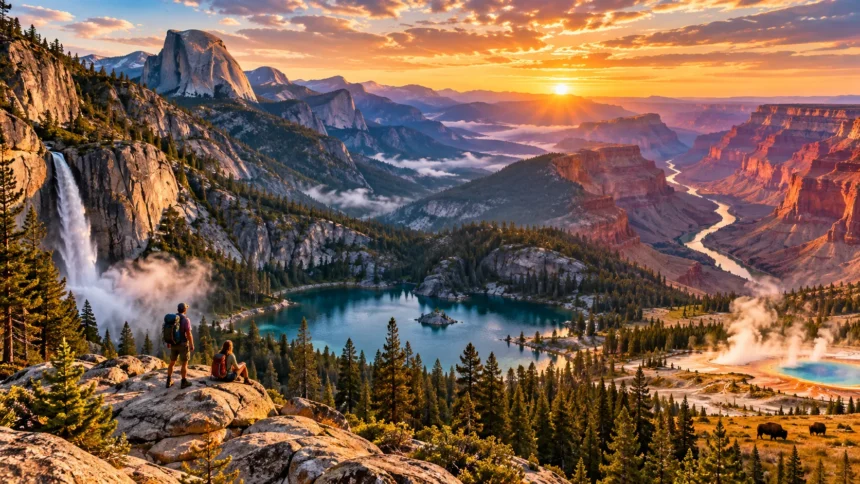
The United States is home to some of the world’s most breathtaking natural landscapes, offering everything from towering mountains and ancient forests to dramatic canyons, beautiful waterfalls, and tropical coastlines. With an incredible variety of national parks, wildlife habitats, and protected wilderness areas, the country provides unforgettable experiences for nature lovers and outdoor adventurers. Every region offers something unique, making the USA an exciting destination for exploring natural beauty.
Whether you want to hike through the Rocky Mountains, admire the Grand Canyon, or discover peaceful forests and pristine lakes, there are countless beautiful places to explore. The nature of the USA reflects remarkable geographical diversity, with landscapes shaped by glaciers, volcanoes, rivers, and changing climates. This guide highlights the best natural places in America, including famous national parks, scenic destinations, and practical travel tips.
1. Yellowstone National Park: Discover Geysers and Incredible Wildlife
Yellowstone National Park is one of the most extraordinary natural attractions in the United States, famous for its geothermal features, mountain landscapes, and diverse wildlife. Located primarily in Wyoming, with portions extending into Montana and Idaho, the park offers spectacular scenery throughout its vast protected wilderness. Visitors can explore colorful hot springs, powerful geysers, peaceful forests, and beautiful river valleys.
Old Faithful is among Yellowstone’s most recognizable attractions, drawing visitors who want to witness its impressive geothermal eruptions. Another remarkable destination is Grand Prismatic Spring, known for its brilliant blue, orange, and yellow colors. The Grand Canyon of the Yellowstone also features dramatic cliffs and magnificent waterfalls that create some of the park’s most memorable viewpoints.
Wildlife viewing is another major reason travelers visit Yellowstone, particularly for opportunities to observe bison, elk, bears, and wolves. Lamar Valley and Hayden Valley are popular areas for spotting animals in their natural habitats. Summer provides extensive sightseeing opportunities, while spring and autumn can offer beautiful landscapes and fewer visitors in certain areas.
2. Grand Canyon National Park: Experience Arizona’s Natural Wonder
The Grand Canyon is one of the most famous natural wonders in America, attracting travelers with its enormous cliffs, colorful rock formations, and breathtaking desert scenery. Located in northern Arizona, this remarkable landscape was shaped over millions of years through geological processes and erosion. Its dramatic appearance makes it one of the best places to experience the nature of the USA.
The South Rim is the most accessible and frequently visited section, offering numerous viewpoints, walking paths, and visitor facilities. Popular observation areas provide spectacular views across the canyon and toward the Colorado River far below. Sunrise and sunset are particularly beautiful because changing light creates remarkable colors across the layered rock formations.
Travelers interested in outdoor adventures can explore designated hiking trails and participate in guided activities suited to their abilities. However, hiking into the canyon is physically demanding because returning requires a significant uphill climb, often in extreme heat. Spring and autumn generally provide comfortable sightseeing conditions, while summer visitors should prepare carefully for high temperatures.
3. Yosemite National Park: Explore Waterfalls and Granite Mountains
Yosemite National Park is one of California’s most beautiful natural destinations, famous for its towering granite cliffs, spectacular waterfalls, and peaceful mountain valleys. Located in the Sierra Nevada mountains, the park attracts hikers, photographers, and outdoor enthusiasts throughout the year. Its combination of dramatic landscapes and accessible viewpoints creates unforgettable experiences for visitors of different ages.
Yosemite Valley is the park’s most recognizable area, surrounded by impressive landmarks such as El Capitan and Half Dome. Yosemite Falls is another popular attraction, particularly during spring when snowmelt often creates powerful water flows. Visitors can explore scenic walking trails, enjoy photography, and admire towering cliffs rising above forests and open meadows.
The park also features giant sequoia groves, beautiful lakes, and mountain viewpoints that extend beyond the famous valley. Summer provides access to more high-elevation areas, although popular locations can become crowded. Spring is especially attractive for waterfalls, while autumn brings cooler temperatures and beautiful scenery for hiking and outdoor exploration.
4. Zion National Park: Discover Utah’s Red Rock Landscapes
Zion National Park is one of the most spectacular natural places in the southwestern United States, known for its towering sandstone cliffs and dramatic desert valleys. Located in Utah, the park combines colorful rock formations with beautiful canyon landscapes and riverside vegetation. Its unique scenery attracts travelers interested in hiking, photography, and outdoor adventures.
Zion Canyon is the park’s main attraction, offering impressive views of reddish cliffs and the winding Virgin River. Popular hiking experiences include Riverside Walk and more challenging routes such as Angels Landing. Some trails require permits or special preparation, making it important to understand current access rules and safety requirements before beginning.
Spring and autumn are particularly enjoyable for exploring Zion because temperatures are often more comfortable than during the hottest summer months. Travelers can discover scenic viewpoints, photograph remarkable rock formations, and enjoy peaceful moments along designated trails. Flash flooding and extreme heat are important concerns, so checking weather conditions is essential before exploring narrow canyons.
5. Glacier National Park: Admire Mountains and Alpine Lakes
Glacier National Park in Montana is one of the most beautiful mountain destinations in the USA, featuring rugged peaks, turquoise lakes, and spectacular alpine scenery. Located near the Canadian border, the park protects remarkable ecosystems shaped by glaciers and mountain landscapes. Visitors can explore forests, valleys, and mountain viewpoints while experiencing the natural beauty of the northern Rocky Mountains.
Going-to-the-Sun Road is among the park’s most famous attractions, providing dramatic views of mountain slopes, waterfalls, and valleys. Scenic destinations such as Lake McDonald and the Many Glacier area offer opportunities for photography and hiking. Wildlife enthusiasts may also encounter mountain goats, bighorn sheep, bears, and other animals while maintaining appropriate distances.
Summer is generally the most convenient season for accessing high-elevation roads and trails because snow can restrict travel during other months. The full opening of Going-to-the-Sun Road varies according to weather and snow conditions. Visitors should confirm road availability, trail restrictions, and reservation requirements before planning activities in this remarkable national park.
6. Great Smoky Mountains: Enjoy Forests and Beautiful Waterfalls
Great Smoky Mountains National Park is one of America’s most beloved natural destinations, spanning the border between Tennessee and North Carolina. The park is known for its mist-covered mountains, dense forests, flowing streams, and impressive biodiversity. Its peaceful environment makes it ideal for travelers seeking scenic drives, hiking experiences, and relaxing outdoor adventures.
Cades Cove is a popular attraction featuring beautiful meadows, historic buildings, and opportunities to observe wildlife. Visitors can also explore scenic trails leading to waterfalls such as Laurel Falls and other natural landmarks. The park’s extensive forest landscapes provide wonderful photography opportunities, particularly when mountain mist creates atmospheric views across the valleys.
Autumn is especially popular because the forests display brilliant shades of red, orange, and yellow. Spring brings wildflowers and fresh greenery, while summer offers longer days for outdoor activities. Travelers should prepare for changing mountain weather and busy roads during peak seasons, particularly around popular viewpoints and major hiking destinations.
7. Olympic National Park: Discover Rainforests and Wild Coastlines
Olympic National Park in Washington State offers an extraordinary combination of temperate rainforests, rugged mountains, and beautiful Pacific Ocean coastlines. Few national parks provide such dramatically different ecosystems within one protected area. Visitors can explore moss-covered forests, peaceful lakes, mountain landscapes, and wild beaches during a memorable nature-focused vacation.
The Hoh Rain Forest is one of Olympic’s most famous attractions, known for towering trees covered in moss and lush green vegetation. Hurricane Ridge provides impressive mountain views, while Lake Crescent offers clear waters surrounded by forested hills. Along the coastline, destinations such as Rialto Beach feature dramatic sea stacks and beautiful natural scenery.
Summer is generally attractive for exploring mountainous areas because conditions are often drier and more accessible than during colder months. However, coastal regions and rainforests can experience changing weather throughout the year. Travelers should pack waterproof clothing, wear appropriate footwear, and allow enough time to experience the park’s different landscapes comfortably.
8. Redwood National and State Parks: Walk Among Giant Trees
California’s Redwood National and State Parks protect some of the tallest trees on Earth, creating one of the most remarkable forest environments in the United States. These ancient coastal redwood forests offer peaceful walking experiences beneath enormous trees and lush vegetation. The region is especially appealing for nature enthusiasts who appreciate forests, wildlife, and scenic outdoor destinations.
Visitors can explore beautiful trails surrounded by towering redwoods, ferns, and moss-covered landscapes. Popular areas include Lady Bird Johnson Grove and the scenic forests around Prairie Creek Redwoods State Park. The surrounding region also features rugged coastal scenery, creating opportunities to combine forest exploration with beautiful Pacific Ocean viewpoints.
Spring through early autumn is a popular period for visiting, although coastal fog and occasional rain are common throughout the year. Travelers should remain on designated trails to protect sensitive vegetation and avoid damaging tree roots. Exploring these forests slowly allows visitors to appreciate the extraordinary scale, age, and ecological importance of coastal redwoods.
9. Everglades National Park: Experience Florida’s Unique Wetlands
Everglades National Park is one of the most distinctive natural attractions in the United States, protecting an extraordinary subtropical wetland ecosystem in southern Florida. Unlike mountainous national parks, the Everglades features broad marshlands, mangrove forests, freshwater habitats, and coastal waterways. Its unique environment provides excellent opportunities for wildlife observation, nature photography, and educational outdoor experiences.
Visitors may observe American alligators, wading birds, turtles, and other animals throughout the park’s different habitats. Popular activities include walking along designated boardwalks, joining guided boat excursions, and exploring appropriate paddling routes. Shark Valley and the Anhinga Trail are well-known areas for discovering the remarkable wildlife and landscapes of the Everglades.
The dry season, generally from December through April, is particularly popular because temperatures are often more comfortable and mosquitoes may be less troublesome. Wildlife viewing can also be rewarding when animals concentrate around available water. Visitors should prepare for sunshine, changing weather, and insects while respecting wildlife and avoiding unsafe interactions.
10. Hawai’i Volcanoes National Park: Explore Volcanic Landscapes
Hawai’i Volcanoes National Park offers one of America’s most fascinating natural environments, featuring volcanic landscapes shaped by powerful geological activity. Located on Hawai’i Island, the park includes the summits of Kīlauea and Mauna Loa, two remarkable volcanoes. Visitors can discover lava fields, volcanic craters, native vegetation, and dramatic landscapes unlike those found elsewhere in the country.
Popular attractions include the Kīlauea summit area, scenic overlooks, and designated trails through volcanic terrain. Crater Rim Drive provides opportunities to admire geological formations and learn about the island’s changing environment. Volcanic activity varies over time, so visitors should not assume that flowing lava or active eruptions will be visible during their trip.
The park can be explored throughout the year, although rainfall, elevation, and volcanic conditions influence individual activities. Travelers should follow official safety instructions because volcanic gases, unstable ground, and restricted areas can create serious hazards. Respecting protected landscapes and Hawaiian cultural heritage makes a visit both safer and more meaningful.
11. Denali National Park: Discover Alaska’s Untouched Wilderness
Denali National Park and Preserve is one of the best natural places in the USA for travelers seeking remote wilderness and spectacular mountain scenery. Located in Alaska, the park features enormous landscapes, tundra ecosystems, and dramatic mountain ranges. Its most famous landmark is Denali, the highest mountain peak in North America, rising above the surrounding wilderness.
Visitors can explore designated trails, participate in guided nature activities, and experience beautiful scenery through available park transportation services. Wildlife observation is another major attraction, with opportunities to see caribou, moose, bears, and Dall sheep. The park’s expansive landscapes and changing weather conditions create extraordinary opportunities for photographers and outdoor enthusiasts.
Summer is generally the most popular season because visitor services and transportation options are more widely available. However, access along Denali Park Road can be restricted by construction, landslides, and other conditions. Travelers should verify current road access and activity availability before departure, especially when planning excursions into remote sections of the park.
How to Plan the Best Nature Trips Across the USA
Planning a nature-focused vacation in the United States begins with choosing destinations that match your preferred landscapes and outdoor activities. Mountain lovers may enjoy Glacier, Denali, and Yosemite, while desert enthusiasts can explore Zion and the Grand Canyon. Travelers interested in forests, wildlife, and wetlands may prefer the Smoky Mountains, Olympic, Redwood, or Everglades.
Seasonal weather plays an important role because natural attractions across America experience dramatically different conditions. Summer provides greater access to many mountain destinations, while spring and autumn are often more comfortable in desert regions. Before traveling, check national park opening conditions, transportation requirements, accommodation availability, and whether reservations or special permits are necessary.
Responsible travel helps preserve America’s natural landscapes for future generations while making outdoor adventures more enjoyable. Stay on designated trails, dispose of waste appropriately, and observe wildlife from safe distances. Carry suitable clothing, drinking water, and navigation supplies, and avoid activities beyond your experience level, particularly in remote mountains or extreme weather conditions.
Conclusion
The nature of the USA offers extraordinary variety, from the dramatic cliffs of the Grand Canyon to Yellowstone’s colorful geothermal features and Yosemite’s towering granite formations. These destinations showcase the country’s remarkable geographical diversity and natural beauty. Whether you enjoy peaceful forests, mountain scenery, or adventurous hiking trails, America’s protected landscapes provide unforgettable opportunities for exploration.
Some of the best natural places in America include Glacier National Park, the Great Smoky Mountains, Olympic National Park, and California’s ancient redwood forests. Travelers seeking different ecosystems can explore the Everglades’ wetlands or the volcanic landscapes of Hawaii. Denali offers an additional opportunity to appreciate the spectacular wilderness and mountain environments of Alaska.
Choosing the right destinations depends on your travel interests, preferred season, and available time. Planning ahead, respecting environmental regulations, and preparing for changing weather can make your experience safer and more rewarding. With its incredible national parks, diverse wildlife, and beautiful landscapes, the United States remains one of the world’s most exciting countries for nature exploration.
Frequently Asked Questions (FAQs)
1. What Are the Most Beautiful Natural Places in the USA?
Yellowstone, Yosemite, the Grand Canyon, Glacier National Park, and Olympic National Park are among America’s most beautiful natural destinations. They offer spectacular mountains, waterfalls, forests, canyons, and diverse wildlife.
2. Which US State Has the Best Natural Beauty?
California, Alaska, Montana, Utah, and Washington are famous for remarkable natural landscapes. Each offers different attractions, including mountain ranges, forests, coastlines, deserts, and beautiful national parks.
3. What Is the Best Time to Explore Nature in the USA?
The best season depends on the destination. Summer is popular for northern mountain parks, while spring and autumn often provide more comfortable conditions for exploring deserts and southern landscapes.
4. What Are the Best National Parks in the USA for Beginners?
Yellowstone, Yosemite, Great Smoky Mountains, and Grand Canyon National Park offer accessible viewpoints, visitor facilities, and activities for different experience levels. Choose suitable trails and check seasonal conditions before visiting.
5. How Many Days Do You Need for a Nature Trip in the USA?
A three-to-five-day trip works well for exploring one major national park, while longer vacations allow visits to multiple destinations. Travel distances, seasonal conditions, and preferred outdoor activities determine the ideal duration.


