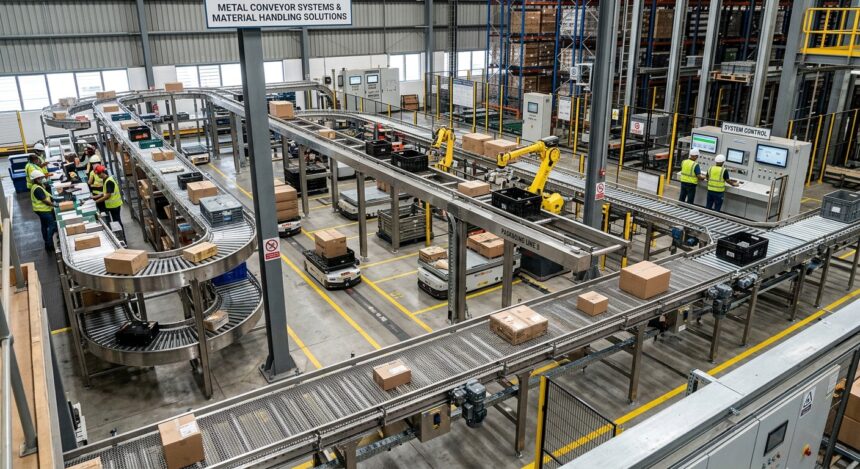
Modern manufacturing and processing facilities rely on dependable material handling systems to keep products moving efficiently through production. A strong example is Wire Belt Company, which specializes in designing, manufacturing, and installing conveyor belts for food processing and industrial applications. Its solutions are designed around specific operating requirements, while technical support, belt surveys, training, and maintenance tools help businesses improve efficiency, reduce downtime, extend equipment life, and maintain consistent conveyor performance.
Understanding Metal Conveyor Belt Systems
Metal conveyor belts are engineered to transport products through demanding production environments where durability, hygiene, temperature resistance, and reliable operation are important. Unlike conventional conveyor systems that may use rubber or synthetic belts, metal designs can provide advantages in applications involving heat, moisture, cleaning processes, and heavy loads.
A mesh conveyor belt can be particularly useful when products need airflow, drainage, or exposure to heat during processing. Its open structure allows air and liquids to pass through the belt, making this type of conveyor suitable for applications such as baking, frying, washing, cooling, coating, and drying.
The exact belt design depends on factors including product size, conveyor speed, load requirements, operating temperature, and the conditions surrounding the equipment.
Why Wire Mesh Conveyor Belts Matter
A wire mesh conveyor belt consists of interconnected metal wires configured into a structure suited to the intended application. Different mesh patterns, wire diameters, materials, and edge configurations can be selected according to production requirements.
For food processors, the design can support efficient cleaning and product handling. In industrial environments, metal construction can provide the strength required for continuous operation and demanding production cycles.
Choosing the appropriate belt is important because an unsuitable design can contribute to tracking problems, product damage, premature wear, or unnecessary maintenance.
Key Benefits of Metal Conveyor Systems
Durability in Demanding Environments
Metal conveyor belts are commonly selected for applications where equipment is exposed to high temperatures, moisture, chemicals, frequent washing, or heavy production loads. Proper material selection can help the belt withstand the conditions it encounters during everyday operation.
Improved Product Handling
Different belt configurations can be engineered around the products being transported. Mesh openings, belt width, surface configuration, and conveyor speed can all affect how products move through a production line.
A properly specified system can reduce unnecessary product movement while maintaining a consistent flow between processing stages.
Better Airflow and Drainage
Open metal belt structures allow air and liquids to move through the conveyor surface. This can be useful for processes involving cooling, drying, washing, heating, or other treatments where airflow or drainage is part of the production process.
Easier Maintenance
Maintenance requirements vary according to the conveyor design and operating environment. However, selecting the correct belt and maintaining it properly can help reduce premature wear and unexpected interruptions.
Routine inspections can identify tracking issues, damaged components, excessive wear, or other problems before they develop into more serious equipment failures.
Customization for Different Applications
Every production facility has different material handling requirements. Conveyor length, width, speed, temperature, product characteristics, and available space can all influence the final system design.
Custom engineering allows manufacturers to select a belt configuration that fits the application instead of relying on a generic solution. This approach can be particularly valuable when conveyors need to integrate with existing production machinery.
Wire Belt Company’s experience with specialized conveyor solutions demonstrates the importance of application-specific design. Its services extend beyond supplying belts, with support that can include technical assistance, belt surveys, training, and maintenance resources.
Reducing Downtime Through Proper Conveyor Support
Unexpected conveyor failures can interrupt production and create additional costs. Preventive maintenance and regular inspections can help identify developing problems before they result in major downtime.
Belt surveys are one practical way to evaluate conveyor condition and identify areas that may require attention. Training can also help maintenance and production teams understand correct belt operation, inspection procedures, and maintenance practices.
Maintenance tools and technical resources can further support operators in keeping conveyor systems running efficiently. When these practices are combined with an appropriately designed belt, businesses can improve reliability throughout the production process.
Applications Across Food Processing and Industry
Metal conveyor systems are used across a broad range of applications. In food processing, they can support stages such as baking, cooking, frying, freezing, cooling, washing, and drying.
Industrial applications may involve material movement through heat-treatment processes, parts handling, assembly operations, or other manufacturing environments where a durable conveyor surface is required.
The correct belt construction depends on the specific process. Factors such as temperature, sanitation requirements, product weight, belt tension, and conveyor configuration should be considered before selecting a solution.
Selecting the Right Conveyor Belt
Businesses evaluating a new or replacement conveyor belt should consider several important questions:
- What type of product will the conveyor transport?
- What temperature will the belt encounter?
- Does the process require airflow or drainage?
- How frequently will the conveyor be cleaned?
- What load and operating speed are required?
- What belt dimensions and configuration are appropriate?
- How will the belt be inspected and maintained?
- Can the belt integrate with existing production equipment?
Answering these questions helps ensure that the selected system is suited to the actual production environment.
Long-Term Performance Starts With the Right Solution
Metal conveyor belt systems can play an important role in improving material handling efficiency, particularly in demanding food processing and industrial environments. Their durability, customizable construction, and ability to support specialized processes make them suitable for many production applications.
However, the belt itself is only one part of a reliable conveyor system. Proper engineering, installation, technical support, operator training, regular inspections, and preventive maintenance all contribute to long-term performance.
Working with an experienced conveyor specialist can therefore help businesses select an appropriate solution, address operational challenges, and reduce avoidable downtime while extending the useful life of their material handling equipment.