
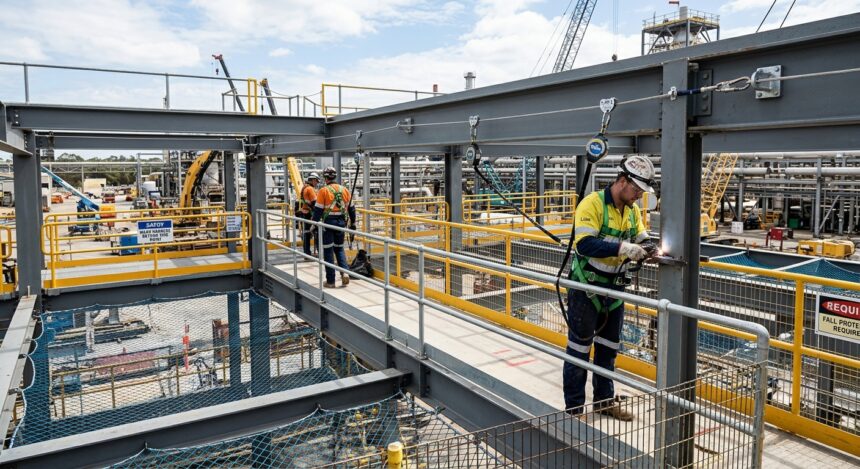
Industrial workplaces such as refineries, warehouses, manufacturing facilities, and construction sites require carefully designed safety measures to protect employees from falls, dropped objects, and other workplace hazards. Intrepid Industries provides OSHA-compliant safety products, including self-closing safety gates, toeboards, safety hooks, and custom molded polyurethane components. These durable solutions help facilities strengthen workplace protection, reduce fall risks, and maintain safer working environments.
Why Fall Protection Matters in Industrial Facilities
Falls are among the most serious hazards in industrial environments. Elevated platforms, mezzanines, loading areas, ladders, walkways, and equipment access points can expose workers to significant risks when appropriate safeguards are missing.
A comprehensive fall protection strategy can include physical barriers, guardrails, safety gates, toeboards, personal protective equipment, and properly designed access systems. Using products engineered for demanding industrial conditions can also help businesses maintain consistent safety standards while reducing the possibility of accidents.
The Role of Toeboards in Workplace Safety
Toeboards are an important component of many guardrail and fall protection systems. They create a barrier along the lower edge of an elevated platform and can help prevent tools, equipment, and other objects from accidentally falling to lower levels.
A common question when designing a compliant workplace safety system is: how tall should a toeboard be? Under OSHA general industry requirements, standard toeboards are typically required to be at least 4 inches high from their top edge to the level of the floor, platform, runway, or ramp. Specific applications and standards can vary, so facilities should verify the requirements applicable to their workplace.
Another important consideration is knowing when these protective barriers are necessary. In applicable situations, toe boards must be used on platforms that are elevated above lower levels where falling objects could create a hazard for employees below. The exact requirements depend on the workplace, platform configuration, and applicable OSHA regulations.
Safety Gates for Elevated Access Points
Self-closing safety gates provide another important layer of protection around ladders, platforms, stairways, and other openings. Unlike an unprotected access point, a properly designed self-closing gate can automatically return to a closed position after a worker passes through.
This feature is particularly useful in busy industrial environments where employees regularly move between elevated platforms and work areas. Durable safety gates can help facilities establish controlled access while supporting their broader fall prevention programs.
Safety Products for Demanding Environments
Industrial safety equipment must withstand frequent use and challenging working conditions. Refineries, warehouses, manufacturing facilities, and construction sites may expose safety components to impacts, weather, chemicals, machinery, and continuous employee traffic.
Products such as safety hooks, toeboards, self-closing gates, and custom molded polyurethane components can be selected according to the specific requirements of a facility. High-quality materials and durable construction help safety equipment remain reliable over extended periods of use.
Custom Molded Components for Industrial Applications
Not every industrial safety challenge can be addressed with an off-the-shelf product. Some facilities require components designed around specialized machinery, dimensions, operating conditions, or installation requirements.
Custom molded polyurethane components can provide manufacturers and facility operators with greater flexibility when developing specialized safety and protection solutions. Polyurethane can be engineered for applications where durability, impact resistance, flexibility, or wear resistance is important.
Supporting OSHA Compliance
Maintaining compliance involves more than simply installing safety equipment. Businesses should identify workplace hazards, select appropriate protective systems, inspect equipment regularly, train employees, and maintain safety procedures.
OSHA requirements can differ according to the type of workplace and specific hazard involved. For this reason, facility managers should evaluate each installation against the regulations and standards applicable to their operation rather than relying on a single generic safety solution.
Working with experienced manufacturers can make it easier to identify products that are appropriate for particular industrial applications.
Creating Safer Workplaces
Effective fall protection combines equipment, workplace procedures, employee training, and regular inspections. Safety gates can protect openings, toeboards can help contain objects on elevated surfaces, and other engineered components can address hazards specific to industrial environments.
For facilities such as refineries, warehouses, and construction sites, investing in durable safety products can support both employee protection and long-term operational reliability. Companies like Intrepid Industries demonstrate how specialized industrial safety products can be incorporated into broader workplace protection strategies.
Conclusion
Industrial safety requires a proactive approach to identifying and controlling workplace hazards. From self-closing safety gates and toeboards to safety hooks and custom molded polyurethane components, properly designed equipment can help reduce fall risks and protect workers in demanding environments.
By combining durable safety products with appropriate installation, inspections, employee training, and OSHA-focused safety procedures, industrial facilities can create safer work areas while supporting ongoing compliance and operational efficiency.