The first real snowfall always seems to catch parents off guard. One morning it is boots-optional, and the next, a kid is standing at the door refusing to leave without proper footwear. Picking the right girls winter boots before that morning arrives saves a lot of last-minute scrambling and a few frozen recess mornings.
Why Fit and Function Matter More Than Looks
It is tempting to choose girls snow boots based on color or pattern alone, since kids often have strong opinions here. But warmth, traction, and a secure fit matter just as much for a boot that will see months of daily wear. The best winter boots for girls balance both: a design she is excited to wear and construction that actually holds up to snowbanks, slush, and ice.
A boot that looks great but pinches toes or slips at the heel will get kicked off within the first cold walk to school. It also helps to think about how the boots will actually be used. A child who spends recess building snow forts needs more durable, higher-cut protection than one who mostly walks between the car and the front door.
Warmth: What to Look for in Kids Winter Boots
Insulation ratings vary a lot between brands, so it helps to know what you are comparing.
- Temperature ratings: Many kids winter boots list a comfort rating, often somewhere between -20°C and -40°C depending on insulation thickness. Match the rating to your actual climate and how much time your child spends outdoors.
- Lining material: Fleece or faux-shearling linings trap warmth without adding bulk, which matters for kids who need to move freely on the playground.
- Removable liners: Some boots include a liner that can be pulled out to dry overnight, which is especially useful after a day of puddle-jumping or sledding.
For most winters, boots rated in the -20°C to -30°C range cover everyday recess and school-run wear. Families in colder regions, or kids who spend long stretches outside, generally do better with a warmer rating at the top of that range.
Waterproofing Deserves Equal Attention
Warmth alone will not keep feet comfortable if moisture gets in. Waterproof winter boots typically rely on a sealed or coated outer shell paired with a gusseted tongue that keeps snow from sneaking in at the top. Rubber lowers with fabric or synthetic uppers are common, and the seam where those two materials meet is usually the first place leaks happen, so it is worth checking that seam closely before buying.
Getting the Right Fit for Growing Feet
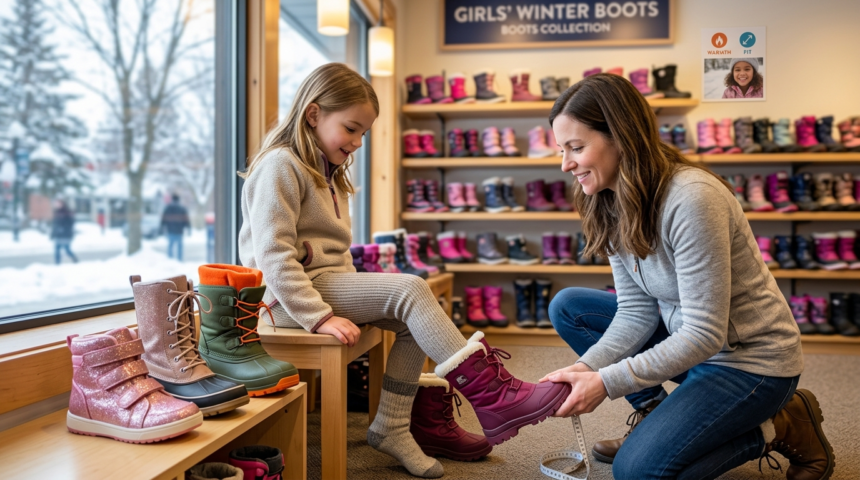
Sizing is where a lot of winter boot purchases go wrong, mostly because kids’ feet change size faster than most parents expect.
- Measure at the end of the day, when feet are slightly larger from a day of activity.
- Leave a small amount of extra room, roughly a thumb’s width at the toe, for a warm sock without crowding.
- Avoid sizing up too aggressively. A boot that is too loose will rub, and a loose heel makes it harder for a child to walk confidently on ice.
Trying boots on with the socks your child will actually wear that winter also matters, since a thick wool sock can change the fit noticeably compared to a thin cotton one.
For families who are unsure between two sizes, a detailed kids’ shoe size guide can help translate age and shoe size into the right boot fit before ordering.
Toddler Winter Boots vs. Boots for Older Kids
Toddler winter boots typically prioritize ease of use over anything else. Pull-on styles or wide Velcro straps let a toddler get boots on independently, or at least cooperate more willingly, since fine motor skills are still developing. As kids get older, laces, side zippers, and more structured soles become practical again, with adjustable straps or bungee-lace systems often bridging the gap for school-age kids managing boots on their own.
Style Without Sacrificing Practicality
Once warmth, waterproofing, and fit are sorted, style is where kids get to have real input. Many families like to browse a full boots collection together, letting kids choose between colors or patterns within a shortlist of boots that already meet the practical requirements. This keeps the decision collaborative without letting appearance override function.
Replacing Winter Boots Season to Season
Because feet grow quickly, most kids need new winter boots every one to two seasons, sometimes sooner during major growth spurts. Signs it is time to replace a pair include toes pressing against the front, cracked or peeling waterproofing, and worn tread that no longer grips well on ice. A quick fit check partway through winter, not just at the season’s start, catches a January growth spurt before it turns into cold, wet mornings.
Choosing girls winter boots does not have to mean choosing between practicality and something she will actually want to wear. With the right insulation, a genuinely waterproof shell, and a fit that is checked rather than guessed, most families land on a pair that lasts the whole season comfortably.
What has worked best for your family when picking winter boots each year — sizing up for growth, prioritizing waterproofing, or letting your kids choose the style th