
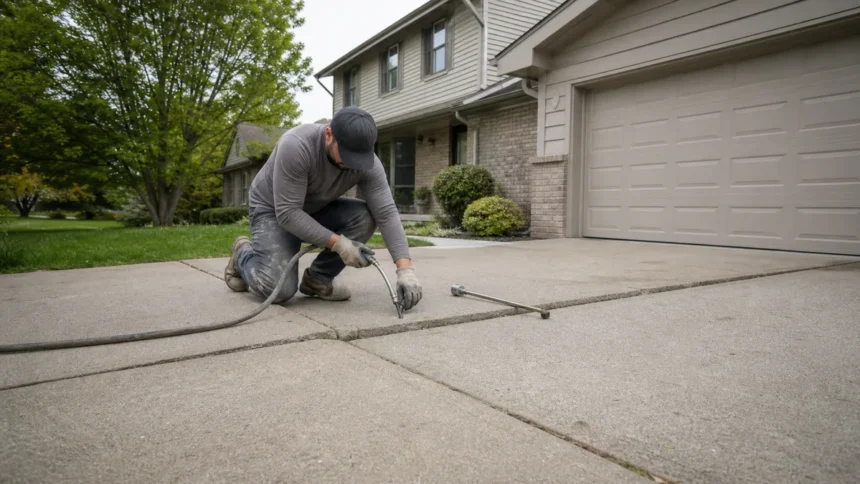
Apart from natural settling, uneven driveways often result from soil movement or erosion beneath the concrete slab. Professional concrete raising addresses these underlying voids and lifts the slab to a more level position. Here is what the process involves to help homeowners know what to expect when scheduling services:
Evaluating the Driveway’s Condition
Technicians begin the concrete raising project with an inspection of the driveway. They evaluate the entire driveway, focusing on areas that have settled and the condition of the concrete slabs. This assessment helps them determine the likely cause of settlement and whether the existing concrete is suitable for raising. Some of the areas of concern during the evaluation include the following:
- Joint alignment
- Drainage patterns
- Cracks
- Amount of vertical movement between slabs
While minor damage and cosmetic cracking allow the driveway to be raised successfully, technicians may use different solutions when there is severe structural damage. They discuss the different options with homeowners and develop appropriate lifting plans before work begins; this helps establish realistic expectations for the project.
Preparing the Driveway for Raising
Once technicians establish a lifting plan, they prepare the driveway for the process. They first clear the work area so equipment has unobstructed access to the affected slabs. Technicians also inspect the surrounding landscape, control joints, and nearby structures. These steps help protect adjacent surfaces while the work is underway. Professionals drill strategically placed holes into the affected slabs, and these openings provide access to the voids beneath the concrete. Specialized lifting material is then introduced beneath the slabs through the drilled openings. The material fills the voids and raises the uneven sections, while technicians monitor the slab’s position throughout the process.
Lifting and Stabilizing the Concrete
During concrete raising, technicians introduce the specialized material beneath the settled slab. The material fills empty spaces below the concrete, creating pressure that gradually lifts the affected driveway toward its intended position. This stage of the restoration process requires professionals to monitor the slab movement continuously.
The lifting process occurs slowly and in small increments throughout the duration of the project. Technicians often make adjustments where necessary to help maintain proper alignment between adjoining sections. This careful approach also helps them evaluate the slab’s response to avoid placing unnecessary stress on the concrete during repair.
Apart from raising the slab, the injected material helps improve support beneath the driveway. It fills voids created through settlement or erosion, strengthening the driveway. This reduces pressure on the home’s foundation and stops further damage.
Completing the Finishing Touches
Technicians complete several finishing tasks once the driveway reaches the desired elevation. They patch the access holes with compatible repair materials after lifting the concrete. They also inspect surface transitions, slab alignment, and overall stability before completing the project. This final inspection helps identify areas that require additional adjustment, and technicians address those areas as needed.
The project concludes when technicians remove their equipment from the site. They also provide homeowners with guidance on routine driveway care and drainage practices. Proper drainage helps limit water-related soil movement beneath the concrete. Homeowners should focus on the following practices:
- Direct rainwater away from the driveway and maintain proper drainage
- Address erosion around the concrete
- Watch for low areas that collect standing water
- Schedule an inspection if new settlement becomes noticeable
Concrete Raising Restores Driveways
Concrete raising lifts settled slabs by filling voids beneath the concrete and restoring a more level surface. This approach addresses settlement while retaining the existing driveway when the slabs remain suitable for raising. Experienced professionals assess the concrete and underlying conditions to determine whether raising is an appropriate solution. Contact a qualified concrete raising professional to have your driveway evaluated today.