
What is HCG and Why is it Important?
Human Chorionic Gonadotropin (HCG) is a hormone produced during pregnancy, primarily by the placenta shortly after a fertilized egg attaches to the uterine lining. This glycoprotein hormone plays a critical role in maintaining pregnancy, particularly in the early stages. Its presence is essential for sustaining the corpus luteum, which in turn produces progesterone to protect the developing embryo.
HCG is commonly used as a reliable marker in pregnancy tests, as it can be detected in both blood and urine soon after conception. Typically, levels of HCG begin to rise rapidly within the first few weeks of pregnancy, doubling roughly every 48 to 72 hours. This consistent increase not only confirms pregnancy but also indicates that the pregnancy is progressing normally. Abnormal HCG levels can signal potential complications, including the risk of miscarriage or ectopic pregnancy.
Monitoring HCG levels during the first trimester is crucial for several reasons. Firstly, it allows healthcare providers to ascertain whether the pregnancy is developing appropriately. In some situations, notably in cases of suspected miscarriage, HCG levels can provide valuable information regarding the health of the pregnancy. Furthermore, abnormal levels can be indicative of certain medical conditions, such as gestational trophoblastic disease.
In summary, HCG is an essential hormone for early pregnancy, playing a key role in sustaining the developing embryo and confirming the viability of the pregnancy. Understanding HCG levels can provide insights into the health of both the mother and the fetus, underscoring its importance in prenatal care during the first trimester.
Normal HCG Levels in Early Pregnancy
Human Chorionic Gonadotropin (HCG) is a hormone produced during pregnancy, primarily by the placenta. Understanding normal HCG levels during early pregnancy is essential for assessing fetal development and overall health. Throughout the first trimester, HCG levels can vary significantly among individuals, making it important to recognize typical ranges for monitoring purposes.
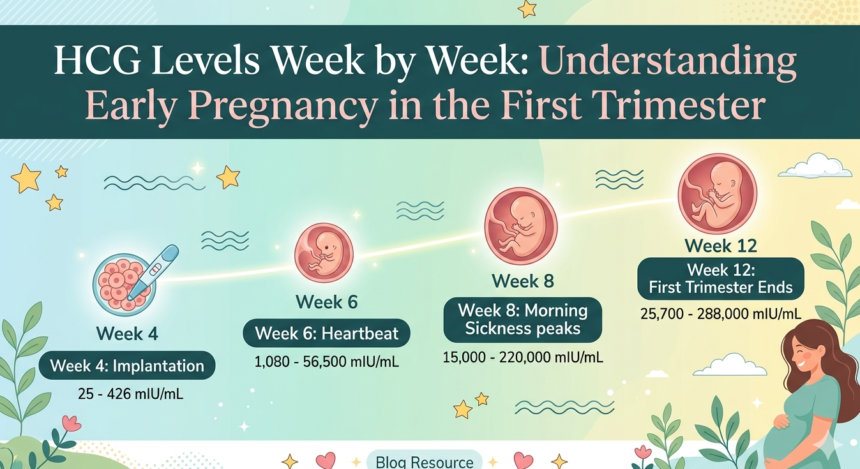
In general, HCG levels begin to rise shortly after implantation and peak around the end of the first trimester. For weeks 3 to 4 of pregnancy, normal HCG levels can range anywhere from 5 to 426 mIU/mL (milli-international units per milliliter). By week 5 to 6, this range typically increases to approximately 18 to 7,340 mIU/mL. As the pregnancy progresses, specifically during weeks 7 to 8, levels can rise to anywhere between 7,650 and 229,000 mIU/mL.
After the peak around the 8th week, HCG levels generally begin to plateau and then gradually decline by the end of the first trimester. In the weeks 9 to 12 of pregnancy, normal HCG levels typically range from 25,700 to 288,000 mIU/mL. The wide variability in HCG levels means that healthcare providers often assess trends over time rather than relying on a single measurement.
It’s crucial to recognize that while these ranges provide guidelines, individual circumstances may present different HCG profiles. Factors such as multiple pregnancies (twins or more) can also influence HCG levels, causing them to be higher than those typically observed. Therefore, it is advisable for expectant mothers to consult healthcare professionals for personalized information regarding their HCG levels and early pregnancy health.
Week 1: What to Expect from HCG Levels
During the first week post-conception, understanding human chorionic gonadotropin (HCG) levels is crucial for interpreting early pregnancy signs. Typically, HCG levels may be low at this stage, often ranging from 5 to 50 mIU/ml, as the body begins to adjust to the newly implanted embryo. These levels vary significantly from one individual to another, partly due to the timing of ovulation and conception.
Pregnancy tests work by detecting the presence of HCG in urine or blood. For the most reliable results, it is recommended to wait until at least a week after a missed period to take a home pregnancy test. This timing allows HCG levels to rise sufficiently for accurate detection. Testing too early can lead to false negatives, as the hormone may not have reached detectable levels yet.
If an early pregnancy test yields a positive result, it usually indicates that the body is producing HCG as expected. However, it’s important to monitor these levels through follow-up blood tests, particularly in the case of low initial counts. Healthcare providers may recommend a quantitative HCG blood test to measure the exact amount of the hormone present. A healthy pregnancy typically shows an increase in HCG levels approximately every two days during the early weeks.
In summary, understanding HCG levels in week one is essential for those who suspect they may be pregnant. Monitoring the levels closely can provide insight into the viability of the pregnancy and help guide next steps. If you have concerns regarding your HCG levels or the results of a pregnancy test, consulting with a healthcare professional is advisable to ensure proper care and guidance.
Week 2: Rapid Changes in HCG Levels
During the second week of pregnancy, significant biological changes occur as the body begins to support the developing embryo. One of the most notable changes is the rapid increase in human chorionic gonadotropin (HCG) levels. This hormone is crucial for the maintenance of early pregnancy and is produced by the placenta shortly after implantation.
In week 2, many women may start to experience early pregnancy symptoms as HCG levels rise. Within the first few days post-implantation, HCG concentrations can begin to double approximately every two to three days. This swift increase can stimulate various reactions in the body, including alterations in mood, increased fatigue, and the onset of nausea, commonly referred to as morning sickness. These symptoms are often among the first signals that pregnancy is progressing.
The surge in HCG levels serves several physiological purposes. It signals the ovaries to stop releasing eggs, thereby halting ovulation during the pregnancy. Additionally, HCG helps maintain the corpus luteum, the structure that forms from the follicle after an egg is released, ensuring that it continues to produce progesterone. This hormone is vital for thickening the uterine lining, thus creating a supportive environment for the embryo to develop.
Understanding the role of HCG levels during this critical week can provide insight into the early changes in a woman’s body and help manage expectations regarding early pregnancy symptoms. The fluctuations of HCG levels not only indicate the health status of the pregnancy but also influence how the mother feels during these transformative early stages.
Week 3: Understanding HCG Doubling Times
In the third week of pregnancy, human chorionic gonadotropin (HCG) levels become a primary focus for evaluating the embryo’s development. During this early phase, HCG levels are crucial indicators of a healthy pregnancy. Typically, healthcare providers observe that HCG levels double approximately every 48 to 72 hours. This doubling pattern is a well-established norm and serves as a significant marker in early gestation.
The significance of the HCG doubling time cannot be overstated. Rapid increases in HCG levels suggest that the embryo is developing normally, indicating that the pregnancy is progressing as expected. If HCG levels do not rise as anticipated, this may signal potential complications such as an ectopic pregnancy or a possible miscarriage. Therefore, monitoring these levels closely during the first trimester is fundamental for assessing pregnancy health.
During this week, HCG levels can range anywhere from 5 to 50 mIU/mL, varying widely among individuals. This variability is common and reflects the body’s unique response to early pregnancy changes. To gain a comprehensive understanding of these fluctuations, healthcare providers often request multiple blood tests to monitor HCG levels over a series of days. By evaluating the rate of increase, they can better gauge the viability of the pregnancy.
Moreover, understanding HCG levels and their doubling rules can alleviate some anxiety for expecting parents. It provides them with measurable benchmarks to consider as they embark on the journey of pregnancy. As HCG serves as a critical hormone promoting fetal growth and development, its levels during the third week offer essential insights into the overall health of the pregnancy.
Week 4: The Peak of HCG Levels
During the fourth week of pregnancy, human chorionic gonadotropin (HCG) levels typically reach their peak. This hormone, produced by the placenta shortly after implantation, plays a crucial role in supporting the early stages of pregnancy. In this week, HCG levels can rise remarkably, generally ranging from 5 to 426 mIU/mL. This substantial increase is notable when compared to the levels observed in the previous weeks.
In the first week following conception, HCG levels may start at around 5 to 50 mIU/mL as the embryo implants into the uterine lining. By week two, the levels should ideally double, marking the necessary hormonal support for a developing embryo. When the third week rolls around, levels often reach between 100 to 4,000 mIU/mL. By the time a woman enters the fourth week, it is common to see HCG levels peak, indicating a healthy progression of the early pregnancy.
However, variations exist, and what constitutes high or low HCG levels in week four can be context-dependent. For instance, consistently high levels may suggest a properly developing pregnancy, while levels that are significantly lower than expected can raise concerns about viability. Factors such as multiple pregnancies or potential complications, such as ectopic pregnancies, could also influence HCG levels significantly.
It is essential for individuals navigating early pregnancy to be aware of what these levels signify. Consulting healthcare professionals for blood tests can provide clarity regarding one’s specific HCG situation. Understanding these dynamics helps in recognizing the health and viability of early pregnancy.
Week 5 and Beyond: What Changes to Expect
As pregnancy progresses beyond week 4, significant changes in human chorionic gonadotropin (HCG) levels can be anticipated. During week 5, HCG typically continues to rise dramatically, often reaching levels between 18 to 7,340 mIU/mL. This surge is crucial for maintaining early pregnancy, as HCG supports the corpus luteum, which in turn produces progesterone—a vital hormone for uterine lining maintenance and embryo protection.
By week 6, HCG levels can peak around 1,080 to 56,500 mIU/mL, thus reflecting the increasing nature of the developing placenta. However, it’s essential to understand that the rise in HCG levels is not uniform for every individual. Some may observe fluctuations, and it is not uncommon for levels to stabilize or even decline after reaching a peak, particularly by the end of the first trimester.
It is important to consider that while a steady increase in HCG is often seen in the initial weeks of pregnancy, values may stabilize or drop in certain circumstances. Declining HCG levels often signal complications such as threatened miscarriage or ectopic pregnancy, emphasizing the need for vigilance and medical consultation should abnormalities occur.
Simultaneously, significant developmental milestones occur during this period. By week 5, the embryo grows rapidly, and structures such as the heart are beginning to form and beat. As the weeks progress, other essential organs further develop, illustrating the intricate and rapid changes that happen within the first trimester. Monitoring HCG levels can provide insight into these developments, although it is only part of the broader picture of maternal and fetal health.
Factors Affecting HCG Levels
Human Chorionic Gonadotropin (HCG) is a hormone produced during pregnancy, and its levels can be indicative of various conditions and statuses during this crucial period. However, several factors can significantly influence HCG levels, leading to variations in what is considered normal. Understanding these factors can provide insights into the early stages of pregnancy and its respective challenges.
One of the primary factors affecting HCG levels is the presence of multiple pregnancies, such as twins or triplets. In cases of multiple gestation, HCG levels are often higher than in a single pregnancy. This increase occurs because each embryo produces HCG, leading to elevated hormone levels in the mother’s bloodstream. As such, healthcare providers may monitor HCG levels more closely in women expecting multiples to assess the health and development of each fetus.
Certain medical conditions can also influence HCG levels. For example, ectopic pregnancies, where the embryo implants outside the uterus, can lead to abnormal HCG readings. In these cases, HCG levels may rise more slowly than expected or may even drop. Other conditions, such as trophoblastic disease or certain cancers, can result in elevated HCG levels, unrelated to pregnancy. Therefore, it is crucial for healthcare professionals to consider these medical nuances when evaluating HCG levels.
Additionally, external factors, such as the time of day when the blood test is conducted, can play a role in HCG measurement fluctuations. Hormone levels can vary throughout the day, so consistent timing for tests may be advisable for accurate tracking. Furthermore, differing laboratory techniques and units of measurement can result in variations in reported HCG levels. Recognizing these discrepancies is essential for accurate interpretation when monitoring early pregnancy.
When to Consult a Healthcare Provider
Monitoring HCG (Human Chorionic Gonadotropin) levels during early pregnancy is vital for assessing the health of both the mother and the developing fetus. Although changes in HCG levels are normal, certain indicators necessitate immediate consultation with a healthcare provider. These signs can range from unusual cramping to significant deviations in HCG levels based on the expected week of pregnancy.
It is essential to be aware of symptoms such as heavy bleeding, which may accompany severe abdominal pain, as these could indicate a miscarriage or ectopic pregnancy. An ectopic pregnancy occurs when the fertilized egg implants outside the uterus, leading to abnormal HCG levels and posing serious health risks. Any such symptoms should be taken seriously and prompt immediate medical attention.
Additionally, if routine checks reveal that the HCG levels are not rising appropriately according to the weeks of pregnancy, this may warrant a visit to a healthcare provider. Generally, HCG levels should double approximately every 48 to 72 hours in early pregnancy. However, if levels plateau or drop within this timeframe, it is crucial to seek professional guidance to rule out complications.
Women should also consider consulting their healthcare provider if they experience severe nausea or vomiting that hinders their ability to retain food and fluids, known as hyperemesis gravidarum. This condition not only affects maternal health but may also lead to complications for the fetus.
In summary, understanding when to consult a healthcare provider regarding HCG levels is fundamental in managing early pregnancy. Close monitoring and prompt responses to concerning symptoms are key to ensuring a healthy pregnancy outcome.