
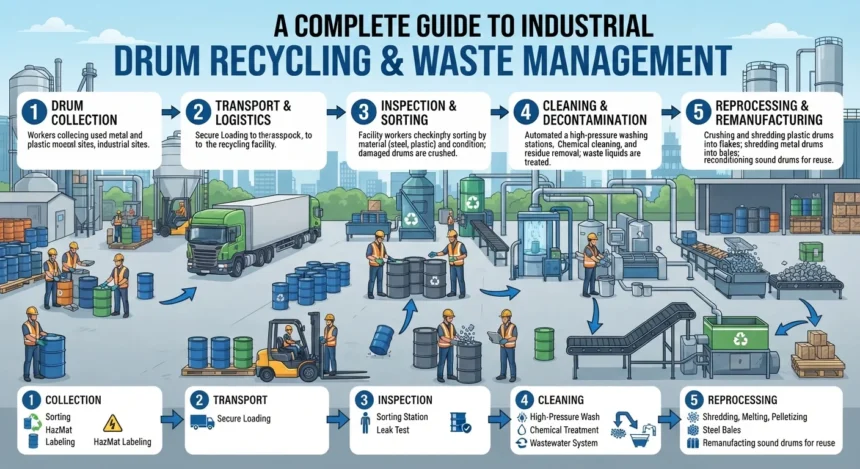
Industrial businesses generate large quantities of packaging waste through daily operations, including steel drums, plastic containers, fiber drums, intermediate bulk containers (IBCs), and bulk shipping boxes. Managing these materials responsibly is essential for maintaining workplace safety, meeting environmental regulations, and reducing unnecessary waste. Professional providers such as Kelly Drums help businesses across the Mid-Atlantic region manage industrial containers through specialized pickup, recycling, reconditioning, and destruction services. Their expertise in fiber drum recycling and the responsible handling of steel, poly, and fiber drums, IBC totes, and Gaylord boxes allows industrial clients to manage waste efficiently while supporting environmentally responsible disposal practices.
Why Industrial Container Recycling Matters
Industrial containers are widely used in manufacturing, chemical processing, food production, pharmaceuticals, and other commercial operations. Although these containers are essential for storing and transporting materials, they eventually reach a point where they can no longer serve their original purpose. Simply disposing of every used container can increase operational costs and contribute to unnecessary landfill waste.
Recycling provides a more sustainable alternative by allowing suitable materials to be recovered and processed for future use. Steel can be recycled into new metal products, while certain plastic and fiber containers can be processed through appropriate recycling channels. Businesses that establish effective recycling procedures can reduce waste, improve resource efficiency, and demonstrate a stronger commitment to environmental responsibility.
Managing Different Types of Industrial Containers
Industrial waste management requires specialized knowledge because different containers have different materials, construction methods, and handling requirements. A comprehensive recycling program should account for the specific characteristics of each container type.
Steel drums are commonly used for storing chemicals, oils, industrial ingredients, and other materials. Depending on their condition and previous contents, they may be suitable for reconditioning or material recovery. Poly drums offer lightweight and durable storage solutions, making them popular across several industries. Fiber drums are frequently used for dry materials and specialized packaging applications, making proper fiber drum recycling an important part of industrial waste reduction.
Businesses also rely on IBC totes for transporting and storing large quantities of liquids. These containers require appropriate inspection, cleaning, and handling procedures before they can be considered for reuse. Gaylord boxes, meanwhile, provide practical bulk storage and shipping solutions but must also be managed properly when they are no longer needed.
Working with an experienced recycling provider helps businesses determine the most appropriate handling and disposal options for these different materials.
The Value of Reconditioning Industrial Drums
Reconditioning is an important component of sustainable industrial container management. Instead of immediately sending every used drum for disposal, suitable containers can undergo professional inspection, cleaning, and restoration processes.
reconditioned drums provide businesses with an alternative to purchasing entirely new containers when the original equipment meets the necessary quality and safety requirements. This approach can help reduce material consumption, limit waste generation, and support more efficient packaging operations.
However, not every container is suitable for reconditioning. Its previous contents, physical condition, contamination level, and intended future application must all be considered. Containers that cannot safely be reused should be directed toward appropriate recycling or destruction processes.
Choosing the correct approach for each container helps businesses balance operational efficiency with environmental and safety responsibilities.
Responsible Handling of Hazardous Industrial Materials
Industrial containers sometimes hold hazardous chemicals, flammable substances, oils, or other materials that require specialized handling. Improper disposal can create environmental risks, expose workers to harmful substances, and result in regulatory complications.
A responsible waste management program should include proper identification, segregation, transportation, and processing procedures. Businesses must also ensure that containers are handled according to applicable environmental regulations and hazardous waste requirements.
Professional service providers can help industrial facilities establish appropriate disposal processes, particularly when dealing with containers that have held regulated or potentially hazardous substances. Proper documentation and communication throughout the disposal process also help businesses maintain accountability and demonstrate compliance.
How Professional Recycling Services Improve Business Operations
Managing industrial waste internally can require significant time, labor, storage space, and logistical coordination. Businesses may need to organize collection schedules, separate different container materials, identify suitable recycling facilities, and arrange specialized transportation.
Outsourcing these responsibilities to an experienced industrial recycling company can simplify the process. Professional providers offer services such as scheduled pickups, container evaluations, recycling coordination, reconditioning, and destruction when reuse or recycling is not appropriate.
Kelly Drums is an example of a provider supporting industrial clients throughout the Mid-Atlantic region with comprehensive container management solutions. By handling steel, poly, and fiber drums, IBC totes, and Gaylord boxes, the company helps businesses manage their used packaging materials through appropriate recovery and disposal processes. Its services support organizations seeking more organized waste management practices while addressing the specific requirements associated with industrial containers and hazardous materials.
Supporting Long-Term Environmental Sustainability
Sustainability has become an increasingly important consideration for manufacturers, distributors, and industrial facilities. Businesses are looking beyond traditional disposal methods and exploring opportunities to reduce waste, recover valuable materials, and extend the useful life of industrial packaging.
Container recycling and reconditioning contribute to these objectives by reducing dependence on new raw materials and limiting the amount of waste sent to landfills. Reusing suitable containers can also help reduce the environmental impact associated with manufacturing and transporting replacement packaging.
Companies can strengthen their sustainability efforts by evaluating their waste generation, introducing consistent container collection procedures, and partnering with qualified recycling providers. Regular reviews of these processes can reveal opportunities to improve efficiency and reduce unnecessary disposal expenses.
Choosing the Right Industrial Waste Management Partner
Selecting an industrial recycling provider requires more than comparing collection prices. Businesses should consider the provider’s experience with different container materials, available processing capabilities, transportation arrangements, and understanding of environmental requirements.
It is also important to establish clear procedures for handling containers that have previously held hazardous substances. A reliable provider should be able to explain which materials can be recycled, which containers may qualify for reconditioning, and which require specialized destruction or disposal.
Communication, dependable collection services, and transparent waste management procedures are equally important when developing a long-term partnership.
Conclusion
Industrial container recycling and waste management play an important role in helping businesses operate responsibly while controlling waste-related costs. From steel and poly drums to fiber containers, IBC totes, and Gaylord boxes, each material requires an appropriate approach to collection, recovery, reuse, or disposal.
Through professional services such as those provided by Kelly Drums, industrial organizations across the Mid-Atlantic region can improve container management, support regulatory compliance, and adopt more sustainable disposal practices. Investing in responsible recycling and reconditioning solutions allows businesses to protect the environment, use resources more efficiently, and build a stronger foundation for long-term operational sustainability.