
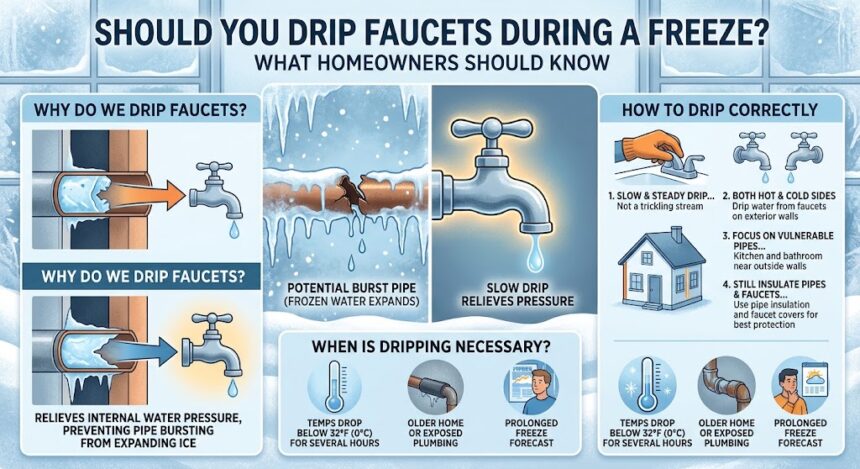
Should You Drip Faucets During a Freeze? What Homeowners Should Know
Yes, dripping a faucet can help protect exposed water lines during severe cold, according to the American Red Cross. However, dripping alone does not protect every pipe or replace adequate heat and insulation.
The important distinction is between a temporary precaution and lasting protection. Understanding where water lines run, how the home stays heated, and which areas have frozen before provides a clearer starting point for cold-weather preparation.
Should You Drip Faucets During a Freeze?
The Red Cross recommendation applies to faucets served by exposed pipes: let cold water drip during very cold weather. Even a trickle of running water helps prevent freezing, but the advice is not a guarantee against damage.
That does not mean every faucet needs to run whenever the forecast reaches freezing. Pipes inside heated living spaces face different conditions than pipes in an unheated garage or crawl space. For advice about whether to drip faucets during freeze conditions, describe any exposed supply lines or past freezing problems when contacting a plumbing repair provider.
Leaving water running does not correct missing insulation or an exposed pipe route. Those conditions need attention separately.
Which Pipes Are Most Vulnerable?
Water expands as it freezes, putting pressure on the pipe containing it. Both metal and plastic pipes can break under that pressure.
The Red Cross identifies several common trouble spots:
- Outdoor hose connections and other exposed water lines.
- Pipes in unheated attics, basements, crawl spaces, and garages.
- Supply lines along poorly insulated exterior walls.
- Plumbing inside cabinets where warm indoor air may not circulate well.
A faucet inside a warm room may still be supplied by a pipe passing through a cold space. The fixture’s location alone does not establish how well its water line is protected. Previous freezing is another reason to review the pipe’s route and surrounding insulation before winter.
How to Winterize Plumbing Before Temperatures Drop
Learning how to winterize plumbing starts with identifying weak points before freezing weather arrives. A licensed plumber can evaluate exposed supply lines, recommend appropriate insulation, and determine whether shutting off and draining outdoor water lines is appropriate for the system.
Useful questions for that visit include:
- Which hot and cold water lines need additional protection?
- Are outdoor hose connections properly prepared for winter?
- Would insulation or relocating an exposed line offer better protection?
- Where is the main water shutoff, and is it accessible?
Dripping and winterization serve different purposes. Dripping is a short-term precaution during severe cold; winterization addresses the exposure that makes pipes vulnerable in the first place.
For Metro Atlanta homeowners, Davis & Sons Plumbing is one local repair provider to ask about existing plumbing problems and what additional protection may be needed to prevent frozen pipes. Confirm the proposed work and applicable coverage in the company’s service guarantee and warranty details.
Indoor Heat Matters, Too
The Red Cross recommends maintaining the same thermostat setting day and night during very cold weather. If leaving home, keep the heat on at no lower than 55°F.
Keeping garage doors closed where water lines are present also helps. Opening kitchen and bathroom cabinet doors allows warmer air to reach plumbing, but household chemicals must remain out of children’s reach. These measures improve access to indoor warmth; they do not remove the need to address exposed supply lines.
Frequently Asked Questions
Should a repeatedly frozen pipe be relocated?
Relocation is worth discussing when an exposed pipe remains vulnerable. The Red Cross lists relocating exposed pipes as a protection option; the appropriate solution depends on the home’s layout and should be evaluated professionally.
Does one dripping faucet protect every pipe in the house?
Do not assume one faucet protects every water line. Homes can have multiple exposed branches, so a faucet on one branch should not be treated as protection for separate vulnerable lines.
What if a faucet suddenly produces only a trickle?
An unexpected trickle can indicate a frozen pipe, according to the Red Cross. Contact a licensed plumber for an assessment rather than attempting to thaw plumbing with a torch or open flame.
Prepare Before the Forecast Becomes Urgent
Appropriate dripping, dependable indoor heat, and protection for exposed pipes work together. Arrange an assessment before severe weather to identify vulnerable areas and plan any needed repairs or insulation.


