
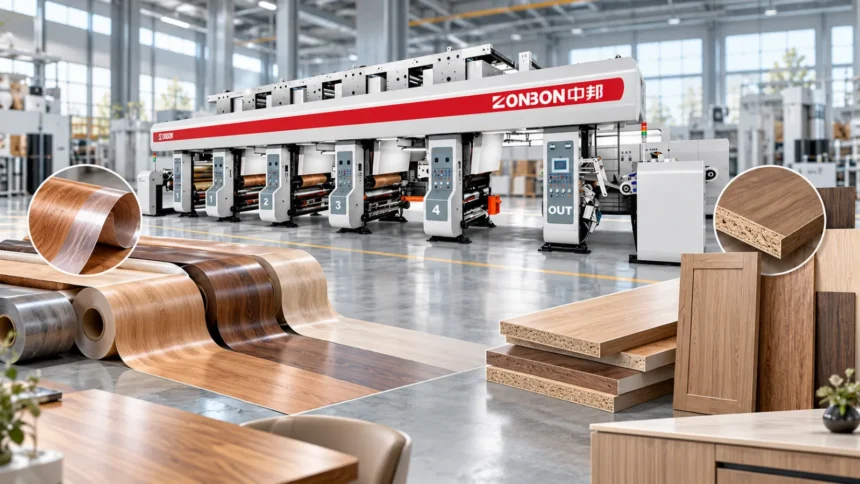
Imagine choosing a beautiful oak finish for a new kitchen. The cabinet doors look perfect in the sample, but once production begins, questions start appearing. Will the material wrap neatly around curved edges? Will the color remain consistent across every cabinet? And how well will the surface handle years of cleaning and everyday use?
These are the questions that make choosing between wood grain decorative films and laminates more complicated than simply comparing two samples. Both can recreate the warmth of natural wood, but the best choice depends on where the finish will be used, how the panels are manufactured and what the surface will experience after installation.
Wood Grain Films or Laminates: Why the Choice Matters
At first glance, wood grain films and laminates can look remarkably similar. Both can reproduce popular finishes such as oak, walnut and ash. The difference becomes clearer when you consider the shape of the furniture and the demands placed on its surface.
Flexible decorative films, including suitable PVC and other polymer-based products, can be applied to certain contoured cabinet doors, furniture components and profiles. Their flexibility can be useful when a design includes curves, routed details or wrapped edges.
Decorative laminates cover several product categories. High-pressure laminate (HPL) is commonly used on furniture, countertops and interior panels, while thermally fused laminate (TFL) is manufactured directly on compatible board substrates.
For a flat work surface exposed to frequent use, a suitable HPL grade may be worth considering. For a shaped cabinet front, a thermoformable decorative film may simplify finishing. However, specialized postforming laminates can also accommodate certain curved designs.
The real question is not which material looks better in a catalog. It is which one fits the finished product.
Where Each Material Performs Best
Consider two furniture projects: a kitchen cabinet with decorative grooves and a reception desk used throughout the day. Both require attractive wood grain finishes, but their performance priorities are different.
The cabinet manufacturer may focus on forming the finish around edges without visible joints. The reception desk manufacturer may place greater importance on abrasion resistance, cleaning performance and surface durability.
| Project Requirement | Decorative Film | Decorative Laminate |
|---|---|---|
| Contoured cabinet doors | Suitable thermoformable grades can follow shaped surfaces | Requires an appropriate laminate grade and forming method |
| Flat furniture panels | Available for compatible lamination processes | HPL and TFL are established options |
| Frequently used work surfaces | Performance depends on film construction and coating | Suitable HPL grades offer demanding-use options |
| Wood grain appearance | Printed patterns and optional textured finishes | Printed decorative layers with varied surface textures |
| Manufacturing considerations | Adhesion, temperature and forming compatibility | Panel processing, bonding and edge finishing |
These differences do not make one material universally superior. Product grade, substrate quality and processing conditions matter just as much as the material category.
Cabinets, Doors and Wall Panels: Matching Finishes to Real Projects
A finish that works beautifully on a flat wardrobe panel may not deliver the same result on a cabinet door with deep routed details. Similarly, a decorative surface selected for a bedroom wardrobe may not be ideal for a heavily used commercial counter.
Kitchen Cabinets and Wardrobes
For kitchens, appearance must be balanced with cleaning requirements, moisture exposure and edge durability. Flexible films may work well on suitable shaped fronts, while HPL or TFL panels can be practical options for many flat cabinet components.
Interior Doors and Decorative Panels
Wood grain finishes help create a coordinated appearance across interior doors, wall panels and furniture. When several components share the same design, differences in gloss, texture or printed color can become noticeable under consistent lighting.
The range of architectural and decorative materials extends beyond furniture films to decorative papers, surface layers and other printed materials used in interior finishing. Although these products may share similar wood or stone patterns, their application and finishing requirements can differ considerably.
Before committing to a large project, reviewing actual finished panels is more useful than choosing from a printed color chart alone.
Why Some Wood Grain Finishes Look More Realistic Than Others
Have you ever seen two walnut-effect cabinet doors with nearly identical colors, yet one looks much more natural? The difference often comes from the quality of the printed pattern and its relationship with the surface texture.
Natural wood contains subtle color variations, irregular grain lines and changes in light reflection. Reproducing those details consistently requires careful artwork preparation, printing and finishing.
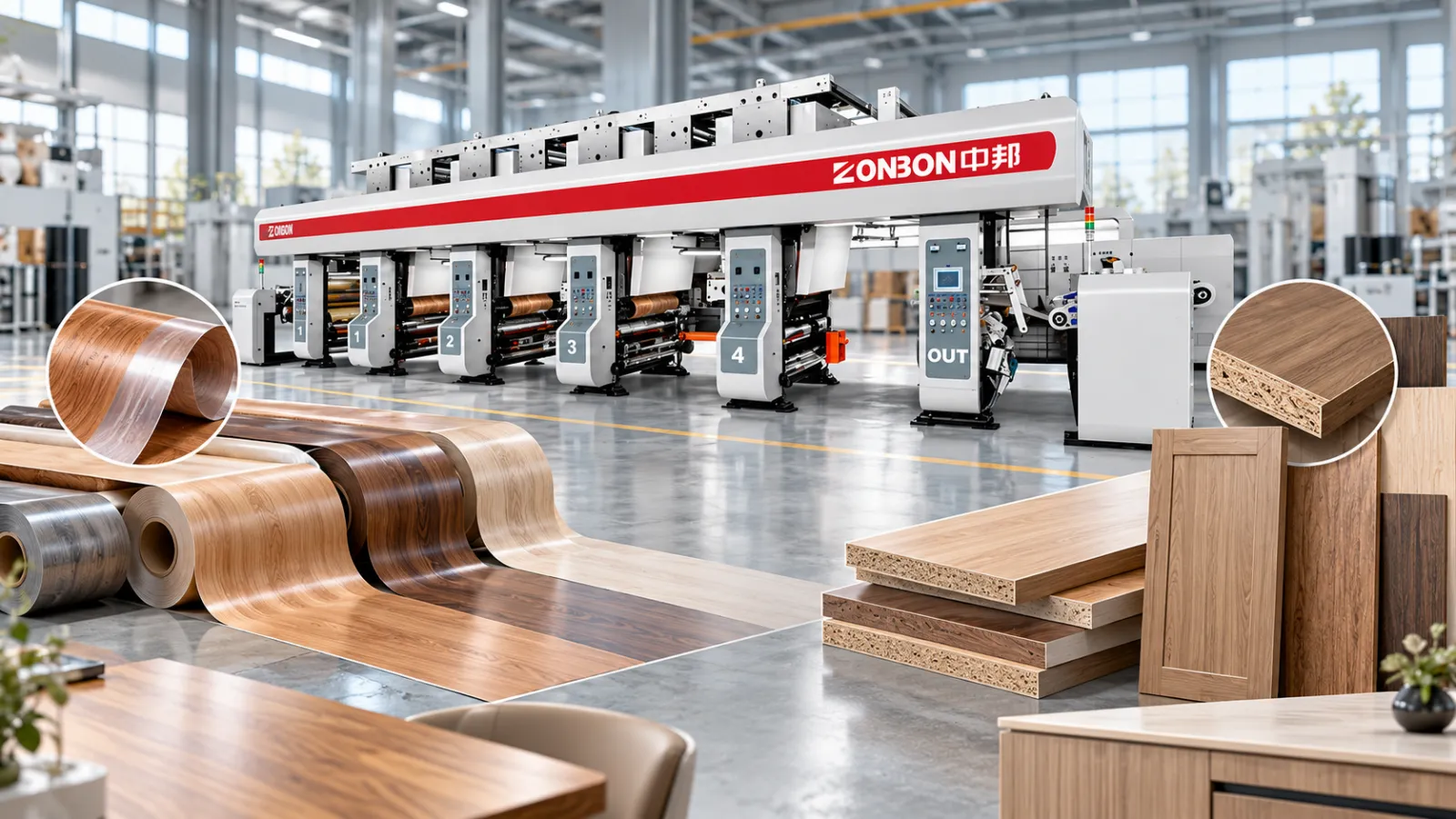
For decorative films and papers produced in continuous rolls, industrial printing methods can reproduce repeating wood grain designs across long material lengths. One such method is decorative material rotogravure printing, which uses engraved cylinders to transfer detailed patterns onto compatible substrates.
However, a well-printed pattern is only part of the finished appearance. Gloss level, embossing, surface coating and the direction of the grain also affect how realistic the material looks after application.
For furniture manufacturers, consistency across production batches can be especially important. A small shade difference that goes unnoticed on an individual sample may become obvious when several cabinet doors are installed side by side.
What Happens After Installation?
A wood grain finish should look attractive on installation day, but its performance over the following years matters just as much.
Think about the surfaces people touch every day. Kitchen cabinet doors are exposed to fingerprints, cleaning products and occasional splashes. Office desks experience repeated contact, while wall panels may face relatively little physical wear.
These differences should influence the material specification. A suitable HPL grade may be preferable for demanding horizontal applications, while decorative films can be appropriate for compatible vertical and shaped surfaces.
Neither material should be assumed to be waterproof, scratchproof or heatproof without supporting product data. Performance varies with thickness, surface coating, bonding system and manufacturing quality.
Before approval, ask for test information relevant to the application, including abrasion resistance, stain resistance, cleaning compatibility and adhesion where appropriate.
The Hidden Costs Beyond the Material Price
A lower price per square meter does not always mean a lower manufacturing cost.
Imagine a furniture factory comparing two wood grain finishes for several hundred cabinet doors. One material may cost less to purchase but require additional trimming, edge finishing or more complicated processing. Another may carry a higher material price yet fit the factory’s existing production method more efficiently.
The total cost should account for material yield, adhesive consumption, labor, rejected panels, equipment compatibility and finishing operations.
Design consistency is another consideration. If replacement components must match an existing furniture range, the availability of the same color and pattern across future batches may be commercially important.
Instead of comparing quotations based only on material price, furniture manufacturers should request samples that reflect the actual substrate, shape and finishing process planned for production.
Which Wood Grain Finish Makes Sense for Your Project?
There is no single answer for every furniture or interior design project. The right finish depends on how the component will be manufactured, installed and used.
- For contoured cabinet fronts: Consider thermoformable decorative films or other materials specifically approved for the required shape and processing method.
- For flat furniture panels: Compare suitable decorative films, HPL and TFL according to appearance, performance and manufacturing compatibility.
- For busy work surfaces: Prioritize documented wear, stain and cleaning resistance rather than appearance alone.
- For coordinated interior projects: Check pattern consistency, texture, gloss and batch-to-batch color matching.
- For large production orders: Evaluate overall processing costs and inspect representative finished components before approval.
The most useful test is often a simple one: make a sample using the actual board, adhesive, finishing method and production conditions. Examine the edges, compare the color under realistic lighting and check whether the finished surface meets its intended performance requirements.
Final Thoughts
Wood grain decorative films and laminates can both deliver attractive timber-inspired finishes, but they solve different manufacturing and design challenges.
Rather than choosing a material solely because its sample looks realistic or its purchase price is appealing, consider the finished component. Its shape, daily use, processing requirements and long-term appearance should guide the decision.
The best wood grain finish is ultimately the one that looks right, performs as expected and fits the way the product is actually made.


