What Is the Happy Baby Stretch?
The Happy Baby Stretch is a gentle yoga pose designed to improve flexibility, release tension, and encourage relaxation throughout the body. Also known as Ananda Balasana in yoga, this position involves lying on your back while holding your feet and bringing your knees toward your sides. It is particularly popular for stretching the hips, inner thighs, and lower back comfortably.
The name comes from the playful position babies often take when lying on their backs and reaching for their feet. Although the movement looks simple, it can offer several physical and mental benefits when performed with proper alignment. People of different fitness levels can practice this stretch with modifications that suit their flexibility, comfort, and mobility.
Many yoga instructors include the Happy Baby Pose in relaxation sessions, stretching routines, and cool-down exercises. It can help create a sense of openness around the hip joints while encouraging slow, controlled breathing. Whether you practice yoga regularly or want a gentle stretching exercise at home, understanding this movement can help you perform it safely and effectively.
How to Do the Happy Baby Stretch Step by Step
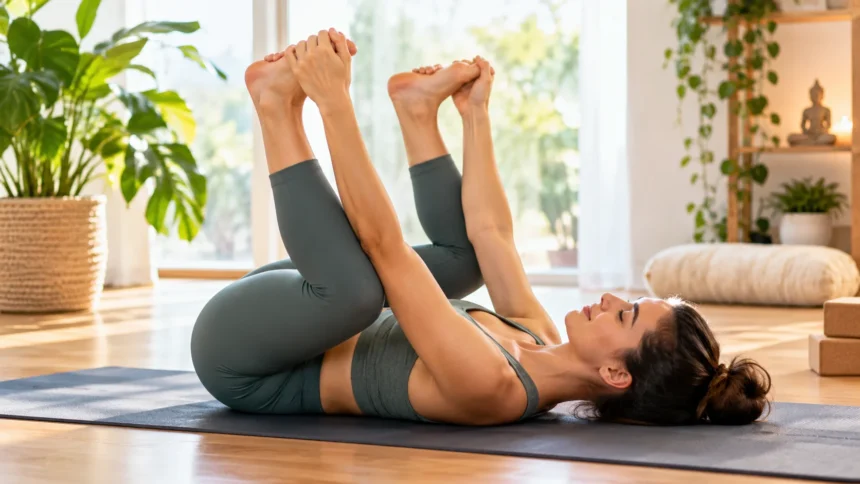
Begin by lying flat on your back on a comfortable yoga mat with your arms resting beside your body. Bend your knees toward your chest while keeping your shoulders relaxed and your head supported. Slowly separate your knees toward the outside of your torso, allowing your hips to open naturally without forcing the movement or creating discomfort.
Next, reach your hands toward the outside edges of your feet, ankles, or lower legs, depending on your flexibility. Position your ankles approximately above your knees while keeping your shins as upright as comfortably possible. Gently guide your knees toward your armpits, maintaining a relaxed lower back and avoiding unnecessary pressure on your hip joints.
Hold the position for approximately 15 to 30 seconds while breathing slowly and naturally. You may gently rock from side to side if the movement feels comfortable and does not strain your back. When finished, release your feet carefully, bring your knees together, and lower your legs to the mat in a controlled manner.
Key Benefits of the Happy Baby Stretch
One of the main benefits of the Happy Baby Stretch is its ability to encourage comfortable movement around the hips. The position gently stretches muscles near the inner thighs and groin while supporting the body against the floor. Regular practice may help reduce feelings of stiffness, particularly after long periods of sitting or limited physical activity.
Another advantage is the opportunity to relax muscles around the lower back and pelvis. By lying on your back with your knees bent, you can explore gentle hip movement without supporting your body weight in a standing position. However, the stretch is not a treatment for back pain, and its effects can vary depending on individual mobility and existing conditions.
The Happy Baby Pose may also support mental relaxation when combined with slow breathing and mindful movement. Taking a few moments to focus on comfortable stretching can create a calming break during a busy day. Although one stretch cannot eliminate stress, including relaxing yoga poses in a balanced routine may contribute to overall well-being.
Muscles Targeted During the Happy Baby Pose
The Happy Baby Stretch primarily targets muscles surrounding the hip joints, including the inner thigh muscles known as the hip adductors. These muscles help bring the legs toward the body’s center and contribute to hip stability during everyday movements. When the knees move outward, the position creates a gentle stretching sensation through the inner thighs and groin.
The position can also stretch parts of the gluteal region and surrounding hip tissues, depending on individual anatomy and joint positioning. Because the hips are flexed and opened, several muscle groups experience changes in length and tension. This makes the exercise useful for exploring comfortable hip mobility without requiring complex movements or specialized fitness equipment.
Muscles around the lower back and pelvis may also feel more relaxed during this position. However, the sensation is influenced by spinal alignment, breathing, flexibility, and the amount of pressure applied through the hands. Rather than pulling your legs forcefully, focus on gentle movement that allows the targeted muscles to stretch without pain.
How Happy Baby Stretch Improves Hip Flexibility
Hip flexibility plays an important role in everyday activities such as walking, sitting, bending, and changing positions. The Happy Baby Stretch encourages hip flexion and outward movement, allowing the joints to move through a comfortable range. Practicing this movement consistently may help maintain flexibility and make certain daily activities feel more natural over time.
People who sit for extended periods sometimes experience a feeling of tightness around their hips and inner thighs. Adding gentle hip-opening stretches to a varied movement routine may help reduce temporary stiffness. The Happy Baby Pose can be particularly convenient because it requires little space and allows the back to remain supported throughout the exercise.
However, improved flexibility does not happen instantly, and pushing beyond your natural range can lead to discomfort. Gradual progress is generally more useful than attempting to reach an extreme position during one session. Combining the Happy Baby Stretch with walking, strengthening exercises, and other mobility movements can support balanced hip function and comfortable movement.
Happy Baby Stretch for Lower Back Relaxation
The Happy Baby Stretch is frequently included in yoga routines intended to promote lower back relaxation. Lying on the floor provides support while the knees bend toward the torso, which some people find soothing. The position may reduce the sensation of muscular tension, especially when performed gently after sitting or participating in everyday physical activities.
Maintaining a comfortable spine position is essential when practicing this stretch. Avoid pressing your lower back aggressively into the floor or lifting your head and shoulders to reach your feet. Instead, use your hands to hold your ankles or legs if reaching the feet causes strain, and allow your breathing to remain steady.
Although gentle stretching may help some people feel more comfortable, lower back pain can have several underlying causes. The Happy Baby Pose should not replace professional assessment when pain is persistent, severe, or accompanied by unusual symptoms. If the position increases discomfort, stop the exercise and consider a gentler alternative recommended by a healthcare professional.
Common Mistakes to Avoid During Happy Baby Stretch
One common mistake is pulling the feet too strongly toward the body in an effort to deepen the stretch. Excessive pulling can place unnecessary stress on the hips, knees, and surrounding tissues. Instead of focusing on how far your knees move, concentrate on maintaining a gentle stretching sensation that allows you to breathe and relax comfortably.
Another mistake involves lifting the shoulders, neck, or head away from the mat while trying to reach the feet. This can create unwanted tension through the upper body and make the position harder to maintain. If your feet are difficult to reach, hold your ankles or thighs instead of compromising your natural alignment.
Holding your breath or forcing the knees into a perfectly symmetrical position can also interfere with comfortable stretching. Different levels of flexibility between the hips are common, and each side may move differently. Move slowly, respect your available range of motion, and avoid bouncing or making sudden adjustments that could strain sensitive muscles.
Happy Baby Stretch Modifications for Beginners
Beginners may find the traditional Happy Baby Pose challenging because of limited hip flexibility or difficulty reaching their feet. A simple modification involves holding the backs of the thighs rather than the feet. This reduces the need for a deep hip position while still allowing a gentle stretch around the hips and lower body.
Another option is to practice one leg at a time while keeping the opposite foot resting on the floor. Bend one knee toward the side of your body and support the leg with your hands. This variation offers greater control over the movement and may feel more manageable for people developing their hip mobility.
A yoga strap can also provide additional reach when holding the feet directly feels uncomfortable. Place the strap securely around each foot and hold it with relaxed arms, avoiding excessive pulling. The purpose of modifications is not to force a deeper stretch but to make the position accessible, controlled, and comfortable for different bodies.
How Long Should You Hold the Happy Baby Stretch?
The ideal holding time depends on your experience, flexibility, and personal comfort. Beginners can start with approximately 15 to 20 seconds while maintaining natural breathing and relaxed muscles. As the position becomes familiar, some people may comfortably increase the duration to 30 seconds or slightly longer without experiencing strain.
Instead of concentrating only on time, pay attention to how your body responds during the exercise. A mild stretching sensation is generally acceptable, but sharp pain, tingling, or increasing discomfort indicates that you should stop. Releasing the position slowly helps prevent sudden movements and allows your muscles to return comfortably to rest.
You can practice the Happy Baby Stretch during a regular mobility routine, after suitable physical activity, or as part of a gentle yoga session. A few controlled repetitions may be sufficient for exploring comfortable movement. Consistency matters more than holding the position for an unusually long time or trying to achieve immediate flexibility improvements.
Best Time to Practice the Happy Baby Stretch
The Happy Baby Stretch can be practiced at different times of the day depending on your routine and comfort. Some people enjoy gentle stretching in the morning to explore mobility after sleeping. Beginning slowly is especially important when muscles and joints feel stiff, and it may help to move around briefly before entering the pose.
Practicing the stretch after exercise can also be a comfortable way to transition toward relaxation. When muscles are warm, gentle static stretches may feel easier to perform without excessive effort. The Happy Baby Pose can be included alongside other cool-down movements, although it should not replace a complete recovery routine when additional exercises are needed.
Evening yoga sessions provide another opportunity to enjoy this relaxing position. Combining the stretch with steady breathing and comfortable floor-based movements may help you unwind after daily activities. There is no universally perfect time to perform the exercise, so choose a schedule that supports regular practice without discomfort or unnecessary pressure.
Who Should Avoid or Modify the Happy Baby Stretch?
Although the Happy Baby Stretch is generally gentle, it may not be appropriate for everyone. People experiencing recent hip, knee, or lower back injuries should seek professional guidance before attempting the full position. Certain joint conditions, recent surgeries, or movement restrictions can make deep hip flexion uncomfortable or unsuitable without individualized modifications.
Pregnant individuals may also need adjustments, particularly later in pregnancy when prolonged lying flat on the back may cause discomfort. A qualified prenatal healthcare professional or experienced prenatal yoga instructor can recommend suitable positions. Modified side-lying stretches or other supported movements may be preferable depending on pregnancy stage and individual medical considerations.
Anyone who experiences numbness, sharp pain, dizziness, or unusual pressure during the movement should stop immediately. Stretching should create a controlled sensation rather than force the body into uncomfortable positions. If you have a medical condition affecting your joints, muscles, or spine, personalized guidance can help you select exercises that match your needs.
How to Include Happy Baby Stretch in Your Daily Routine
Adding the Happy Baby Stretch to your routine does not require a lengthy yoga session or expensive equipment. A comfortable mat and enough floor space are generally sufficient for performing the movement. You can combine it with gentle knee-to-chest movements, pelvic tilts, and relaxed breathing to create a short mobility routine at home.
For a balanced stretching session, consider practicing movements that target different areas of the body rather than focusing only on hip flexibility. Gentle hamstring stretches, supported spinal movements, and comfortable hip rotations may complement the Happy Baby Pose. Keep each exercise controlled and select movements that suit your current flexibility and physical comfort.
Building a sustainable routine involves paying attention to consistency, recovery, and gradual progression. Some days your hips may feel more flexible, while other days a modified position may be more appropriate. Treat stretching as an opportunity to explore comfortable movement rather than a competition, and combine mobility exercises with appropriate strengthening and everyday physical activity.
Conclusion
The Happy Baby Stretch is an accessible yoga movement that encourages gentle hip mobility, inner thigh flexibility, and relaxation. Its supported position makes it a convenient addition to many stretching routines, especially when practiced with suitable modifications. Learning the correct technique can help you explore the benefits while reducing unnecessary strain on your joints and muscles.
To perform the stretch effectively, focus on relaxed breathing, comfortable alignment, and gradual movement rather than forcing your legs into a deeper position. Beginners can hold their thighs or ankles and progress according to their individual flexibility. Practicing consistently and responding to your body’s signals can make the exercise a more enjoyable part of your routine.
Whether you want to unwind after a busy day, explore hip flexibility, or add variety to your yoga practice, the Happy Baby Pose offers a simple starting point. Remember that individual results vary, and stretching works best alongside other healthy movement habits. With patience and proper technique, this gentle exercise can become a comfortable part of your wellness routine.
Frequently Asked Questions (FAQs)
1. What is the Happy Baby Stretch good for?
The Happy Baby Stretch is useful for gently stretching the inner thighs, improving comfortable hip mobility, and encouraging relaxation. It may also help reduce temporary feelings of muscular tension.
2. Can beginners do the Happy Baby Stretch?
Yes, beginners can perform the Happy Baby Stretch using suitable modifications. Holding the ankles or thighs instead of the feet can make the position more accessible and comfortable.
3. Does the Happy Baby Stretch help with lower back pain?
Some people find the stretch relaxing for their lower back, but it is not a proven treatment for every cause of back pain. Avoid it if symptoms worsen.
4. How often should you do the Happy Baby Stretch?
You can include the Happy Baby Stretch in a regular gentle mobility routine if it feels comfortable. Start with short holds and adjust frequency according to your body’s response.
5. Should your lower back stay on the floor during Happy Baby Pose?
Keep your back comfortably supported without forcing it flat against the mat. A small amount of natural movement is acceptable, provided you avoid straining your spine or hips.