
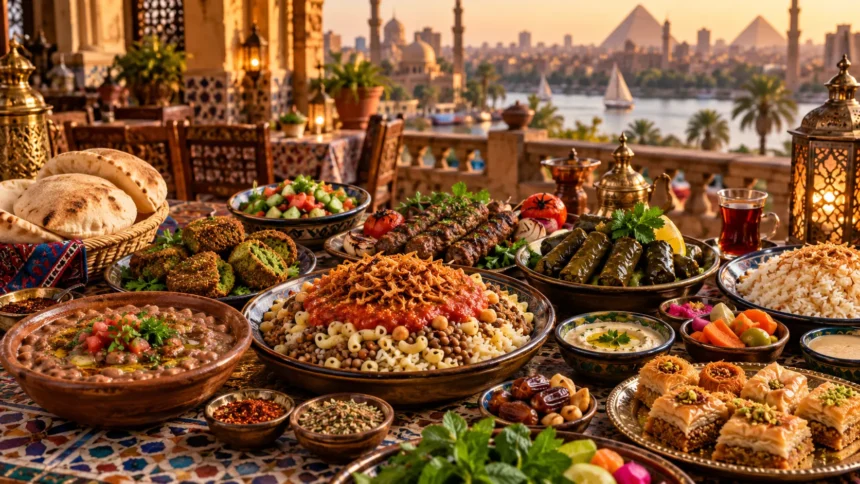
Egypt is famous for its ancient pyramids, fascinating history, and beautiful Nile River, but its traditional cuisine is another reason to explore this remarkable country. Egyptian food combines fresh ingredients, aromatic spices, hearty grains, and cooking traditions passed down through generations. From busy Cairo streets to family kitchens in Alexandria, local dishes reflect the country’s rich cultural heritage.
This Egypt food guide explores the must-try dishes, popular street foods, traditional desserts, and regional specialties that make Egyptian cuisine unique. Visitors can enjoy comforting meals such as koshari, ful medames, taameya, and molokhia while discovering flavorful grilled meats and freshly baked bread. Many classic dishes feature simple ingredients transformed into satisfying meals through traditional cooking methods.
Whether you are visiting Egypt for the first time or exploring its culinary traditions from home, understanding local food can make the experience more rewarding. Egyptian cuisine offers options for vegetarians, meat lovers, and travelers who enjoy discovering authentic regional flavors. This guide highlights essential dishes, food traditions, dining customs, and practical tips for enjoying Egyptian cuisine.
What Makes Traditional Egyptian Food Unique?
Traditional Egyptian food is known for its combination of affordable ingredients, comforting flavors, and deeply rooted culinary customs. Common ingredients include fava beans, lentils, rice, vegetables, herbs, and freshly baked bread. These foods form the foundation of many everyday meals and reflect Egypt’s long agricultural history along the Nile.
Egyptian cooking often uses spices such as cumin, coriander, black pepper, and cinnamon to create distinctive flavors. Garlic, onions, tomatoes, and fresh herbs are also important ingredients in numerous dishes. Rather than relying entirely on intense heat, many recipes emphasize balanced seasoning, slow cooking, and natural flavors.
Food also plays an important social role in Egyptian culture. Families frequently gather around shared meals, while traditional restaurants and street vendors serve dishes enjoyed across generations. Understanding these customs allows travelers to appreciate Egyptian cuisine as more than a collection of recipes because it reflects hospitality, history, and community life.
1. Koshari – Egypt’s Most Famous Street Food
Koshari is one of Egypt’s most recognizable national dishes and a favorite among local residents. This hearty meal combines rice, lentils, macaroni, and chickpeas, creating a satisfying mixture of textures. It is typically topped with a flavorful tomato sauce, crispy fried onions, and optional garlic vinegar or spicy chili sauce.
The dish is popular because it is affordable, filling, and widely available throughout Egypt. Small restaurants and specialized koshari shops serve generous portions to students, workers, families, and tourists. Although the ingredients are relatively simple, the combination of different components creates a distinctive flavor that makes koshari memorable.
Koshari is especially appealing to travelers looking for traditional Egyptian street food without meat. Most standard versions are plant-based, although individual preparation methods may vary. Trying koshari at a busy local establishment provides an opportunity to experience one of the country’s most beloved everyday meals.
2. Ful Medames – A Traditional Egyptian Breakfast
Ful medames is a classic Egyptian breakfast dish made primarily from slowly cooked fava beans. The beans are usually seasoned with ingredients such as cumin, lemon juice, olive oil, garlic, or chopped vegetables. Its rich texture and satisfying flavor have made it an essential part of Egyptian breakfast traditions.
Ful is commonly served with warm baladi bread, fresh tomatoes, cucumbers, and other simple accompaniments. Many Egyptians enjoy it at home or purchase it from neighborhood food vendors. Different restaurants and households prepare their own versions, creating variations in texture, seasoning, and presentation.
Travelers interested in authentic Egyptian food should consider trying ful medames during breakfast. It provides an introduction to the importance of beans, bread, and fresh vegetables in local cuisine. The dish is also naturally rich in plant-based nutrients, making it a satisfying option for people who enjoy traditional legume-based meals.
3. Taameya – Egyptian-Style Falafel
Taameya is Egypt’s distinctive version of falafel and one of the country’s most popular street foods. Unlike many Middle Eastern falafel recipes that rely on chickpeas, Egyptian taameya is traditionally prepared using fava beans. The mixture usually contains fresh herbs, garlic, onions, and spices before being shaped and fried.
The finished taameya typically has a crisp exterior and a vibrant green interior created by ingredients such as parsley, cilantro, and dill. It is commonly served inside baladi bread with vegetables, pickles, and tahini sauce. The contrast between crispy fritters and fresh accompaniments creates a flavorful and satisfying meal.
Taameya is widely available from breakfast shops and street-food vendors throughout Egypt. Visitors can enjoy it as a quick breakfast, snack, or casual lunch. Its distinctive preparation makes it an essential dish for travelers interested in comparing Egyptian food traditions with other regional cuisines.
4. Molokhia – A Famous Egyptian Green Soup
Molokhia is a traditional Egyptian dish made from finely chopped leaves of the jute mallow plant. These leaves are cooked into a distinctive green soup or stew with a characteristic texture. Garlic and coriander are commonly used to create the aromatic seasoning that gives the dish its recognizable flavor.
Molokhia is often served alongside rice, bread, or cooked chicken and other meats. Families may prepare it for everyday meals or special gatherings, depending on regional traditions. Its consistency can surprise first-time visitors, but the combination of herbs, garlic, and savory accompaniments makes it a memorable culinary experience.
The dish has an important place in Egyptian home cooking and is prepared in several regional variations. Some households prefer different broths or serving styles, while others emphasize traditional family recipes. Trying molokhia provides insight into Egyptian comfort food and the country’s long-standing appreciation for leafy vegetables.
5. Mahshi – Vegetables Stuffed With Flavorful Rice
Mahshi is a popular Egyptian dish consisting of vegetables stuffed with a seasoned rice mixture. Common vegetables include zucchini, bell peppers, eggplants, and tomatoes, while cabbage and grape leaves are also frequently used. The filling usually contains rice, herbs, tomato-based seasoning, and aromatic spices.
Preparing mahshi requires patience because the vegetables or leaves must be filled carefully before cooking. They are generally simmered in a flavorful liquid until the rice becomes tender. The finished dish combines soft vegetables with fragrant filling, creating a comforting meal enjoyed in many Egyptian households.
Mahshi is particularly associated with family gatherings and traditional home cooking. Recipes differ between regions and households, with some versions containing meat and others remaining vegetarian. Travelers who enjoy discovering authentic local dishes may appreciate mahshi because it reflects the care and preparation involved in Egyptian culinary traditions.
6. Hawawshi – Egyptian Spiced Meat Bread
Hawawshi is a popular Egyptian street food made by filling bread with seasoned minced meat. The filling commonly includes onions, peppers, and spices that create a savory aroma during cooking. Traditional versions are prepared using Egyptian bread, although regional variations feature different doughs and baking techniques.
The bread is baked or cooked until the exterior becomes crisp and the meat filling is thoroughly cooked. Hawawshi is commonly served with pickles, tahini, or fresh vegetables. Its combination of warm bread and flavorful filling makes it a convenient meal enjoyed in casual restaurants and neighborhood food shops.
Hawawshi is especially popular among travelers interested in Egyptian meat-based street food. The dish is satisfying without requiring elaborate presentation or expensive ingredients. Visitors should choose establishments with good food-handling practices and ensure the meat is properly cooked before eating.
7. Fattah – A Traditional Egyptian Celebration Dish
Fattah is a traditional Egyptian dish commonly associated with festive occasions, family gatherings, and religious celebrations. It typically consists of layers of rice and pieces of toasted or fried bread combined with a flavorful garlic and vinegar sauce. Cooked meat is often served on top, creating a rich and satisfying meal.
The dish is especially important during celebrations such as Eid al-Adha, when families prepare traditional meals together. Different households may adjust the seasoning, meat selection, and sauce according to family preferences. The combination of textures and savory flavors makes fattah distinctive within Egyptian cuisine.
Fattah is more than a hearty meal because it reflects the cultural importance of shared food during special occasions. Travelers may encounter it at traditional restaurants or family-style dining establishments. Its connection to celebration and hospitality makes it an interesting dish for understanding Egyptian food culture.
8. Alexandrian Liver – A Flavorful Street Food Specialty
Alexandrian liver, commonly called kebda Eskandarani, is a well-known Egyptian street food associated with the coastal city of Alexandria. It consists of thinly sliced liver cooked with garlic, peppers, cumin, and other seasonings. The ingredients create a strong, savory flavor that is distinctive from many other Egyptian dishes.
The liver is often served inside bread as a sandwich, sometimes accompanied by tahini, pickles, or vegetables. Street-food shops and casual restaurants prepare different variations based on regional preferences. The combination of aromatic spices and warm bread makes it a popular choice for people who enjoy traditional meat dishes.
Because liver has a distinctive flavor and texture, it may not appeal to every traveler. However, it remains an important part of Alexandria’s culinary identity. Visitors interested in regional Egyptian specialties can explore this dish at reputable establishments that follow appropriate food preparation and hygiene practices.
9. Sayadiya – Traditional Egyptian Fish and Rice
Sayadiya is a traditional seafood dish commonly associated with Egypt’s coastal communities, particularly around Alexandria and the Mediterranean region. It usually combines fish with seasoned rice, onions, and aromatic spices. The dish reflects the importance of fishing and seafood in the culinary traditions of Egypt’s coastal cities.
A distinctive feature of sayadiya is the flavorful rice, which often gains a rich color and taste from deeply cooked onions. Fish may be cooked separately or combined with the rice, depending on the recipe. Lemon, herbs, and regional seasonings can add freshness and enhance the overall flavor.
Travelers visiting Alexandria or other coastal destinations may find sayadiya at seafood restaurants and traditional dining establishments. Freshly prepared versions provide an enjoyable introduction to Egyptian fish-based cuisine. Those with seafood allergies should always confirm ingredients and preparation methods before ordering.
10. Egyptian Kofta and Kebab – Popular Grilled Dishes
Kofta and kebab are among the most popular grilled meat dishes served throughout Egypt. Kofta is generally prepared from seasoned minced meat shaped around skewers, while kebab commonly uses pieces of meat. Both are cooked over heat to develop a distinctive smoky flavor and tender texture.
These grilled specialties are often served with Egyptian bread, rice, salads, and tahini sauce. Restaurants may also provide pickled vegetables and other traditional side dishes. The combination of grilled meat and fresh accompaniments makes kofta and kebab popular for family meals and social gatherings.
Egyptian grilled dishes vary according to restaurant style and regional preferences. Some preparations emphasize simple seasoning, while others incorporate additional herbs and spices. Travelers who enjoy meat-based cuisine can explore these dishes at traditional Egyptian grill restaurants, where they are frequently prepared fresh.
11. Baladi Bread – The Essential Egyptian Flatbread
Baladi bread, commonly called aish baladi, is one of the most important everyday foods in Egypt. This traditional flatbread is usually made with wheat flour and baked at high temperatures. Its round shape and pocket-like structure make it especially convenient for eating with beans, vegetables, grilled meats, and sauces.
Egyptians commonly enjoy baladi bread throughout the day, particularly during breakfast and lunch. It is often used to scoop up foods such as ful medames, molokhia, or various vegetable dishes. The bread’s versatility makes it a central part of countless traditional meals.
Fresh baladi bread is widely available from local bakeries and food establishments. Its flavor and texture can vary depending on the flour and baking method. Trying freshly baked bread with traditional Egyptian dishes offers an authentic and enjoyable introduction to the country’s everyday culinary traditions.
12. Egyptian Street Food – What to Try at Local Markets
Egyptian street food is an important part of the country’s culinary culture, offering affordable meals and snacks in busy neighborhoods. Cities such as Cairo and Alexandria contain numerous vendors preparing traditional dishes throughout the day. Street-food experiences allow visitors to discover local flavors while observing everyday food traditions.
Popular street foods include koshari, taameya sandwiches, ful medames, hawawshi, and roasted sweet potatoes. Different vendors specialize in particular dishes, often developing loyal local customers. Exploring established food areas can provide opportunities to taste regional specialties without relying exclusively on formal restaurants.
Food safety should remain a priority when trying unfamiliar street foods. Travelers can choose busy establishments where food is prepared fresh and served hot. Drinking safe water, checking cleanliness, and avoiding poorly stored ingredients can help reduce the risk of food-related illness during a culinary adventure.
13. Basbousa – A Famous Egyptian Semolina Dessert
Basbousa is one of Egypt’s most popular traditional desserts, made primarily from semolina and sweetened syrup. The cake has a soft, slightly grainy texture and is often flavored with ingredients such as coconut or nuts. Its rich sweetness makes it a favorite treat during family gatherings and celebrations.
The dessert is typically baked until golden before being soaked with a fragrant sugar syrup. Some versions include almonds or other decorative toppings. The syrup creates a moist texture while preserving the characteristic structure of the semolina cake.
Basbousa is widely available from Egyptian bakeries, dessert shops, and traditional restaurants. Travelers can enjoy it with tea or coffee after a meal. Its simple ingredients and comforting flavor make it an excellent introduction to Egyptian sweets and the broader dessert traditions of the Middle East.
14. Om Ali – Egypt’s Famous Bread Pudding
Om Ali is a beloved Egyptian dessert that resembles a rich baked bread pudding. It is traditionally prepared using pieces of pastry or bread combined with milk, sugar, nuts, and sometimes coconut or raisins. The mixture is baked until the top becomes golden and the ingredients develop a warm, creamy texture.
The dessert is especially popular during special occasions, family gatherings, and traditional restaurant meals. Its combination of soft pastry, warm milk, and crunchy toppings creates an enjoyable contrast of textures. Different recipes use various nuts and dried fruits according to personal preferences and regional traditions.
Om Ali is commonly served warm, making it particularly comforting after a traditional Egyptian meal. Many restaurants offer individual portions, while families may prepare larger dishes for sharing. Visitors interested in Egyptian desserts should consider trying Om Ali because it represents an important part of the country’s culinary heritage.
15. Konafa – A Crispy and Sweet Egyptian Treat
Konafa is a traditional dessert enjoyed in Egypt and many neighboring countries. It is commonly made using fine strands of pastry layered with butter or another suitable fat and sweet fillings. After baking, the dessert is soaked with syrup to create a combination of crispy texture and rich sweetness.
Traditional fillings may include nuts, cream, or other ingredients, depending on the recipe. Modern Egyptian bakeries also prepare creative versions with chocolate, fruit, and different flavored creams. Konafa is especially popular during Ramadan, when families gather to enjoy traditional sweets after evening meals.
Travelers can find konafa at bakeries, dessert shops, and restaurants throughout Egypt. Freshly prepared versions are particularly enjoyable because of their contrast between crisp pastry and soft filling. Its popularity across generations makes konafa an essential dessert for visitors exploring Egyptian food culture.
16. Egyptian Tea and Traditional Drinks
Egyptian beverages play an important role in everyday social life, particularly during family gatherings and visits to local cafés. Black tea, commonly called shai, is one of the country’s most widely consumed drinks. It is usually served hot, often with sugar, and enjoyed throughout the day.
Karkade, a drink made from hibiscus flowers, is another popular Egyptian beverage. It can be served hot or cold and is known for its vibrant red color and pleasantly tart flavor. Other traditional drinks include tamarind beverages and seasonal fruit juices prepared from locally available ingredients.
Experiencing Egyptian drinks provides insight into local hospitality and café culture. Visitors can enjoy tea while relaxing in traditional coffeehouses or exploring neighborhood markets. When purchasing beverages, travelers should consider drinking water quality and choose establishments that use safe preparation methods.
17. Regional Egyptian Cuisine – Cairo, Alexandria, and Upper Egypt
Egyptian cuisine varies between regions because of differences in geography, agriculture, and cultural traditions. Cairo is especially famous for popular street foods such as koshari, ful medames, and taameya. Its restaurants and markets offer a broad selection of dishes representing different parts of the country.
Alexandria and other coastal cities are known for their seafood traditions, including fish dishes and regional specialties such as Alexandrian liver. Fresh seafood, aromatic rice, and coastal cooking methods play important roles in local cuisine. These dishes reflect the influence of Mediterranean geography on Egyptian food culture.
Upper Egypt also has distinctive culinary traditions shaped by rural communities and agricultural practices. Local breads, hearty vegetable dishes, and traditional meat preparations may differ from recipes found in northern cities. Exploring regional cuisine allows travelers to understand how Egyptian food reflects different environments and longstanding community traditions.
18. Best Places to Experience Authentic Egyptian Food
Cairo is one of the best destinations for experiencing a wide variety of traditional Egyptian dishes. Neighborhood restaurants, bakeries, and street-food establishments serve everything from breakfast staples to elaborate meals. Visitors can explore local food areas while discovering the everyday flavors that define Egyptian culinary culture.
Alexandria provides another distinctive food experience, particularly for travelers who enjoy seafood and coastal specialties. Traditional restaurants serve fresh fish, seasoned rice, and other regional dishes. Markets and neighborhood cafés also offer opportunities to experience local dining traditions beyond the main tourist attractions.
Smaller Egyptian towns can provide equally memorable culinary experiences through family-run restaurants and traditional bakeries. Choosing established local businesses may introduce visitors to recipes that differ from international hotel menus. A thoughtful approach to dining allows travelers to appreciate both the flavors and cultural significance of Egyptian food.
19. Egyptian Food Etiquette and Dining Customs
Dining customs in Egypt emphasize hospitality, social connections, and the enjoyment of shared meals. Families and friends frequently gather around tables containing several dishes, allowing everyone to enjoy different flavors. Offering food to guests is an important expression of welcome in many Egyptian households.
Bread often accompanies meals and may be used to scoop up food from shared dishes. When eating in traditional settings, visitors should observe local customs and follow the host’s example. Using the right hand for eating or passing food is considered courteous in many situations, particularly during informal meals.
Respecting dining traditions can make food experiences more comfortable and enjoyable. Travelers should be considerate when photographing meals or people in restaurants and markets. Understanding basic etiquette, expressing appreciation, and remaining open to unfamiliar dishes can help create positive interactions with local communities.
20. Essential Tips for Enjoying Egyptian Food Safely
Exploring Egyptian cuisine can be one of the highlights of visiting the country, but food safety deserves attention. Choose restaurants and vendors that appear clean, prepare food properly, and serve meals at appropriate temperatures. Freshly cooked dishes are generally preferable to foods that have been left unrefrigerated for extended periods.
Travelers should also pay attention to drinking water and food preparation conditions. Bottled or properly treated drinking water may be a practical option when water safety is uncertain. Washing hands regularly and being cautious with uncooked foods can help reduce the likelihood of common travel-related stomach problems.
Food allergies and dietary restrictions require additional planning because ingredients may vary between recipes and restaurants. People avoiding meat, dairy, nuts, or gluten should ask about preparation methods before ordering. Learning a few useful Arabic food-related phrases can make communication easier and help travelers enjoy Egyptian cuisine more confidently.
Conclusion
Egyptian cuisine offers an extraordinary combination of traditional flavors, hearty meals, aromatic spices, and delicious desserts. From the famous koshari and ful medames to molokhia, mahshi, and grilled kofta, each dish reflects a different aspect of the country’s culinary heritage. Exploring local food provides an enjoyable way to understand Egypt beyond its famous historical landmarks.
This Egypt food guide highlights the must-try dishes and regional specialties that make the country’s cuisine memorable. Street foods offer convenient opportunities to experience everyday Egyptian flavors, while traditional restaurants introduce visitors to family-style meals and celebration dishes. Desserts such as basbousa, Om Ali, and konafa add another delicious dimension to the experience.
Whether you are enjoying breakfast in Cairo, discovering seafood specialties in Alexandria, or sharing a traditional meal with local hosts, Egyptian food creates opportunities for meaningful cultural experiences. With an open mind and sensible food safety precautions, travelers can discover the diverse flavors that make Egyptian cuisine such an important part of the country’s identity.
Frequently Asked Questions (FAQs)
1. What is the most famous food in Egypt?
Koshari is one of Egypt’s most famous dishes, combining rice, lentils, pasta, chickpeas, tomato sauce, and crispy onions. Ful medames and taameya are also widely enjoyed traditional Egyptian foods.
2. What traditional Egyptian food should tourists try?
Tourists should try koshari, ful medames, taameya, molokhia, mahshi, hawawshi, and Egyptian grilled kofta. Traditional desserts such as basbousa, Om Ali, and konafa are also worth exploring.
3. Is Egyptian food spicy?
Egyptian food is generally flavorful rather than extremely spicy. Many dishes use cumin, coriander, garlic, and aromatic herbs, while chili sauces or additional spicy seasonings are often served separately.
4. Is Egyptian food suitable for vegetarians?
Yes, several traditional Egyptian dishes are vegetarian or naturally plant-based, including many versions of koshari, ful medames, and taameya. However, ingredients and preparation methods should always be confirmed.
5. What is a typical Egyptian breakfast?
A traditional Egyptian breakfast often includes ful medames, taameya, baladi bread, fresh vegetables, and tea. Some meals also feature eggs, cheese, or other simple accompaniments depending on household preferences.