
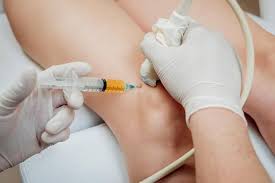
Your knee hurts halfway through a walk. Your shoulder complains every time you reach overhead. You’ve tried resting, adjusted your workouts, and waited for the pain to disappear. It hasn’t. Naturally, you’re wondering whether there’s another option besides repeating the same routine and hoping for a different result.
That’s where regenerative medicine enters the conversation. Platelet-rich fibrin, or PRF, is a treatment being explored for certain joint and tendon problems. It uses components of your own blood in an effort to support the body’s healing response. Interesting? Certainly. A guaranteed fix? Not quite. Understanding the science behind it can help you decide whether it’s worth discussing with a healthcare professional.
PRF: Your Blood, Prepared for a Purpose
PRF stands for platelet-rich fibrin. To prepare it, a clinician takes a small blood sample and processes it in a centrifuge, concentrating platelets and other blood components within a fibrin matrix.
Think of fibrin as a natural protein framework that plays a role in blood clotting. It acts like a scaffold holding parts together. Platelets release growth factors and signaling molecules that are important in the body’s repair processes.
The idea behind PRF therapy is to deliver these components to a specific area. This can help support the healing environment where it’s needed. Unlike treatments that focus mainly on pain relief, PRF is designed to affect the processes involved in tissue recovery.
There’s an important distinction, though. A treatment can have a plausible biological mechanism without consistently producing meaningful improvements in patients. That’s why clinical evidence matters just as much as the science behind the injection.
Could It Help Your Joints or Tendons?
Researchers are investigating PRF for musculoskeletal problems, including persistent tendon pain and degenerative joint conditions. Potential applications include certain shoulder and elbow tendon injuries, as well as symptoms associated with osteoarthritis. But the evidence isn’t equally strong across all these conditions.
Studies vary in how PRF’s prepared, where it is injected and how researchers measure results. Findings from one use of PRF cannot be assumed to prove that the treatment works for a case. A review of PRF in orthopedics has pointed out possible benefits but also stressed weaknesses in the current evidence. There is a need for studies with stronger designs.
In real-world situations, PRF therapy is still considered an emerging choice, not a fix for every painful joint or tendon. Proven methods like physical therapy and changes in daily activities may still be better options depending on the specific diagnosis.
What Happens During an Injection?
The procedure generally begins with a blood draw. The sample is then processed to produce the PRF preparation, which a clinician injects into the intended treatment area. Ultrasound guidance may be used to improve placement accuracy, depending on the condition and the technique.
It is generally a nonsurgical procedure, but that doesn’t mean there are no risks. Temporary soreness, bruising, or swelling can occur after an injection, and the risks depend partly on the treatment site and how the procedure is performed.
Before scheduling treatment, ask how the PRF is prepared, why it is appropriate for your diagnosis, and what recovery might involve. You should also understand the cost and whether the available evidence supports its use for your particular condition.
Promising Doesn’t Mean Proven
PRF research is still developing. Different preparation methods and inconsistent study results make it difficult to predict how much benefit an individual patient might experience or how long that benefit might last.
Regulatory status also deserves attention. In the United States, the FDA has not approved medicine products for orthopedic conditions such as osteoarthritis or tendonitis. Patients should ask about the status of the specific product and the intended use instead of assuming that using their own blood automatically makes a procedure approved or risk‑free. Always verify the status before proceeding.
If joint or tendon pain is interfering with your routine, start with an accurate diagnosis and a conversation with a qualified healthcare professional. The best treatment is the one that fits your condition, has an evidence base and offers benefits that justify its risks and costs.


