
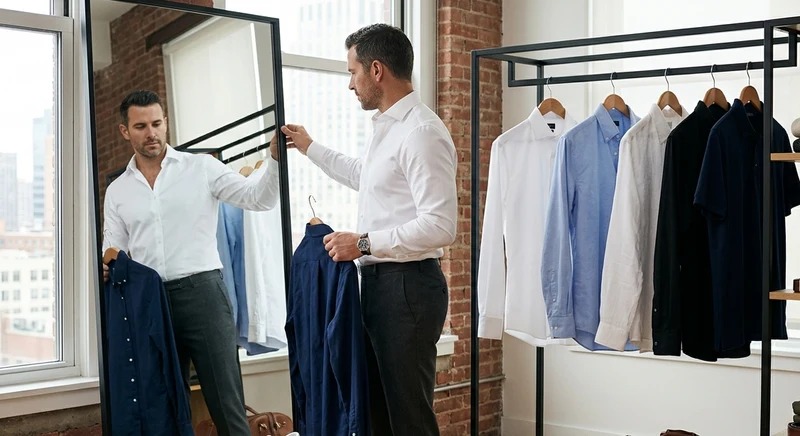
Renting a tuxedo for a wedding is normal. Renting the rest of your wardrobe still isn’t, at least for most men. That may be starting to change. Clothing rental is growing again after a difficult stretch, and the idea of paying for access to clothes rather than owning them is reaching people who never considered it before.
Most of that growth has happened around women’s fashion, so men’s rental is still a much smaller story. Even so, the underlying ideas behind rental raise interesting questions for men’s style. This guide looks at why rental is growing, where it fits naturally into a man’s wardrobe, where it doesn’t, and how it could change the way men shop over the next few years.
Why Clothing Rental Is Growing Again
Rental had a rough patch when events and travel slowed in 2020, since the early model leaned heavily on special-occasion clothing. The comeback has looked different. Fashion trade coverage in 2026 reported that Nuuly, the rental platform run by URBN, passed $500 million in revenue for the year ending January 31, 2026, with more than 420,000 subscribers. The same coverage pointed to price-conscious younger shoppers as one driver of the resurgence, and to a shift toward more flexible, everyday-oriented subscriptions.
Those numbers describe one company, and rental remains a small slice of overall retail, so it’s worth treating the trend as growing, not dominant. But the direction is clear: renting is becoming more approachable for everyday wear, not only for weddings and galas.
Why Men Have Been Slower to Adopt It
Rental’s early growth centered on women’s fashion, where trends move quickly and occasion dressing is common. Industry commentary has noted for years that men might need more convincing, and that major rental services were slow to build men’s ranges. A few reasons help explain this:
- Men’s wardrobes tend to be built around repeat wear. A man who wears the same jacket, boots, and jeans for years has less reason to rotate.
- Trend cycles are slower in menswear. Classic pieces stay wearable, so the pull of “something new every month” is weaker.
- Fit preferences are personal. Many men prefer to own clothes that have been broken in or tailored to them.
Where Rental Makes Sense for Men
Even with those hurdles, rental fits several real situations well.
Formalwear and Special Occasions
This is where men’s rental already works. A tuxedo, morning suit, or dinner jacket you’ll wear once or twice is a classic case where renting beats buying.
Travel
Renting can solve specific travel needs, like a heavy winter coat for a single cold-weather trip or a formal outfit for an event abroad, without buying something that will sit in a closet afterward.
Testing a Style
Rental can act as a low-risk trial. If you’re unsure whether a bolder cut or an unfamiliar color suits you, wearing it for a few weeks can be a cheaper way to find out than buying it outright.
Short-Term Life Changes
A new job in a stricter dress-code environment, a temporary move, or a season of unusual events can all be covered by rental, letting you avoid committing to pieces you may not need long term.
Where Owning Still Wins
Rental has clear limits, and they show up most for the pieces men wear most.
Everyday Staples
If you’ll wear something several times a week, the math usually favors buying. Cost per wear drops quickly with frequent use, while rental fees keep recurring.
Outerwear You’ll Wear Often
Jackets are a good test case. A men’s hooded leather jacket that you’d wear through most of the cooler months is the kind of piece that tends to pay for itself over time, since leather ages well, improves with wear, and can last for years. Renting a jacket like this for the same period would likely cost more in total, and you’d never get the benefit of a piece that molds to you.
Pieces That Depend on Fit
Some clothes only work when they fit exactly. Shoulders, sleeve length, and overall proportion are difficult to get right from a rotating inventory, and a tailored or well-fitted piece you own will usually look better than a “close enough” rental.
How Rental Could Change Men’s Fashion
Even if most men never subscribe, the ideas behind rental could influence how menswear works.
- Try before you buy. Rental models can normalize wearing something for a while before committing, which could shift how brands think about returns and trials.
- Less impulse buying. Access instead of ownership can reduce the pile of pieces bought and barely worn.
- Pressure on quality. Items that circulate through many customers have to hold up, which favors durable construction.
- Growth of hybrid models. Rent-to-own, resale, and brand-run rental programs could blur the line between renting and buying.
- More attention to specialty pieces. Occasion wear and travel-specific clothing may increasingly be rented, leaving purchases for the core wardrobe.
What to Watch Out For
Rental isn’t automatically cheaper or greener, and a few cautions apply:
- Recurring fees add up. A subscription can cost more over a year than buying a few well-chosen pieces.
- Damage and cleaning policies vary. Read what happens if something is stained, torn, or returned late.
- Sizing is limited. Not every service offers a full range, and men’s selection may be narrower.
- The environmental benefit isn’t guaranteed. Shipping, cleaning, and returns all carry costs, so the sustainability case depends on how the service is run and how often each item is used.
A Simple Way to Decide: Rent or Buy?
A quick set of questions can help:
- Will I wear this more than a handful of times? If yes, buying usually wins.
- Does it need to fit precisely? If yes, owning or tailoring is better.
- Is this for a one-off event or trip? If yes, renting is worth considering.
- Do I want to test a style before committing? Rental can be a useful trial.
Where ownership makes sense, it helps to buy pieces built to last. Specialist retailers that focus on durable materials and construction, such as The Leather Coats for leather outerwear, are a natural fit for the “buy fewer, keep longer” side of the equation, and the same durability that makes a piece worth owning also makes it easier to resell later.
Common Mistakes With Clothing Rental
- Renting items you’d wear constantly. Frequent use makes buying cheaper.
- Ignoring the fine print. Fees for damage, lateness, or cancellation can be costly.
- Assuming rental replaces a wardrobe. It works best as a supplement to a solid core of owned pieces.
- Choosing rental for fit-critical items. Buying or tailoring is usually a better option.
FAQ
FAQ 1: Is clothing rental available for men?
Formalwear rental has long been common for men. Broader everyday rental has grown mostly through women’s fashion, and men’s selection has generally been narrower, though options may be expanding.
FAQ 2: Is renting clothes cheaper than buying?
It depends on how often you’d wear the item. For one-off events, renting is often cheaper. For pieces you’d wear regularly, buying usually costs less per wear.
FAQ 3: What types of clothes are best to rent?
Formalwear, travel-specific items, and pieces you want to try before committing are the strongest candidates.
FAQ 4: Is clothing rental more sustainable than buying new?
Not automatically. Sharing clothes can reduce the number of garments produced, but shipping, cleaning, and returns add their own impact, so results vary.
FAQ 5: Should I rent a jacket instead of buying one?
For a single trip or event, possibly. For a jacket you’d wear through much of the season, buying is generally the better value, especially with durable materials like leather.
Final Thought
Clothing rental probably won’t replace the men’s wardrobe, but it could reshape parts of it. Occasion wear, travel needs, and style experiments are natural fits, while the pieces you wear constantly are still better owned. Understanding where each approach works lets you spend money more deliberately: rent what you’ll use briefly, and buy the things worth keeping.


