
Preparing for birth often comes with a long list of decisions: choosing where to deliver, discussing birth preferences, attending prenatal appointments, and deciding who you want beside you during labour.
For some families, that support team includes a birth doula.
But what does a doula actually do? And if doctors, midwives, nurses, and your partner are already present, where does a doula fit into the picture?
For parents considering a birth doula in Toronto, understanding these different roles can make the decision much easier.
What Is a Birth Doula?
A birth doula provides continuous, non-medical support during pregnancy, labour, and birth.
The role is different from that of a physician or midwife. A doula does not diagnose medical conditions, perform clinical procedures, or make medical decisions for the patient.
Instead, birth doula support may include:
- Emotional reassurance
- Physical comfort measures
- Breathing and relaxation techniques
- Position changes and movement
- Helping parents understand what is happening during labour
- Supporting the birth partner
- Helping the labouring person communicate their preferences
- Providing continuous support as labour progresses
The key word is support.
A doula becomes another member of the birth team rather than a replacement for medical care.
What Happens Before Labour?
Doula care often starts before the contractions do.
Prenatal meetings give expecting parents an opportunity to discuss their preferences, concerns, previous experiences, and questions about birth.
Families may talk about comfort measures, different stages of labour, birth positions, communication with the healthcare team, and the role they would like their partner to play.
This preparation can be valuable because labour is not always the easiest time to learn new information.
Discussing options beforehand allows parents and their support people to become familiar with strategies they may want to use later.
What Does Doula Support Look Like During Real Labour?
Descriptions of doula care can sometimes sound abstract until you see what that support looks like in practice.
Dr. Yasmin Amini of Serene Naturopathic Doctors & Doulas has supported families during labour and has seen how quickly the needs of both the labouring parent and their partner can change as contractions become stronger.
In one birth experience, the patient’s partner genuinely wanted to help but was unsure what to do.
Rather than replacing him, Dr. Amini showed him practical ways to participate.
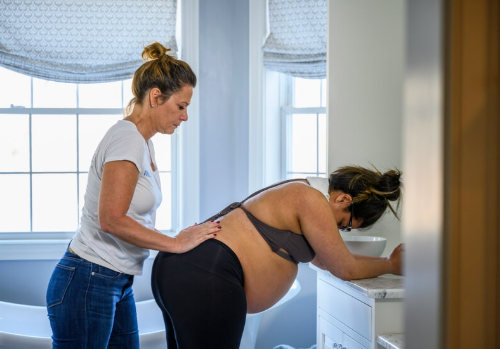
He learned how to provide counter-pressure during contractions and how to help with position changes. As labour progressed, breathing techniques, movement, positioning, reassurance, and continuous support were used according to what the patient needed at different moments.
The experience illustrates an important part of doula care:
Sometimes the partner does not need to step aside. They simply need guidance on how to help.
That distinction can completely change how couples think about having a doula present.
Does a Doula Replace Your Partner?
Usually, no.
In fact, supporting the partner can be an important part of the doula’s role.
Partners know the labouring person in a way the doula does not. They provide familiarity, emotional connection, and personal reassurance.
But they may not have attended many births before.
When contractions become intense or labour lasts for many hours, it is understandable for a partner to wonder:
What should I do right now?
A doula can suggest practical ways to help, such as applying counter-pressure, helping with movement, offering reassurance, or supporting a position that the labouring person finds comfortable.
The doula and partner can therefore work as a team.
Physical Comfort During Labour
Labour can change significantly from one stage to another, so there is no single comfort technique that works for everyone.
Depending on the person’s preferences and clinical circumstances, non-medical support may involve:
- Changing positions
- Walking or movement
- Breathing techniques
- Relaxation
- Massage
- Counter-pressure
- Using pillows or other positioning support
- Encouragement and reassurance
The objective is not to force labour into a particular pattern.
Instead, the doula helps the labouring person explore comfort strategies and adjust them as their needs change.
Continuous labour support has also been studied extensively. A Cochrane systematic review examining continuous support during childbirth found associations with several positive birth outcomes and greater satisfaction with the childbirth experience.
Importantly, the type of support and individual circumstances vary, so these findings should not be interpreted as a guarantee of any particular birth outcome.
Emotional Support Is Part of the Job
Birth is not only a physical process.
A person may feel confident at one stage of labour and overwhelmed at another. Plans can change. Labour may take longer than expected. New medical information may need to be discussed.
A doula can provide a familiar and continuous presence throughout those changes.
Sometimes that means active coaching.
At other times, it simply means staying calm, listening, providing reassurance, and helping the family process what is happening.
That continuity is one of the features that distinguishes doula support from many other roles within the birth environment.
Does a Doula Replace a Doctor or Midwife?
No.
This distinction is essential.
Doctors, midwives, and other regulated healthcare professionals are responsible for clinical assessment and medical care within their respective scopes of practice.
A birth doula’s role is supportive and non-medical.
A doula should not diagnose complications, interpret clinical findings as a substitute for the medical team, prescribe medical treatment, or make medical decisions on behalf of the patient.
Instead, the doula works alongside the healthcare team while remaining focused on the parent’s comfort, emotional support, and preferences.
What Happens When Birth Does Not Go According to Plan?
Birth plans can be helpful, but birth itself can be unpredictable.
A parent may initially hope for one type of labour experience and later decide they want different pain-management options. Labour may progress differently than expected, or the healthcare team may recommend an intervention based on the clinical situation.
The doula’s job is not to pressure someone into preserving the original plan.
Support can instead involve helping the parent remain calm, understand the questions they may want to ask, and communicate with their healthcare team while adapting to changing circumstances.
A positive birth experience does not necessarily mean that everything happened exactly as originally planned.
Feeling informed, respected, and supported can matter too.
What About Hospital Births in Toronto?
Many families looking for a Toronto birth doula are planning hospital births.
Toronto and the surrounding GTA have several hospitals providing maternity care, including Mount Sinai Hospital, Sunnybrook Health Sciences Centre, North York General Hospital, St. Michael’s Hospital, Humber River Health, and others.
A doula who is familiar with hospital births can help families prepare for the general environment and think through how they would like to use support during labour.
However, hospital policies regarding visitors and support people can change. Parents should confirm current policies directly with the hospital where they plan to give birth.
What Is a Naturopathic Doula?
Families researching birth support in Toronto may also encounter the term naturopathic doula.
At Serene Naturopathic Doctors & Doulas, Dr. Yasmin Amini brings her professional background as a naturopathic doctor together with birth doula support.
These roles still need to remain clearly defined.
During birth, doula support focuses on helping the labouring parent through non-medical physical and emotional support while respecting the role and clinical decisions of the maternity care team.
For some families, having a provider who understands different stages of pregnancy, birth, and postpartum care may provide additional continuity throughout their experience.
How to Choose a Birth Doula in Toronto
Training and experience matter, but choosing a doula is also highly personal.
You will potentially spend many hours with this person during one of the most significant experiences of your life. Feeling comfortable with their personality and communication style is therefore important.
Consider asking potential doulas:
- What training and birth experience do you have?
- What is included in your doula package?
- How many prenatal meetings are included?
- When should I contact you once labour starts?
- How do you support partners?
- What comfort techniques do you commonly use?
- What happens if you are unavailable when labour begins?
- Do you have experience supporting hospital births?
- Is postpartum follow-up included?
- How do you work alongside doctors, midwives, and nurses?
There is no universally correct answer to every question. The purpose is to understand whether the doula’s approach matches what you want from your birth support.
When Should You Start Looking for a Doula?
There is no specific week of pregnancy when every parent must hire a doula.
However, starting the search earlier gives you more time to meet potential doulas, discuss your expectations, ask questions, and prepare together before your due date.
Availability can also become more limited as the expected delivery date approaches.
The goal should not simply be to find an available doula. It should be to find someone you trust and feel comfortable having as part of your birth team.
Building the Right Birth Support Team
Every family approaches birth differently.
Some parents want extensive hands-on support. Others primarily want reassurance and guidance. Some partners feel confident about labour, while others appreciate having an experienced person show them how they can participate.
Dr. Amini’s experience supporting families during labour highlights something that can easily be overlooked: good doula care is not about taking control of the birth experience. It is about helping the people already in the room feel more supported and better able to participate.
For families exploring Birth Doula services in Toronto, https://sereneclinic.ca/birth-doula/ Serene Naturopathic Doctors & Doulas provides prenatal and labour support focused on the individual needs and preferences of each family.
Ultimately, the right birth team is the one that helps you feel informed, respected, and supported while ensuring that medical decisions remain with you and your appropriate healthcare providers.
Sources & References
- World Health Organization (WHO) — Intrapartum Care for a Positive Childbirth Experience. Recommendations addressing respectful maternity care, communication, companionship and support during labour and childbirth.
- Cochrane — Continuous Support for Women During Childbirth. Systematic review examining continuous labour support and maternal and birth outcomes.
- Society of Obstetricians and Gynaecologists of Canada (SOGC) — Pregnancy and Childbirth Resources. Canadian educational information related to pregnancy, labour, birth and maternity care.
- Mount Sinai Hospital / Sinai Health — Pregnancy, Labour and Birth. Patient information regarding maternity and childbirth services in Toronto.
- Sunnybrook Health Sciences Centre — Pregnancy and Birth. Patient information regarding pregnancy, labour, delivery and maternity services.