
Is Radon Really a Concern in a Place Like Los Angeles?
It is a fair question, since radon gets discussed mostly in colder states with basements, places like Iowa or Pennsylvania, where the gas has fewer ways to escape a home. Los Angeles has a different housing stock, mostly slab-on-grade construction with few basements, and that does change the risk profile. But radon is not a regional weather pattern. It comes from the natural breakdown of uranium in soil and rock, and pockets of elevated radon show up in parts of LA County, particularly areas with more rocky, granitic soil like parts of the San Gabriel Valley and the foothill communities. The EPA maps show moderate potential across large sections of Southern California, not the high-risk zones you see in the Midwest, but not zero either.
Why Does It Matter if You Cannot See or Smell It?
That is exactly the problem. Radon is a colorless, odorless gas, and the only way to know your exposure level is to test for it. The EPA lists radon as the second leading cause of lung cancer in the United States after smoking, and the risk comes from long-term exposure inside a sealed structure, not a single visit. A home can test high even if the surrounding neighborhood generally does not, because radon levels depend heavily on the specific soil conditions under that particular lot and how the foundation was built.
What Does a Radon Test Actually Involve?
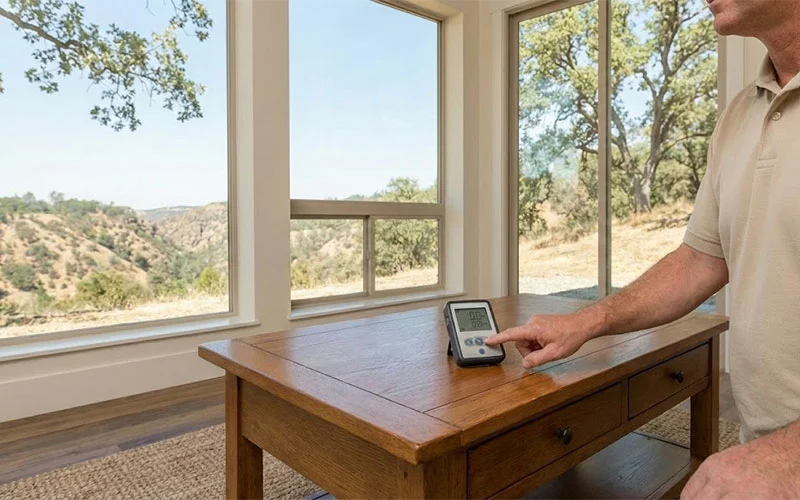
A short-term test uses a small monitor placed in the lowest livable level of the home for 48 to 96 hours. It is inexpensive and noninvasive, and it is often bundled into a broader Los Angeles home inspections package during a home purchase, since buyers rarely think to request it separately. Results come back as a concentration measured in picocuries per liter, with the EPA’s action threshold set at 4.0. Anything above that is generally recommended for mitigation.
What Happens if a Home Tests Above That Threshold?
The standard fix is a sub-slab depressurization system, essentially a vent pipe and fan that pulls radon gas from beneath the foundation and releases it above the roofline before it can enter the living space. It is a well-established technology, not experimental, and it is effective in the large majority of cases when installed correctly. The bigger question for most buyers and homeowners is cost, and radon system cost typically depends on the home’s foundation type and the complexity of routing the vent pipe, with most single-family installations falling into a fairly predictable range that a licensed mitigation contractor can quote after a walkthrough.
Should Every Buyer in LA County Test for Radon?
Testing is inexpensive relative to almost anything else in a home purchase, and unlike many inspection items, it does not depend on the age of the house. A newly built home can test just as high as a 1950s one, since the gas comes from the ground, not the structure. Given the low cost of testing against the potential long-term health exposure, most inspectors recommend it as a standard add-on rather than something to skip based on assumptions about the region. The only way to actually know a specific property’s radon level is to test that property, not to rely on general assumptions about Southern California’s climate or soil.