
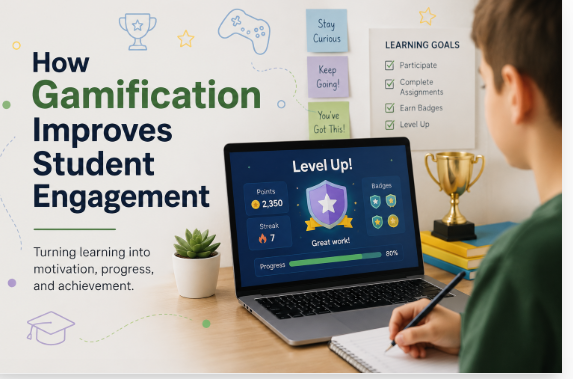
Introduction to Gamification
Gamification is a concept that integrates game-design elements and principles into non-game contexts, particularly in fields like education. It leverages the inherent motivational aspects of games to engage users, stimulate interest, and encourage participation. In educational environments, gamification can transform the learning experience, making it more interactive and dynamic. By incorporating elements such as point scoring, leaderboards, and competition, educators can tap into students’ natural desires for achievement and recognition, leading to increased motivation and engagement.
The significance of gamification in educational contexts is profound. It serves as a bridge between traditional learning methods and the interests of contemporary students, who are often surrounded by digital experiences. As students engage with content through gamified elements, the process becomes more enjoyable, resonating with their need for enjoyment and challenge. This inherently increases their involvement with the material, resulting in improved retention of knowledge and enhanced critical thinking skills.
Moreover, gamification supports differentiated learning by accommodating various student preferences and abilities. Through customization options, learners can progress at their own pace, selecting tasks that align with their interests and learning styles. This personalized approach fosters a sense of ownership over their educational journey, which further boosts engagement. By setting clear goals and providing immediate feedback, gamification also encourages students to reflect on their learning, reinforcing their understanding and commitment.
In summary, the utilization of gamification in education represents a progressive shift towards more engaging learning methodologies. By aligning educational practices with the innate traits found in games, educators can create a more compelling and effective learning environment that ultimately benefits student outcomes.
Understanding Student Engagement
Student engagement is a multifaceted concept that encompasses various dimensions of a learner’s involvement in the educational process. Primarily, engagement can be categorized into three main types: emotional, behavioral, and cognitive engagement. Each of these dimensions plays a crucial role in fostering an effective learning environment.
Emotional engagement refers to the students’ feelings towards their school, teachers, peers, and learning experiences. It includes aspects such as motivation, interest, and sense of belonging within the educational setting. When students feel emotionally invested in their learning, they are more likely to participate actively and seek support from peers and educators, thereby enhancing their overall academic experience.
Behavioral engagement involves the observable actions of students while participating in learning activities. This may manifest through attendance, active participation in class discussions, adherence to school rules, and involvement in extracurricular activities. High levels of behavioral engagement reflect a student’s commitment to their educational pursuits, which is essential for achieving academic success.
Cognitive engagement addresses the mental effort and strategies that students employ to understand and process information. This dimension is characterized by self-regulation, critical thinking, and the willingness to take on challenging tasks. When students are cognitively engaged, they are more likely to invest time and energy into mastering complex concepts, fostering a deeper understanding of the subject matter.
The interrelation of these dimensions is vital for realizing effective learning outcomes. Educators must strive to create an environment that promotes emotional, behavioral, and cognitive engagement, as each dimension influences the others, ultimately resulting in a more enriched educational experience. Addressing these aspects can lead to increased motivation, improved retention, and better academic performance among students, which are all essential for optimizing their overall engagement in the learning process.
The Psychology Behind Gamification
Gamification leverages psychological principles that are vital for enhancing student engagement in educational settings. At its core, it taps into various motivation theories, notably intrinsic and extrinsic motivation. Intrinsic motivation refers to engaging in an activity for personal satisfaction or interest, while extrinsic motivation involves performing tasks for external rewards such as grades, accolades, or tangible benefits. Understanding these motivations allows educators to design gamified elements that cater to both forms, thereby appealing to a broader range of students.
One significant aspect of gamification is the implementation of rewards systems, which harness the power of positive reinforcement. When students receive rewards—ranging from points and badges to social recognition—they are more likely to feel validated and motivated to continue participating actively. This process aligns with B.F. Skinner’s operant conditioning theory, where positive outcomes reinforce desired behaviors. Moreover, when students compete for rewards within a gamified environment, it can stimulate engagement levels, fostering a sense of community and healthy rivalry.
Another pivotal element is the role of challenge in gamification. Humans are naturally drawn to challenges that push their limits. A well-structured gamified system can offer progressively challenging tasks that enhance mastery and competence. This dynamics creates a fulfilling experience where students can track their progress, leading to feelings of achievement and motivation to engage further. Competition, particularly when framed positively, can increase students’ desire to improve skills and knowledge.
Through understanding the underlying psychological factors, educators can implement gamification strategies that not only boost student engagement but also create enriching learning experiences. The integration of intrinsic and extrinsic motivators, combined with carefully crafted rewards and challenges, forms a robust framework for enhancing student participation and facilitating deeper learning.
Benefits of Gamification in Education
Gamification in education has emerged as a powerful tool that enhances student engagement through various mechanisms. One of the most significant benefits is the increase in participation levels among students. By incorporating game-like elements such as points, badges, and leaderboards into the learning process, educators can motivate students to engage more rigorously with the material. The competitive nature of these elements encourages students to participate actively instead of passively absorbing information, thereby fostering a more interactive learning environment.
Another critical advantage of gamification is the improvement in the retention of information. Traditional learning methods often struggle to maintain student interest, leading to a limited ability to retain what has been taught. In contrast, gamified learning experiences often involve challenges and rewards that help to reinforce knowledge retention. When students encounter information in an enjoyable context, they are more likely to remember it. This also links to the concept of experiential learning; when knowledge is associated with practical experiences, it is absorbed more effectively.
Moreover, gamification enhances problem-solving skills in students. Many educational games are designed around challenges that require critical thinking and logical reasoning. As students navigate these challenges, they learn to approach problems methodically, think creatively, and develop resilience. These skills are not only essential for academic success but also serve students well in real-world scenarios.
Lastly, gamification promotes greater collaboration among students. Many gamified environments encourage teamwork and collective efforts. By working together in teams to achieve common goals, students can enhance their social skills and learn the importance of collaboration. This collaborative approach fosters a sense of community and belonging, essential components in the educational experience that further encourage engagement.
Successful Examples of Gamification in Classrooms
The integration of gamification techniques in educational institutions has led to remarkable improvements in student engagement and learning outcomes. One notable example can be observed at the University of Michigan, where professors in introductory psychology courses adopted a point-based system to encourage participation and collaboration among students. By assigning points for activities such as class discussions, group projects, and quizzes, the institution witnessed not only a significant increase in attendance rates but also a boost in student motivation and performance. This method promoted a healthy competitive environment that facilitated deeper understanding of the material.
Another exemplary case is at Kincaid Elementary School in Houston, Texas, which implemented a gamified reading program using the platform Classcraft. This approach involved students earning rewards and powers for reading achievements. The results were noteworthy; a dramatic rise in the number of books read per student was recorded, along with enhanced overall participation in class activities. Educators reported that students were more willing to collaborate with peers and support one another in achieving their reading goals, showcasing how gamification can successfully foster a sense of community in the classroom.
Additionally, the use of educational video games has been successfully incorporated at the New York City Department of Education, where teachers used platforms like Kahoot! and Quizizz to create interactive quizzes that reinforced learning and facilitated engagement. These tools allowed for real-time feedback and fostered an inclusive atmosphere where students felt comfortable participating. Teachers noted a marked increase in enthusiasm from students, leading to improved retention of content and a more engaging learning experience overall.
Tools and Technologies for Gamification
In the modern educational landscape, various tools and technologies serve as powerful resources for educators aiming to incorporate gamification into their teaching methodologies. These tools not only enhance student engagement but also foster a more interactive and enjoyable learning environment. Key among these platforms are Learning Management Systems (LMS) that come equipped with gamification features, such as Moodle and Blackboard. These LMS allow educators to create custom learning trails, track student progress, and integrate game-like elements such as badges and rewards directly into their course designs.
Aside from LMS, dedicated gamification platforms like Kahoot!, Classcraft, and Quizizz have gained significant traction among educators. Kahoot! is widely known for its ability to turn assessments into fun, interactive quizzes where students can compete in real-time. Quizizz follows a similar model, allowing for a more personalized learning experience through self-paced quizzes that provide immediate feedback. Classcraft, on the other hand, transforms the classroom environment into a game, where students assume roles and earn experience points for positive behaviors and academic achievements.
Moreover, mobile applications like Duolingo and Beeminder have demonstrated the effectiveness of gamified learning in language acquisition and goal tracking. Duolingo engages learners with its colorful interface and motivational rewards, while Beeminder helps users to track their goals and incentivize progress through financial stakes. Each of these platforms incorporates elements of competition, instant feedback, and a rewarding experience, which are crucial for successful gamification.
Selecting the right tools and technologies is essential for educators looking to maximize student engagement through gamification. By leveraging these innovative resources, teachers can create a rich, motivating educational experience that caters to the diverse needs of their students.
Challenges and Considerations
The implementation of gamification in educational settings presents several unique challenges and considerations that must be adequately addressed. While gamification has the potential to enhance student engagement and motivation, it can also lead to unintended consequences that may hinder the learning experience.
One significant challenge is the risk of over-competition among students. When gamification elements, such as leaderboards and points systems, are integrated into the classroom, there is a chance that learners may become overly focused on competition rather than collaboration. This competitive mindset can foster an environment where only the top-performing students receive recognition, potentially alienating those who may struggle and disengaging them from the learning process.
Another critical aspect to consider is the alignment of gamification strategies with educational goals. If gamification is simply used as a superficial addition to the curriculum without a clear connection to learning outcomes, it can lead to confusion and frustration among students. Educational institutions must ensure that gamified elements support instructional objectives and that they contribute positively to the educational journey.
Additionally, accessibility concerns must not be overlooked. Not all students have equal access to technology or the same level of technical skills. When gamification relies heavily on digital platforms, there is a risk of marginalizing students who may already face barriers in accessing learning resources. Therefore, it is vital for educators to use inclusive practices and consider diverse learning needs while designing gamified experiences.
In conclusion, while gamification can significantly improve student engagement, educators must be vigilant in addressing potential challenges such as over-competition, misalignment with educational goals, and accessibility issues. By taking these considerations into account, institutions can create a more effective and inclusive learning environment.
Best Practices for Implementing Gamification
Implementing gamification in educational settings requires careful consideration and strategic planning. To maximize student engagement and enhance learning outcomes, educators should adhere to several best practices that facilitate successful integration of gamification into their teaching methodologies.
First and foremost, it is crucial to define clear educational objectives. Educators must identify learning goals that gamified elements can support and enhance. By aligning game mechanics with academic outcomes, teachers can ensure that gamification remains purposeful and focused. This alignment helps students understand the relevance of game-like activities to their studies, which can bolster motivation and participation.
Secondly, incorporating a variety of gamified elements can appeal to diverse learning styles. Utilizing points, levels, badges, and leaderboards can create a comprehensive gamified environment that resonates with different students. However, it is essential to balance competitiveness with collaboration to cultivate a positive classroom atmosphere. Encouraging cooperative tasks alongside competitive elements can foster teamwork and enhance interpersonal skills among students.
Another critical practice involves leveraging technology effectively. Utilizing platforms that support gamified learning can streamline the integration process. Learning management systems with gamification features can streamline tracking progress, provide instant feedback, and allow for personalized learning experiences. This technology can also facilitate a more interactive and engaging learning environment, which is crucial for maintaining student interest.
Moreover, regular assessment and iteration of the gamification strategy is vital. Educators should gather feedback from students regarding their experiences and engagement levels with the gamified components. Analyzing this feedback can reveal insights into what works well and what might need adjustments. Continuous improvement ensures that the gamified elements remain relevant and engaging.
By adhering to these best practices, educators can successfully implement gamification in their classrooms, leading to higher levels of student engagement and enhanced educational outcomes.
Future Trends in Gamification and Education
As the landscape of education continues to evolve, gamification stands out as a prominent method to enhance engagement among students. With advancements in technology, several emerging trends are poised to reshape the application of gamification in educational settings. One notable trend is the increasing integration of virtual and augmented reality (VR and AR) into learning experiences. These technologies offer immersive environments where students can interact with digital content more intuitively, significantly heightening their engagement and motivation.
Moreover, artificial intelligence (AI) is becoming a pivotal component in personalized learning. By analyzing student performance and behavior, AI can tailor gamified experiences to meet individual learning needs, allowing for a more customized educational journey. This adaptability not only fosters engagement but also facilitates a deeper understanding of complex concepts through interactive simulations and challenges that are specifically designed for each learner.
Another emerging trend is the emphasis on social connectivity in gamified learning. As students increasingly participate in digital communities, learning platforms are incorporating features that allow for collaboration and competition among peers. This social aspect enhances motivation, as students are encouraged to engage with their classmates, share achievements, and collaborate on projects. The integration of leaderboards, achievements, and community challenges can create a sense of belonging and accountability, which is crucial for active participation.
Furthermore, the growth of data analytics in educational settings allows educators to track the effectiveness of gamification strategies. This data-driven approach can inform curriculum design, ensuring that gamified elements not only entertain but also contribute meaningfully to educational outcomes. Overall, the future of gamification in education appears promising, with numerous innovations poised to enhance student engagement and learning effectiveness.