
Introduction
Developmental milestones are crucial indicators of a child’s growth and maturation. Among these milestones, walking and talking stand out as significant achievements in an infant’s early life. These stages not only reflect physical and cognitive development but also enhance a child’s interaction with their environment and those around them. Parents often eagerly anticipate the moment their baby takes their first steps or utters their first words, as these events symbolize the transition into a more independent phase of childhood.
Walking typically occurs when infants reach a certain level of muscular strength and coordination, enabling them to balance while moving. This milestone is not merely about mobility; it signifies enhanced exploration and engagement with the world. On the other hand, the ability to speak marks the beginning of effective communication, allowing infants to express their needs and emotions clearly. Both milestones lay the foundation for further socialization and learning, which are crucial during the early years.
As parents navigate the complexities of infant development, understanding the typical timelines for walking and talking can provide reassurance and help set realistic expectations. It is essential to recognize that each child is unique and develops at their own pace. While some may walk and talk earlier than their peers, others may take a bit longer to master these skills. This variability can depend on several factors, including genetics, environment, and individual personality traits.
This blog post will explore these crucial milestones in detail, addressing the typical age range when babies start to walk and talk. We will also discuss the signs that indicate readiness for these significant achievements, aiming to equip parents with the knowledge necessary to support their child’s growth effectively.
Typical Age Range for Walking
Walking is a significant milestone in a child’s development, typically occurring between the ages of 9 and 15 months. During this period, many infants begin to show signs of physical readiness for walking. The exact age can significantly vary from one child to another, as each child develops at their own pace. While some may take their first steps as early as 9 months, others may not walk independently until they are closer to 15 months old.
Several factors can influence when a child starts walking. Genetic predisposition plays a role, as some families may have a history of early walkers, while others may see delayed walking. Additionally, physical readiness is crucial; children must develop adequate muscle strength, balance, and coordination, which is often achieved through activities like crawling and pulling up to stand.
Environmental factors can also impact the walking timeline. Encouragement from parents, caregivers, and siblings can motivate a child to take those initial steps. Additionally, providing a safe space for exploration allows children to practice their balancing and walking skills without undue risk of injury. Developmental milestones that precede walking, such as sitting up and crawling, can also set the stage for this important skill, emphasizing the interconnected nature of physical development.
In conclusion, while the average range for walking is between 9 to 15 months, children’s individual rates of progression can be remarkably different. Being aware of these varying factors can help parents understand and support their child’s walking journey effectively.
Typical Age Range for Talking
Language development in infants follows a general progression, with milestones that many babies reach within specific age ranges. Typically, most babies say their first words around the age of 12 months. This phase is part of a broader spectrum of language development that begins much earlier in their life. Before they utter their first meaningful words, babies go through stages such as cooing, babbling, and word formation.
Cooing usually begins as early as six to eight weeks, where infants produce sounds of happiness and contentment. By the time they reach four to six months, babies start to engage in babbling. This stage is characterized by the repetition of consonant-vowel combinations, such as “ba-ba” or “da-da.” Though these sounds do not yet carry meaning, they are crucial for developing the muscle control necessary for speech.
As babies approach their first birthday, the transition from babbling to more coherent speech occurs. Often, the first recognizable words are simple nouns or names, like “mama” or “dada.” By 12 months, many infants not only say their first words but also start to understand basic commands and questions. Following this, a significant leap in vocabulary typically occurs between 12 and 18 months, when toddlers begin to expand their word bank rapidly.
By 18 to 24 months, many children can combine two simple words to form basic sentences, such as “more juice” or “doggy go.” This stage showcases their growing ability to express needs and ideas. It is important to note that while these age ranges provide general guidelines, individual children may progress at different paces based on a variety of factors including exposure to language, social interactions, and overall developmental health.
Signs of Readiness to Walk
Determining when a baby is ready to walk can be an exciting yet confusing moment for parents. There are several physical and behavioral signs that can indicate a baby’s readiness to take their first steps. One of the most noticeable physical indicators is the development of strength in their legs. Babies typically start to bear weight on their legs when they are supported while standing. If parents observe their child pushing down with their feet, this shows that they are becoming more comfortable with bearing weight.
Another significant milestone is the ability to pull themselves up to a standing position, which generally occurs around 9 to 12 months. When a baby can confidently pull themselves up using furniture or other sturdy objects, it is often a strong sign that they are preparing for walking. This action demonstrates not only the strength in their legs but also balance and coordination. Observing a baby begin to cruise alongside furniture—taking steps while holding on for support—is another key behavior indicating readiness to walk.
Moreover, babies exhibit a keen interest in exploring their environment, which can be a motivational factor for them to walk. If parents notice their child attempting to reach for toys that are slightly out of grasp or showing excitement when seeing a family member across the room, these behaviors suggest a desire for mobility. Additionally, increased interactions with peers, where babies are encouraged to engage, can inspire them to take independent steps. All these signs combined create a clearer picture of when a child may be ready to walk, making it an exhilarating phase of development for both the baby and the parents.
Signs of Readiness to Talk
Understanding when a baby is ready to start talking involves observing various developmental signals. Typically, the journey towards speech begins with babbling, a stage where infants produce repetitive syllables, such as “ba-ba” or “da-da.” This is not only a form of vocal exploration but also an essential precursor to actual speech. As babies progress, their babbling may begin to incorporate intonation patterns that mimic the rhythm and melody of adult speech. This exploration is part of the foundation for future language development.
Moreover, as infants reach approximately six months of age, they may start to imitate sounds they hear. This imitative behavior is crucial as babies learn from their environment. By mimicking the sounds made by others, they practice the muscle coordination necessary for producing speech. This imitative stage might also manifest through gestures or facial expressions, signifying an early understanding of communication.
As babies grow past their first birthday, you may notice them displaying comprehension of simple words and commands. When a parent says “wave bye-bye” or “clap your hands,” a child who is on the cusp of talking will often respond by executing the action or displaying recognition through focused attention. This ability to understand language is as critical as the production of speech itself; it indicates that the child is making connections between sounds and meanings. Overall, the signs of readiness to talk are multi-faceted and include babbling, sound imitation, and comprehension, setting the stage for effective verbal communication.
Tips to Encourage Walking
Encouraging babies to walk can be an exciting milestone for parents and caregivers alike. One of the most valuable strategies is to provide a safe and open environment for babies to practice their newfound skills. Designating a space free of obstacles can give infants the confidence to explore and take those crucial first steps. Soft rugs, padded mats, and clear pathways can create an ideal practice area where they can gain balance and coordination without the risk of injury.
Utilizing push toys is another effective method to promote walking. These toys offer stability and support, allowing babies to push while they work on their walking skills. When selecting a push toy, ensure that it is sturdy, not too heavy, and has a comfortable height for your baby to grasp. The enticing design of these toys often motivates little ones to stand and move, thus enhancing their walking practice.
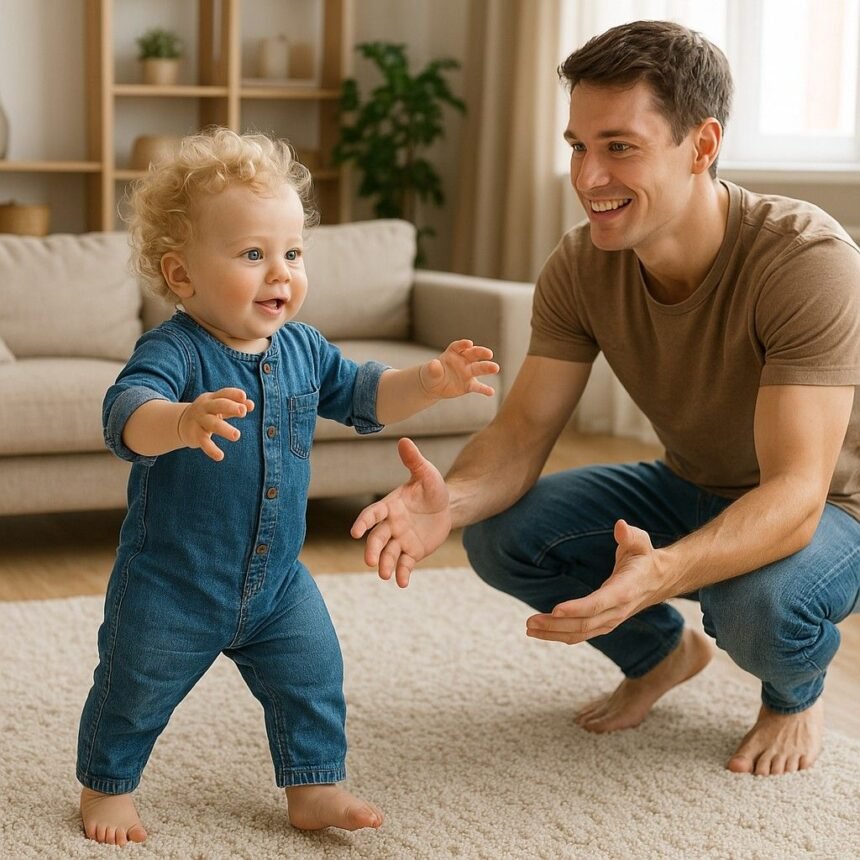
Engaging in interactive games can also be beneficial in fostering walking ability. Games such as “follow the leader” or participating in gentle races can spark enthusiasm and encourage movement. Parents can invite their baby to chase after a favorite toy or even encourage them to walk toward them with outstretched arms. Such activities not only stimulate physical growth but also strengthen the parent-child bond, making the experience enjoyable and memorable.
Additionally, providing ample opportunities for the baby to explore while standing can support their journey towards walking. Whether it is holding onto furniture or leaning against a wall, these experiences contribute significantly to their development. Overall, patience is essential; every child progresses at their own pace. With the right support and encouragement, babies will likely gain the confidence they need to start walking independently.
Tips to Encourage Talking
Language development is a crucial aspect of early childhood, and there are several effective strategies that parents can employ to encourage their child’s language skills. One of the most beneficial activities is reading together. By introducing books filled with vibrant illustrations and engaging stories, parents can capture their child’s interest and promote vocabulary acquisition. Choosing age-appropriate children’s books with repetitive phrases can also reinforce word recognition and pronunciation, making reading both enjoyable and educational.
Another strategy involves talking about everyday activities. For example, while preparing meals, parents can narrate each task, such as washing vegetables or stirring ingredients. This simple act of verbalizing actions and items exposes children to new words and concepts in context, enhancing their understanding and use of language. In addition, asking open-ended questions during routine interactions allows children to express themselves and practice constructing sentences.
Interactive play is also a vital component of language stimulation. Engaging in games that require conversation, such as role-playing or using puppets, creates a fun environment for children to practice language skills. Incorporating turn-taking and encouraging expressive communication during play can foster social skills and boost confidence in speaking. It is essential to respond to children’s attempts at communication, whether through gestures or sounds, as this validation encourages further attempts at expression.
Furthermore, singing songs and reciting nursery rhymes can be incredibly helpful. The rhythm and repetition in music make it easier for children to remember words and phrases, thus enhancing their linguistic skills. Parents should aim to provide a rich language environment that includes diverse experiences and conversations, nurturing their child’s potential to communicate effectively.
Common Concerns and When to Seek Help
As parents navigate the developmental milestones of their infants, concerns about when babies start walking and talking are common. Both walking and talking are critical milestones, and each child develops these skills at their own pace. However, certain signs may indicate a need for additional evaluation or support.
Typically, most babies take their first independent steps between 9 to 15 months. By the time they reach 18 months, many infants can walk confidently. Similarly, vocal development is substantial in the first few years, with most children saying their first words around one year. By the age of 2, many are able to combine words into simple phrases. Nevertheless, variations abound, and some children may take longer to reach these milestones.
If a child shows minimal interest in physical movement, is consistently unable to pull up to a standing position by 12 months, or fails to walk after 18 months, parents should consider consulting a pediatrician. Similarly, if a child is not using any words by 15 months, or their speech does not improve significantly by age 2, this may warrant a discussion with a healthcare provider.
Early intervention is essential. Pediatricians can guide parents on developmental assessments and potential resources. Signs of developmental delays can encompass a range of concerns, such as a lack of eye contact, limited interest in social interactions, or delayed cognitive abilities.
Ultimately, when it comes to a child’s development, it is vital to trust one’s instincts as a parent. If there are pressing concerns regarding walking or talking, seeking professional advice can provide peace of mind and necessary support for the child’s growth.
Conclusion
In the journey of early childhood development, two significant milestones stand out: walking and talking. While each child is unique and may reach these milestones at different ages, understanding typical developmental timelines can help parents provide the right environment for growth. Generally, babies begin to walk between 9 to 15 months and start to speak their first words around 12 months. However, these are merely averages, and individual differences should be embraced.
It is essential for parents to remember that the milestones of walking and talking are not mere checkboxes to tick off, but rather phases that contribute to a child’s overall cognitive and physical development. Some children may take their first steps earlier, while others may take longer; similarly, verbal skills can flourish at varying rates. Hence, patience is paramount during this period of exploration and learning.
Encouraging an interactive environment can significantly influence a child’s progress in both walking and talking. Simple activities such as reading aloud, engaging in play, and allowing ample space for safe movement can foster both walking and language skills. Celebrating small victories—such as a child’s first word or step—helps affirm positive growth and boosts their confidence.
As parents navigate these formative years, it is beneficial to maintain an understanding that development is a gradual process. By providing ongoing encouragement and a supportive atmosphere, parents can aid their children in achieving these developmental landmarks. In doing so, each child’s unique journey of discovery becomes a beautiful experience worth celebrating.