
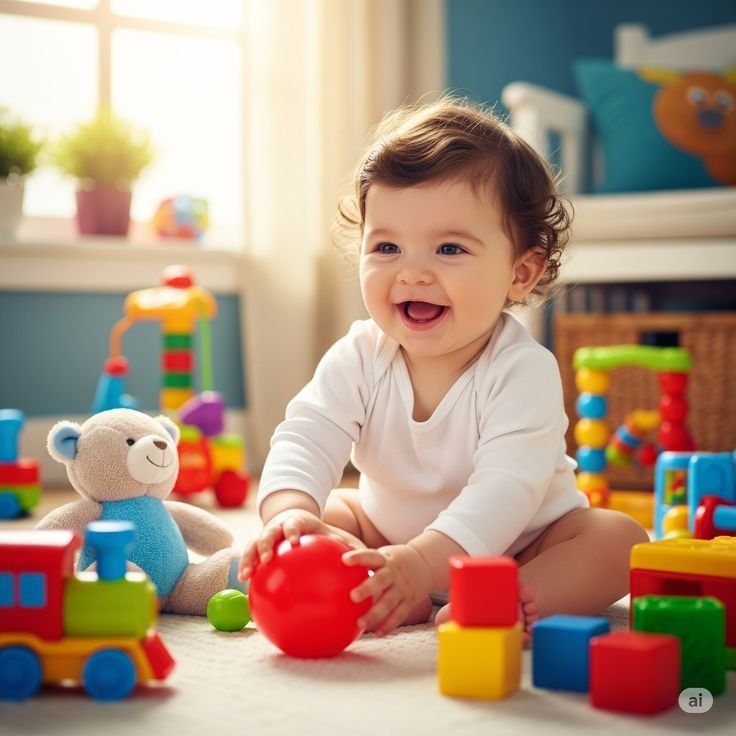
Introduction to Baby Development
Baby development refers to the multifaceted process that encompasses the physical, cognitive, emotional, and social growth of an infant from the moment of birth through their early years. This comprehensive journey is crucial as it lays the foundation for future learning, behavior, and overall well-being. As parents and caregivers, it is vital to monitor this development, allowing for timely interventions and support if necessary.
Understanding baby development is essential for recognizing typical milestones and variations that differ among infants. The process is typically divided into distinct stages, each characterized by specific developmental achievements. Physical development focuses on the baby’s motor skills, such as crawling, walking, and coordination. Cognitive development involves the processing of information, problem-solving skills, and language acquisition. Emotional and social development encompass how infants relate to others, express their feelings, and respond to social cues.
Monitoring these stages provides not only insights into the infant’s growth but also serves as a guide for caregivers to foster an environment conducive to healthy development. Creating a supportive atmosphere that encourages exploration and interaction is key. It is through play and social experiences that babies refine their skills and learn to navigate the world around them.
Recognizing the signs of healthy development is an essential part of parenting. Regular check-ups with pediatricians play a significant role, offering professionals the chance to evaluate the child’s progress. This oversight not only reassures parents but also highlights any atypical development that may require further attention, such as speech delays or motor skill difficulties.
Physical Milestones
Physical development in infants is a critical aspect of overall growth, as it indicates their progression toward independence and mobility. Parents and caregivers can expect to observe a variety of physical milestones during the first year of life. These milestones serve as markers to gauge a baby’s health and development.
One of the earliest indicators of physical development is the ability to control head movement. Typically, by around 2-3 months, babies can lift their heads while lying on their stomachs. This head control is essential, as it lays the foundation for future milestones. As infants reach 4-6 months, they generally demonstrate improved stability and can sit up with assistance.
By 6-9 months, most babies begin to exhibit signs of crawling. This stage is characterized by the use of arms and legs to propel their bodies across the floor, marking a significant advancement in mobility. Crawling not only strengthens muscles but also improves coordination and spatial awareness. If an infant is not yet crawling by 9 months but can roll over and sit independently, they should be monitored closely.
Following this, the transition to pulling up to a standing position typically occurs around 9-12 months. It signifies another significant milestone as it indicates muscle strength and balance can support their weight. Many babies will take their first steps sometime during their first year, usually between 10-14 months. Walking marks a considerable milestone in gross motor development and facilitates increased exploration of their environment.
Overall, tracking these physical milestones not only creates a framework for understanding infant growth but also provides insight into the child’s development trajectory. Parents should consult with pediatricians if any delays or concerns arise, ensuring support for healthy physical development throughout infancy.
Cognitive Development Signs
The cognitive development of infants is crucial in the early stages of their lives, as it lays the foundation for future learning and reasoning abilities. One of the primary indicators of healthy cognitive development is a baby’s growing problem-solving skills. As an infant starts to explore their environment, you may observe them experimenting with toys or attempting to reach objects out of their grasp. This behavior demonstrates not only curiosity but also the capacity to think critically to overcome obstacles.
Another significant sign of cognitive development is the ability to remember and recognize familiar faces and objects. By around six months of age, babies typically exhibit recognition of their parents and caregivers, often smiling or reaching out to them. This recognition is a reflection of their increasing memory capabilities as they begin to associate images with feelings of safety and comfort.
Furthermore, infants generally begin to demonstrate understanding through gestures, such as pointing or waving, around nine months. These actions signify their growing awareness of social interactions and communications, which are essential for cognitive growth. As babies engage with the world, their ability to focus on objects for extended periods is also an encouraging sign. This attention span increases with age and reflects developing cognitive functions that enhance learning.
In summary, parents and caregivers should pay close attention to these cognitive development signs. By noticing how infants solve problems, exhibit memory recall, and recognize familiar faces and objects, one can gauge their child’s cognitive progress. Healthy cognitive development not only fosters a sense of security in babies but also provides a strong basis for future intellectual growth.
Social and Emotional Development
Social and emotional development is a critical aspect of a baby’s overall growth and well-being. It involves forming connections with caregivers, developing emotional responses, and engaging in meaningful social interactions. One key indicator of healthy development in this area is the attachment that a baby forms with their primary caregivers. Secure attachment is characterized by a sense of safety and trust in the relationship, which is crucial for a child’s emotional health.
Initially, infants display attachment through their responses to caregivers. A healthy baby typically shows preferences for their primary caregivers, seeking comfort and security from them. As they grow, they may exhibit separation anxiety, a normal stage that highlights the depth of their attachment. Infants who develop this bond are more likely to showcase healthy emotional expression as they navigate the world.
As social skills begin to emerge, babies will start to engage in reciprocal interactions. This includes initiating contact, such as cooing or smiling, and responding to social cues provided by caregivers. An important sign of healthy emotional development is a child’s ability to express a range of emotions, such as joy, anger, or fear. These emotional responses indicate that the child is learning to communicate their feelings, an essential skill for building relationships later in life.
Moreover, as toddlers, children will typically begin to engage in parallel play, followed by more interactive play with peers. Observing your child sharing, taking turns, or empathizing with others demonstrates significant milestones in social development. These interactions enable babies to build social competence, which is vital for forming friendships and effective communication skills as they progress into later childhood.
Language Acquisition Indicators
Language development in infants is a fascinating and crucial aspect of their overall growth. The progression typically begins in the first few months of life, with early signs including cooing sounds. Around two to three months, babies may start cooing, producing vowel-like sounds that indicate they are experimenting with vocalization.
As development continues, usually between four to six months, infants enter the babbling stage. This vital phase often includes repetitive consonant-vowel combinations, such as “ba-ba” or “da-da.” It is during this time that they begin to practice their speech patterns and develop oral motor skills, setting the foundation for clear communication as they mature.
By the time infants reach their first birthday, many exhibit the emergence of their first words. These initial words might revolve around familiar objects or key people in their environment, such as “mama” or “dada.” This milestone is crucial, as it signifies not only an understanding of language but also the ability to express needs and feelings verbally.
Responsive communication plays an indispensable role during this developmental process. Caregivers can foster language acquisition by engaging in meaningful conversations, even when the baby is in the cooing or babbling stage. Responding to an infant’s sounds with enthusiasm and encouragement can enhance their confidence and promote further vocalization. Reading to infants, singing songs, and describing daily activities are also effective methods for enriching their vocabulary and language comprehension.
In conclusion, monitoring these early language acquisition indicators can provide valuable insight into a child’s developmental trajectory. Recognizing the significance of cooing, babbling, and first words, alongside the impact of nurturing communication from caregivers, can enhance an infant’s language experience and overall cognitive growth.
Sensory Development Signs
Sensory development is a fundamental aspect of a baby’s overall growth and wellbeing. It encompasses the ways in which infants experience and engage with their environment through their senses: sight, hearing, touch, taste, and smell. Each of these senses develops at a unique pace, and recognizing the signs of healthy sensory development can provide reassurance to caregivers.
Beginning with sight, a healthy baby typically shows interest in visual stimuli by around two months of age. They may track objects with their eyes, respond to bright colors, and even recognize familiar faces. By the age of six months, infants should be able to see across the room and demonstrate a preference for certain patterns and colors. It is crucial for caregivers to engage babies visually, as this encourages the development of their visual perception.
In terms of hearing, a responsive infant will react to sounds from an early age, showing notable interest in voices and music. By three months, healthy babies often start to turn their heads toward sounds and may smile in response to familiar voices. This indicates that their auditory system is developing appropriately and that they are beginning to process sounds around them.
Touch, taste, and smell also play significant roles in sensory development. Babies begin to explore their world through touch, demonstrating curiosity about different textures and temperatures by reaching for objects. Tongue movements and facial expressions during feeding reveal that an infant’s sense of taste is developing, while their reactions to different scents show growth in olfactory awareness. Observing these responses is essential for understanding the sensory development of infants, as they reflect the progression of their nervous systems.
Importance of Regular Check-ups
Regular check-ups are a fundamental aspect of ensuring healthy baby development. They provide an opportunity for healthcare professionals to monitor the growth and development of infants and toddlers. These pediatric appointments typically occur at specific intervals, allowing parents and caregivers to receive guidance on important milestones, vaccinations, and general health assessments.
During routine check-ups, various health screenings are conducted. These may include physical examinations, assessments of developmental milestones, and tracking of growth parameters such as height and weight. Health screenings are designed to identify potential health issues early, enabling timely interventions if necessary. For instance, a pediatrician may evaluate motor skills and cognitive development, helping to determine if the baby is progressing appropriately for their age.
The importance of these check-ups extends beyond mere assessment and tracking of physical growth. They also serve as a platform for parents to ask questions and express any concerns regarding their child’s behavior, sleep patterns, or nutrition. Open communication with healthcare providers fosters a supportive environment that encourages informed parenting. Additionally, pediatricians can offer resources and strategies tailored to promote healthy habits and stimulate cognitive development, ensuring that the child reaches their fullest potential.
Parents should prioritize scheduling regular check-ups and adhere to the recommended vaccination schedule. These visits are not only crucial for monitoring typical health and development but also for preventing illnesses through necessary immunizations. Hence, regular pediatric check-ups are essential for helping to track baby development and ensuring a healthy start to life.
When to Seek Help
Monitoring a child’s development is an essential duty for parents and caregivers. While each child grows at their own pace, there are specific indicators that may suggest a potential delay in developmental milestones. Recognizing these signs early can be crucial in ensuring that a child receives any necessary support to thrive.
One primary behavioral indicator to consider is a lack of communication or social engagement. For instance, by the age of 12 months, many children typically begin to use simple words and engage in basic interactions. If a child does not exhibit these skills, it may warrant further assessment. Additionally, by 24 months, children often show the ability to combine words into simple phrases. A noticeable delay in this area can be a cause for concern.
Another significant domain is motor skills. Observing a child’s physical abilities can offer insights into their development. Children should develop the ability to walk independently by 15 months, and by 24 months, they should be able to run and climb. If a child is unable to perform these gross motor skills, it may indicate the need for professional evaluation.
Moreover, emotional and behavioral development must not be overlooked. If a child is excessively withdrawn, displays heightened agitation, or seems unusually disinterested in play or social interaction, these may be signs of underlying issues. Parents should also pay attention to the child’s ability to manage emotions. Ideally, by age three, children should begin learning how to cope with frustration and engage in parallel play with peers.
In light of these indicators, it is advisable for parents and caregivers to consult a pediatrician or a child development specialist if they notice any concerning behaviors. Early intervention is vital and can significantly improve a child’s outcomes in different areas of development. Acting promptly can provide children with the necessary resources and support to help them thrive.
Conclusion and Encouragement for Parents
Understanding the signs of healthy baby development is essential for parents as it provides a framework for tracking their child’s growth and milestones. As we’ve discussed, developmental progress is unique to each infant, with variations in timing and expression of skills such as motor abilities, cognitive growth, and social interactions. Parents should remember that while general guidelines exist, every baby develops at their own pace. This variability is perfectly normal and should be embraced as part of the journey.
It is also important for parents to recognize the milestones related to language, emotional responsiveness, and physical capabilities. Positive engagement through play, communication, and nurturing care are vital as they all contribute significantly to healthy development. Celebrating each small achievement can help cultivate confidence and well-being in both the parent and the child, reinforcing a supportive environment conducive to growth.
As you navigate this developmental journey, it is crucial to cultivate a mindset that values patience and understanding. If you find yourself concerned about your baby’s progress, do not hesitate to consult a pediatrician. Seeking professional guidance can provide reassurance and, if necessary, interventions tailored to address any developmental concerns.
In closing, while the path of development can be varied and filled with challenges, it is also rich with opportunities to nurture strong bonds and foster a sense of security. Embrace each moment and continue to support your baby’s unique journey towards reaching their full potential.