
Understanding Donor Milk and Its Benefits
Donor milk refers to breast milk that is collected from lactating women, screened for safety, and then made available for infants in need. This precious resource is primarily obtained through milk banks, where mothers donate excess milk that is then pasteurized and tested to ensure its purity and safety. Donor milk plays a crucial role, particularly for infants who cannot be breastfed due to various reasons such as health complications, insufficient milk supply from mothers, or preterm birth.
One of the most significant advantages of donor milk is its nutritional profile, which is specifically tailored for the needs of infants. Donor milk contains a balanced combination of proteins, fats, vitamins, and minerals essential for an infant’s growth and development. Additionally, it is rich in bioactive compounds and antibodies that are vital for a baby’s immune system. This immunological advantage can help protect infants from infections and diseases during their vulnerable early stages of life.
Research has indicated that the use of donor milk can significantly reduce the risk of serious health issues among infants, particularly those born preterm. For example, studies have shown that donor milk can lower the incidence of necrotizing enterocolitis (NEC), a potentially life-threatening condition affecting the intestines of premature infants. Moreover, donor milk has been associated with improved digestive health, better weight gain, and a lower chance of developing other complications.
In sum, donor milk serves as a vital nutritional resource for infants who are not receiving breast milk directly from their mothers. Its numerous benefits make it a desirable alternative, ultimately supporting the health and well-being of the most vulnerable infants in need of nourishment.
Exploring Infant Formula: Types and Nutritional Composition
Infant formula serves as a vital alternative to breast milk and donor milk, ensuring that infants receive the necessary nutrition for healthy growth and development. There are several types of infant formulas available in the market, primarily classified into three categories: milk-based, soy-based, and specialty formulas.
Milk-based formulas are the most commonly used type, designed to closely resemble human breast milk in both nutritional content and digestibility. The primary ingredient is cow’s milk, which is modified to make it suitable for infants. Essential nutrients such as carbohydrates, proteins, and fats are included to support growth, while vitamins and minerals are added to align the formula’s composition with the natural nutrition found in breast milk.
Soy-based formulas offer an alternative for infants who are lactose intolerant or allergic to cow’s milk protein. These formulas use soy protein as the primary source of protein and also include a blend of essential nutrients. Although soy-based formulas are suitable for many infants, it is crucial to consult with a pediatrician to ensure they meet the specific needs of the child.
Specialty formulas are tailored for infants with unique nutritional requirements or medical conditions, such as metabolic disorders or severe allergies. These formulas can include hydrolyzed proteins, which are broken down into smaller parts for easier digestion, or other specific components aimed at addressing particular health concerns.
Each type of formula is designed to mimic breast milk, incorporating various additives to enhance their nutritional profiles. Ingredients such as DHA and ARA, fatty acids found in breast milk, are commonly added to support brain development. Furthermore, probiotics may be included to promote healthy gut flora.
Choosing the right formula depends on various factors, including the infant’s health, dietary needs, and any advice from healthcare professionals. Formula feeding serves as a practical and necessary option for many families, ensuring that infants receive adequate nutrition when breast milk or donor milk is not available.
Comparative Analysis: Donor Milk vs Formula
When it comes to feeding infants, the choice between donor milk and formula can be a complicated decision for parents. Each option presents its own benefits and drawbacks, and understanding these can help in making an informed choice suitable for the child’s individual needs.
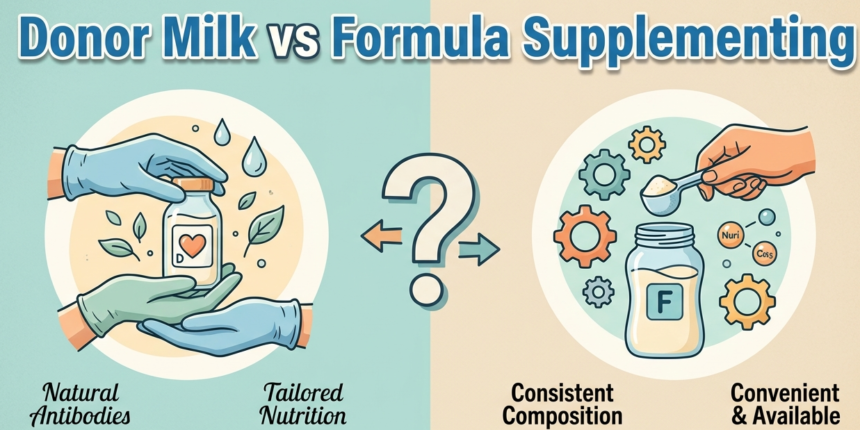
Donor milk, typically sourced from milk banks, contains essential nutrients, antibodies, and growth factors that are known to support infant development. It is particularly recommended for premature or sick infants who may require the immune properties found in breast milk. However, the major downside of donor milk is its availability and cost. Human milk banks follow strict guidelines, leading to limited accessibility and potential high costs involved when purchasing donor milk.
On the other hand, infant formula serves as a convenient and widely available alternative to breast milk. It is formulated to provide balanced nutrition for babies who cannot be breastfed. The affordability and accessibility of formula make it a practical choice for many families. Nevertheless, preferences toward formula may vary depending on the ingredients or additives used, with some formulas potentially being less nutritious compared to donor milk.
Parents may also wonder about the risks associated with each option. While donor milk is often considered safe, improper handling or sourcing could introduce the risk of infection. Conversely, formulas, while generally safe, can lead to allergies or gastrointestinal issues in some infants due to ingredients such as soy or lactose. Furthermore, misconceptions about either option can influence parental decisions; for example, the idea that formula-fed infants are less healthy is unsubstantiated and can cause undue worry.
When evaluating donor milk versus formula, it is crucial for parents to consider their specific situation, including health needs, ethical beliefs, and logistical challenges to ensure that the right choice is made for their baby.
Making the Decision: Factors to Consider When Choosing
When it comes to selecting between donor milk and formula supplementing for your baby, it is essential to consider several factors that impact both your child’s health and your family’s overall situation. The choice should be guided by a comprehensive understanding of medical considerations, personal values, financial implications, and lifestyle compatibility.
Medical considerations are paramount in this decision-making process. Certain infants may have specific health needs that dictate whether donor milk or formula is more suitable. For instance, infants with allergies to cow’s milk protein or those who are lactose intolerant might benefit from specialized formula options or donor milk. Furthermore, premature infants often have increased nutritional requirements that may not be fulfilled by regular formula, making high-quality donor milk an appropriate choice. Consulting with a healthcare professional, such as a pediatrician or lactation consultant, can provide critical insights into the best nutritional path based on your baby’s specific medical needs.
Personal values also play a significant role in this decision. Some parents may prefer donor milk due to its natural nutrients and immunological benefits, while others may opt for formula for its convenience and availability. These choices often reflect individual beliefs about infant feeding and nutrition, and assessing your own values is crucial in making the decision that feels right for your family.
Financial implications must not be overlooked either. Donor milk can be costly, depending on availability and the systems in place at the milk bank, whereas formula generally presents a clear pricing structure. Parents should evaluate their budgets and consider whether the potential additional expenditure aligns with their financial situation.
Lastly, it is vital to consider lifestyle compatibility. Factors such as work schedules, access to facilities for pumping or storing milk, and the general routine of the household can influence which option is more feasible. Both donor milk and formula require planning and commitment, and assessing which aligns better with your family’s lifestyle is crucial for long-term success.